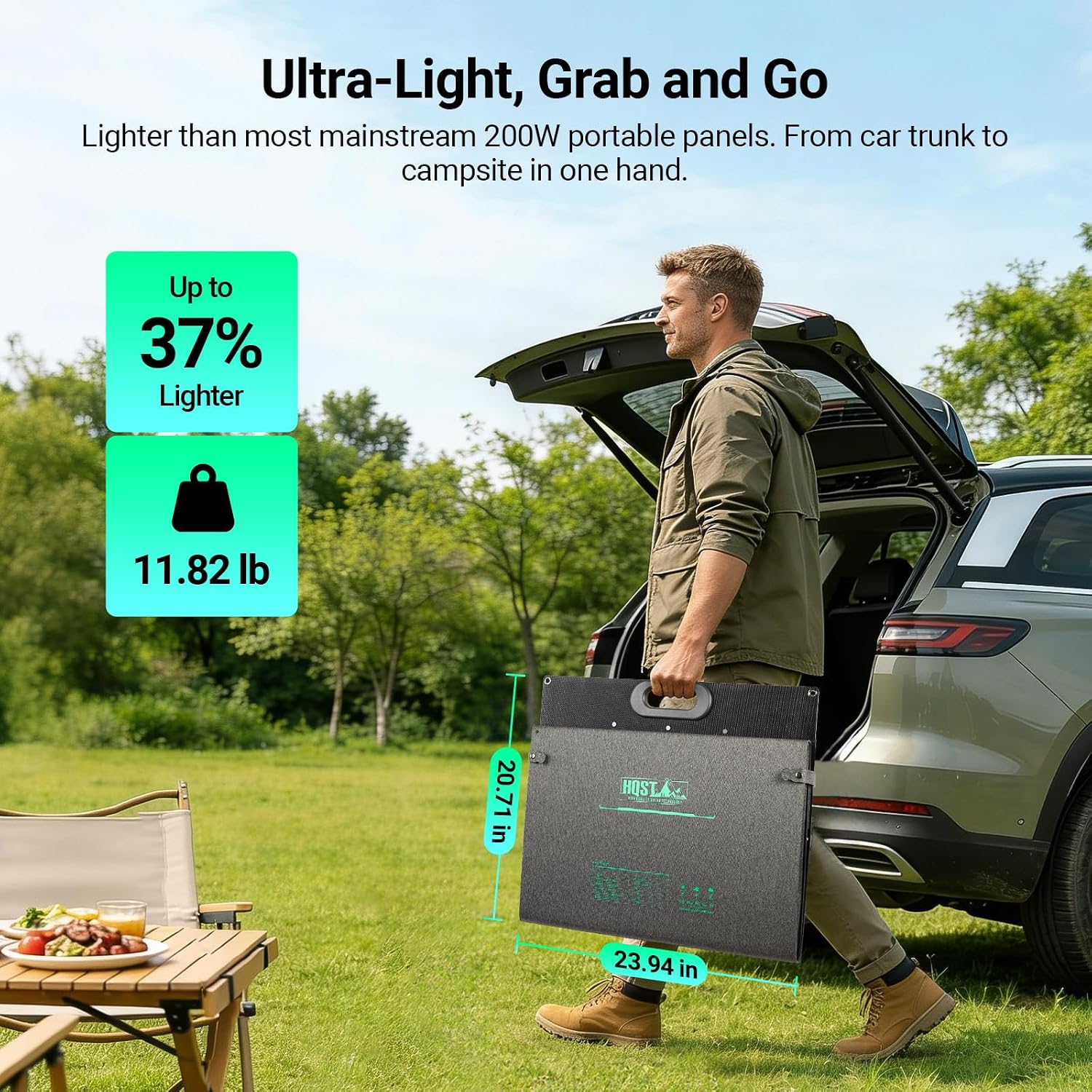
A foldable solar panel is exactly what it sounds like: a rigid or flexible photovoltaic panel that folds in half or thirds like a briefcase so you can carry it in a car trunk or prop it against a wall. When the grid goes down or you’re days from an outlet, these panels recharge a portable power station — think of a power station as a very large rechargeable battery with built-in outlets — so you can keep lights, phones, a CPAP machine, or a camp refrigerator running. The decision this article addresses is whether to spend the money on a 400-watt (W) panel or whether a 200W panel gets you there at half the bulk and often half the price. The answer depends heavily on your specific power station’s solar input limit, your available setup space, and how often you’ll fold and unfold this thing in real use. We’ll walk through the math, real-owner patterns that cut through spec-sheet marketing, and the connector compatibility questions that trip up most buyers before they see their first watt.
| EDITOR'S PICK400W Portable Solar Panel | Mid-tierRenogy 200W Portable Solar Panel | Budget pickFlexSolar 40W Foldable Solar Pa… | |
|---|---|---|---|
| Max power | 400W | 200W | 40W |
| Waterproof | IP65 | IP65 | Waterproof |
| Kickstand | ✓ | — | — |
| USB-C port | — | — | ✓ |
| USB-A port | — | — | ✓ |
| Price | $284.98 | $174.94 | $53.99 |
| See on Amazon → | See on Amazon → | See on Amazon → |
The Core Tradeoff: More Watts vs. More Portability
Let’s put the numbers on the table before getting into specific panels.
200W vs. 400W foldable at a glance:
| Spec | 200W Foldable (typical) | 400W Foldable/Blanket (typical) |
|---|---|---|
| Peak output, ideal conditions | ~160–185W real-world | ~320–390W real-world |
| Folded footprint | Briefcase-sized (~24”×21”) | Larger case or rolled blanket |
| Weight | 9–13 lbs | 16–26 lbs |
| Useful for stations up to | ~500–700Wh | ~1000–2000Wh |
| Typical recharge time, 1000Wh station | 6–9 hours (single panel) | 3–5 hours (single panel) |
The real-world output column matters more than the rated number. Published specs from manufacturers — Renogy, HQST, Jackery, Goal Zero — are measured under Standard Test Conditions (STC): 77°F panel temperature, 1,000 watts of irradiance per square meter, no haze. Field conditions are almost never STC. Wirecutter’s portable solar panel testing, documented in their review “The Best Portable Solar Panels” (The New York Times / Wirecutter, updated 2025), consistently finds that real-world portable panel output runs 70–85% of rated wattage under good but realistic conditions. One Renogy 200W owner documenting use in Florida at solar noon reported exceeding the rated watts — a genuine outlier that speaks to how favorable that latitude and panel combination can be, but not what you should plan around for the Pacific Northwest or a cloudy mid-Atlantic winter.
The HQST owner base includes some unusually long-tenure users. One reviewer documented a decade-plus of HQST panel operation, upgrading from a 100W array to 200W panels — and critically flagged that the performance jump only materialized after upgrading the charge controller (the device that regulates current between the panel and battery) to one rated for the higher amperage. That’s a non-obvious cost that trips up buyers who assume the panel upgrade alone delivers the gain.
The 400W Category: Real Promise, Real Risk
The jump to 400W sounds compelling when you’re staring at a 1,000Wh or 2,000Wh power station and doing the recharge-time math. At a real-world 350W, you can fill a 1,000Wh station in roughly three hours of solid sun. That’s legitimate emergency utility.
The Renogy 400W solar blanket (a flexible, rollable design rather than a rigid suitcase) draws a polarized review pattern that buyers need to understand honestly. On the positive end, owner documentation shows 385W output lying flat in good sun — nearly the full rated wattage, which represents exceptional output efficiency. On the negative end, separate owner reports describe complete panel failure after only six uses. Both data points are real, and neither cancels the other out. What they collectively signal: the 400W blanket category is still maturing. For an emergency panel that you need to perform reliably on deployment one and deployment twenty, that failure-rate pattern should carry meaningful weight in your decision.
SOKIOVOLA’s foldable offerings in this range draw a specific durability flag worth noting: the backing material is described in owner-reported observations as thin, with UV degradation cited as an actionable long-term concern. For a panel that lives in a car trunk or garage — baking and cooling repeatedly — backing material integrity determines whether you have a working panel in year three or a cracked, delaminating shell. Rigid suitcase-style panels with aluminum frames and tempered glass faces consistently outlast flexible and blanket designs in long-run owner reports. If you’re buying for a permanent vehicle kit or a whole-house emergency system that needs to be reliable across years of storage and use, the suitcase form factor earns its extra weight.
Power Station Compatibility: The Bottleneck Nobody Reads the Manual About
Your power station’s solar input limit is often the real ceiling on charging speed — not the panel’s rated wattage. Every portable power station has a maximum solar input specification measured in watts. The Jackery Explorer 1000 Pro accepts up to 200W. The Goal Zero Yeti 1000X accepts up to 600W. The Anker SOLIX C1000 Gen 2, per the Anker Innovations SOLIX C1000 Gen 2 User Manual (2025), accepts up to 1,100W. If your station caps at 200W and you connect a 400W panel, you will charge at 200W — you’ve paid for 200W of capacity you cannot use with that station.
Before buying any panel above 200W, pull up your station’s manual and find the “Max Solar Input” or “PV Input” specification. If it’s under 350W, a 400W panel gives you zero additional speed over a 200W panel.
Connector compatibility is the second problem. Most foldable panels ship with MC4 connectors — the standard weatherproof plug used in permanent solar installations. Most portable power stations use proprietary connectors. You need an adapter cable. One Renogy 200W owner documented a specific working path: Renogy 200W panel → MC4-to-XT60 adapter → Anker SOLIX C1000 Gen 2. That combination works. Other combinations require different adapters; confirm your specific station’s input connector before buying. Always verify the input voltage range of your station against your panel’s open-circuit voltage (Voc) before making any connection.
Which Panel Tier Is Right for You?
After working through published specifications, aggregated owner reports, and compatibility math, the decision breaks cleanly into three buyer profiles. The sections below address each.
The Budget-Conscious Buyer: 200W for Stations Under 300Wh
If your power station’s solar input limit is 200W or below — common examples include the Jackery Explorer 1000 Pro, the EcoFlow River 2 Pro, and many Goal Zero Yeti 500X configurations — a 200W panel is your hard ceiling. Buying a 400W panel is a direct waste of money for that station.
For this buyer, the Renogy 200W Foldable Solar Panel (per Renogy product documentation 2025) represents the most well-documented option in the category. Its rigid aluminum-framed, monocrystalline construction gives it a durability track record that blanket panels don’t currently match. Real-world output in good conditions runs 140–185W depending on latitude and panel temperature. For a 300–500Wh station, that fills the battery in four to five hours of solid sun — practical enough for a weekend outage or a camping trip, without overspending on capacity you cannot use.
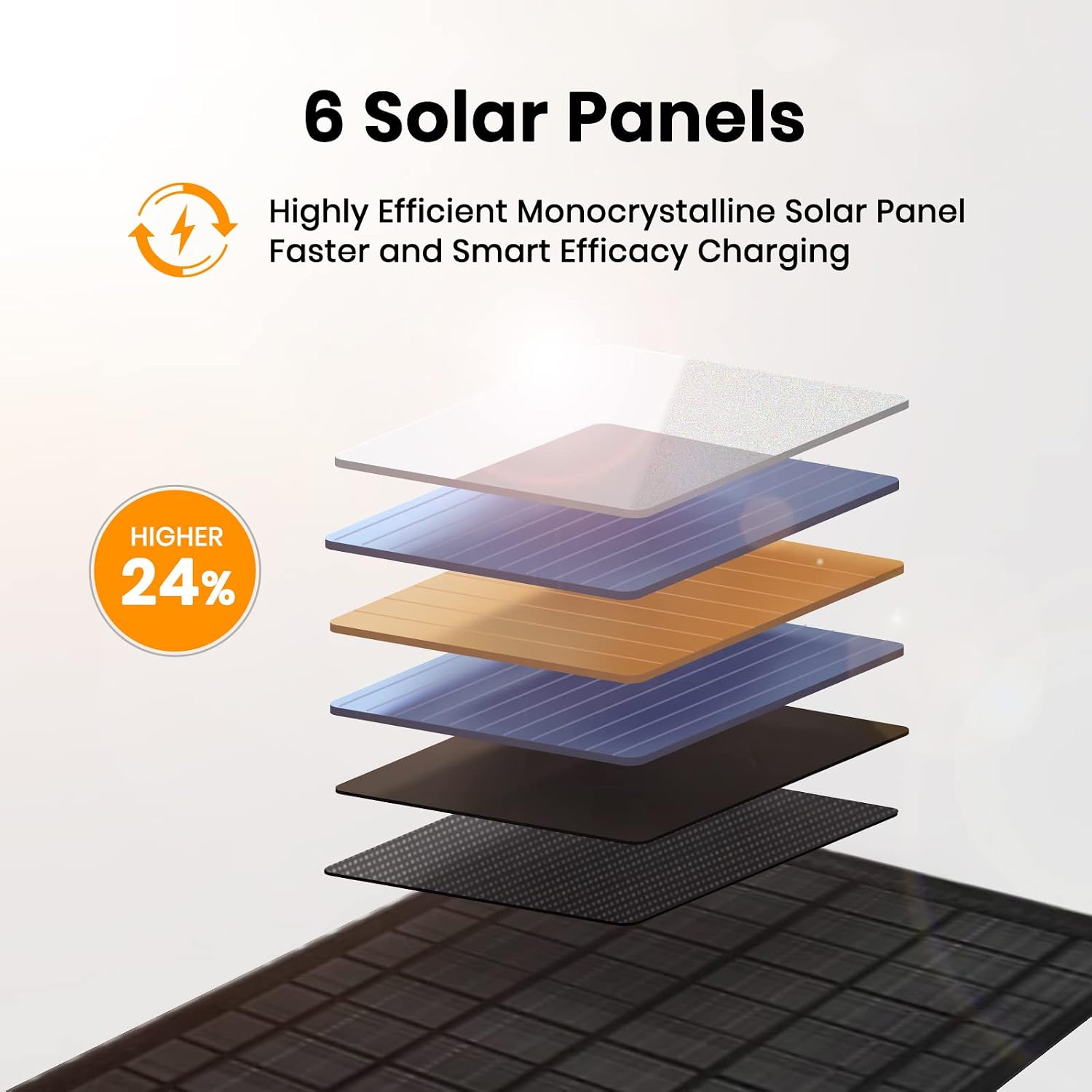
FlexSolar
$53.99
In stock on Amazon
Check price on AmazonThe Mid-Range Buyer: 200W Panels in Parallel for 500–1,200Wh Stations
If your station accepts 400W or more — the EcoFlow Delta 2 Max, Goal Zero Yeti 1000X, or Anker SOLIX C1000 Gen 2 all qualify — you have a genuine choice. Given the Renogy 400W blanket’s documented failure pattern after limited use cycles, budget-conscious buyers in this tier are often better served by running two quality 200W panels in parallel rather than gambling on a single 400W blanket with thin long-term durability data.
Two HQST 200W panels (per HQST product documentation 2024–2025) connected via a parallel branch cable can deliver 280–370W in realistic conditions — cutting a 1,000Wh recharge time to roughly three to four hours of solid sun. As the long-tenure HQST owner who documented the ten-panel array upgrade confirms, this approach scales, but you must pair it with a charge controller rated for the combined amperage. Some stations accept parallel panel input natively via their solar input port; others require an external MPPT charge controller in the chain. Check your station’s documentation before connecting.
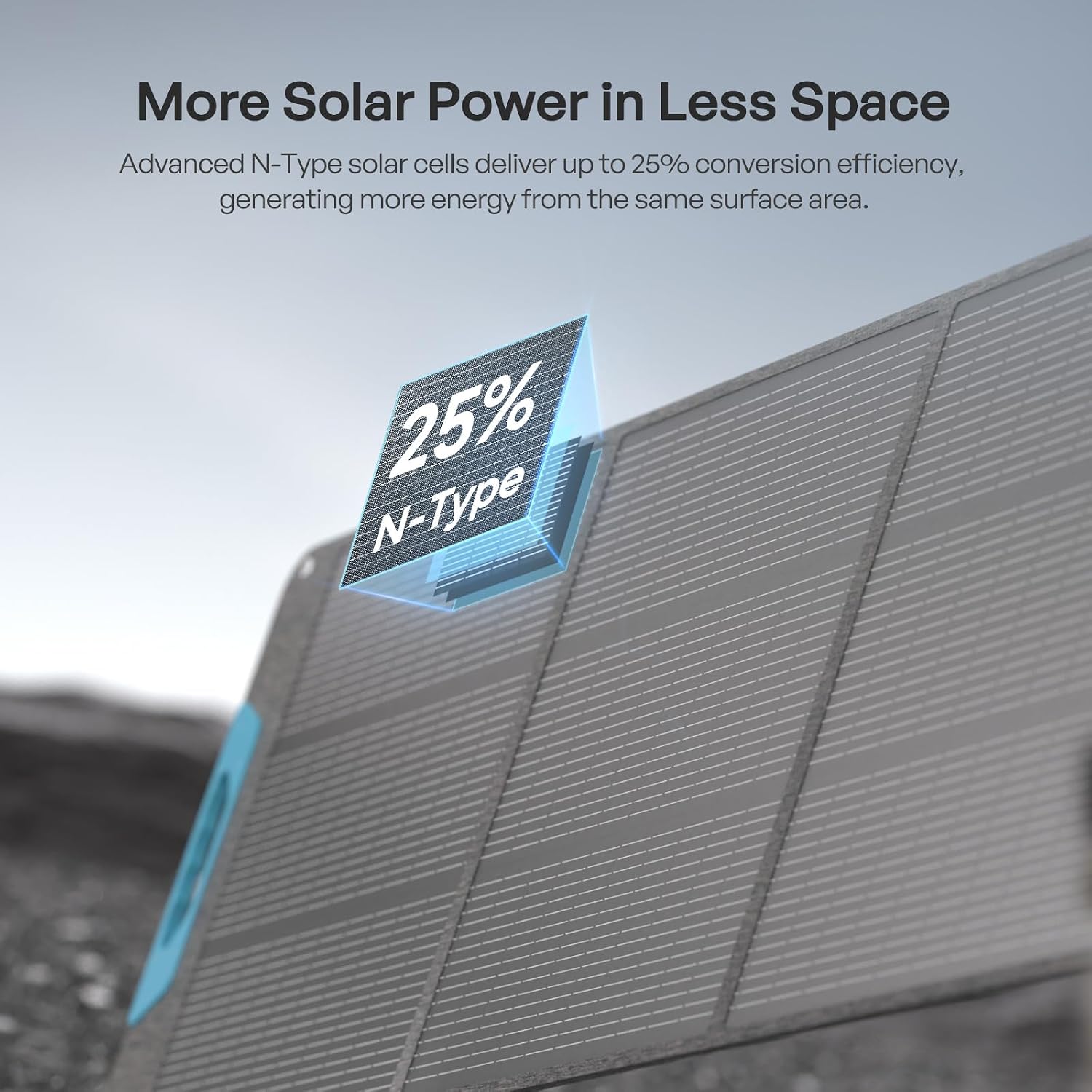
Renogy
$174.94
In stock on Amazon
Check price on AmazonThe High-Capacity Buyer: 400W for Large Stations and Fixed Deployments
If you have a 1,500Wh or larger station, can place a panel in a fixed location without repeated folding and unfolding, and are willing to accept some product-maturity risk, a single 400W panel meaningfully simplifies setup compared to a two-panel parallel array.
For this buyer, the Renogy 400W Solar Blanket (per Renogy product documentation 2025) is the most frequently documented option — but its owner-reported failure rate after limited use cycles is a real concern for a panel intended for emergency reliability. If you go this route, verify that your retailer offers a clear warranty process before purchase. The SOKIOVOLA foldable panels in this class are documented as having thin backing material with UV degradation risk under repeated sun exposure; if you’re building a system that needs to perform across multiple years of storage and deployment, that longevity gap matters more than the upfront cost difference.
Portability-focused buyers — overlanders, kayak campers, people working from narrow vehicle storage — should also weigh the folded footprint realistically. A 400W panel in suitcase form is substantially heavier and wider than a 200W panel, and that difference compounds across repeated deployments.
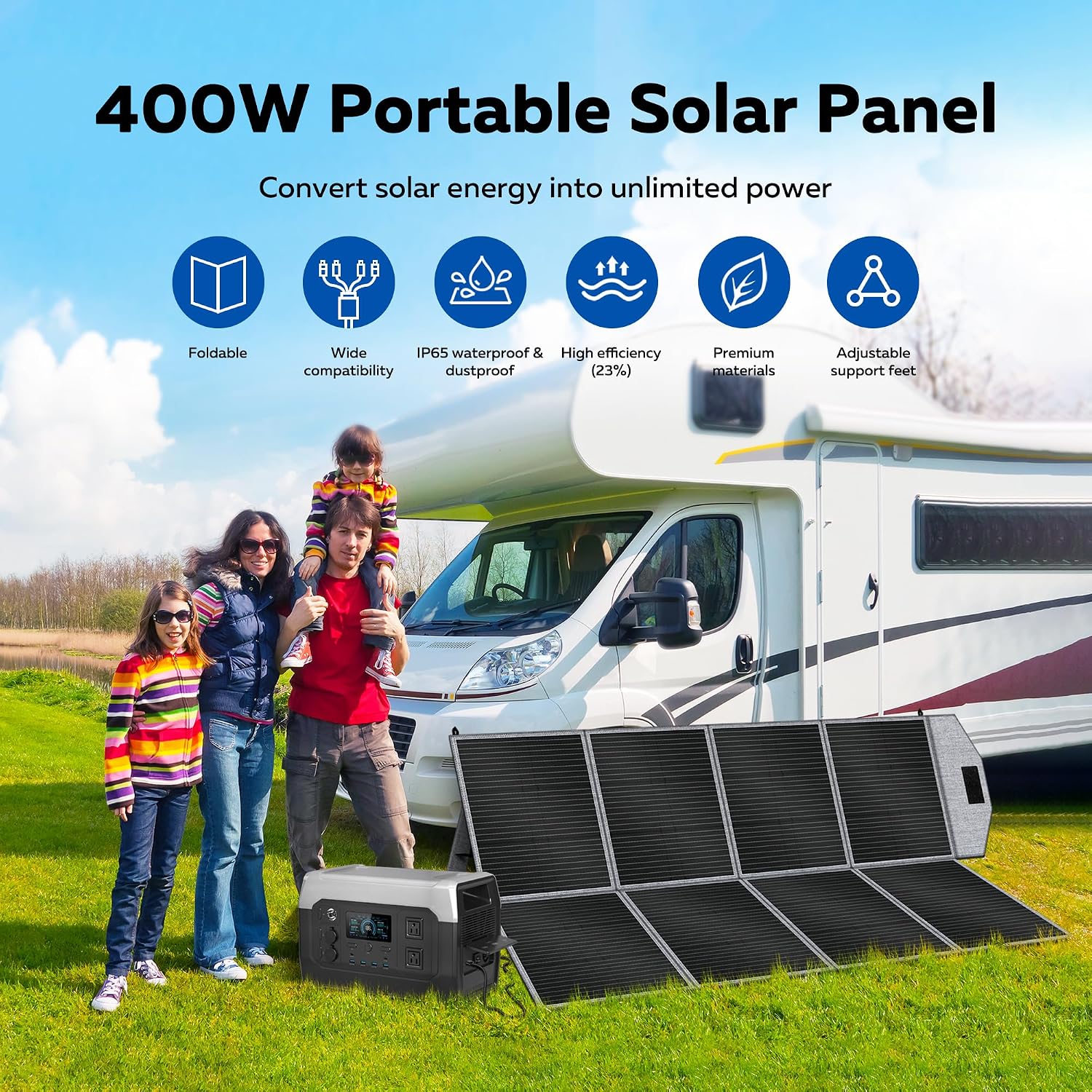
400W
$284.98
In stock on Amazon
Check price on AmazonFrequently Asked Questions
1. What real-world wattage should I expect from a 200W foldable panel in direct sun?
Plan for 140–170W in realistic good conditions: clear sky, panel aimed directly at the sun, ambient temperature under 85°F. Wirecutter’s portable solar panel testing methodology (The New York Times / Wirecutter, “The Best Portable Solar Panels,” updated 2025) documents 70–85% of rated output as the typical real-world range across the panel category. Shade, haze, panel angle, and panel temperature all reduce that figure.
2. Does my power station’s solar input limit matter more than the panel’s rated wattage?
Yes, in most practical situations. Your station’s Max Solar Input spec is a hard ceiling. If it’s 200W and you connect a 400W panel, you charge at 200W. Check your manual before buying — this is the most common expensive mistake in this category.
3. Are solar blanket panels as durable as rigid foldable suitcase panels for repeated emergency use?
Based on aggregated owner observations, not currently. The Renogy 400W blanket’s documented complete-failure-after-six-uses pattern and SOKIOVOLA’s thin backing material and UV degradation risk both point to blanket panels as less durable than aluminum-framed suitcase designs under repeated real-world conditions.
4. What connector adapter connects a Renogy or HQST panel to an Anker SOLIX or Jackery station?
Renogy and HQST panels ship with MC4 connectors. The Anker SOLIX C1000 Gen 2 uses an XT60 input — you need an MC4-to-XT60 adapter cable. Jackery stations use a proprietary DC barrel connector; Jackery sells a compatible solar adapter cable, and third-party MC4-to-DC cables are documented as working for some configurations. Always verify the input voltage range of your station against your panel’s open-circuit voltage (Voc) before connecting.
5. Can I use a foldable solar panel to charge phones directly without a power station?
Most 200W and 400W foldable panels output raw DC at 18–24V, which will damage or fail to charge USB devices without a regulator. Some panels include a built-in USB port with a small onboard regulator, but at very low amperage — enough to trickle-charge a phone, not fast-charge it. A small power bank or power station acts as the buffer and voltage regulator between the panel and your devices.
6. How many 200W panels can I chain together to charge a large station faster?
The limit is your station’s Max Solar Input. If your station accepts 600W, three 200W panels in parallel can theoretically deliver up to 500–550W in real-world conditions — filling a 1,000Wh station in roughly two hours of solid sun. The HQST multi-panel owner who documented a ten-panel array upgrade confirms this approach works, but also confirms you need a charge controller rated for the combined amperage. Check your station’s documentation: some accept parallel panel input natively; others require an external MPPT charge controller in the chain.