If your emergency bag has ever sat in a hot car trunk for six months and you’ve wondered whether the food inside is still any good — this article is for you. Emergency calorie bars are exactly what they sound like: compact, shelf-stable bricks of dense nutrition designed to keep you going when normal food isn’t an option. They’re not fancy, they’re not a full meal plan, but in the first 72 hours of a flood, wildfire evacuation, or power-grid failure, they’re the difference between thinking clearly and running on empty. This comparison looks at two of the most-discussed options in the preparedness community right now — Grizzly Gear Emergency Food Ration Bars and Survival Tabs — and breaks down exactly where each one wins, where it falls short, and which scenario tilts the decision one way or the other.
You already know the basics of a 72-hour kit. What you’re working through here is the component decision: not whether to pack calorie bars, but which ones, and how many, and whether they can carry the full nutritional load or just part of it. That’s the question this article answers.
| EDITOR'S PICKEmergency Food Ration Bars | Budget pickGrizzly Gear Emergency Food Rat… | |
|---|---|---|
| Calories per bar | — | 3600 cal |
| Bar count | 12 | — |
| Flavor | Chocolate | Vanilla Poundcake |
| Thirst-provoking | — | Non thirst provoking |
| Days covered | — | 3 day |
| Price | $37.99 | $21.99 |
| See on Amazon → | See on Amazon → |
What You’re Actually Comparing
Before the head-to-head, it’s worth being precise about what these two products are, because they’re not the same format.
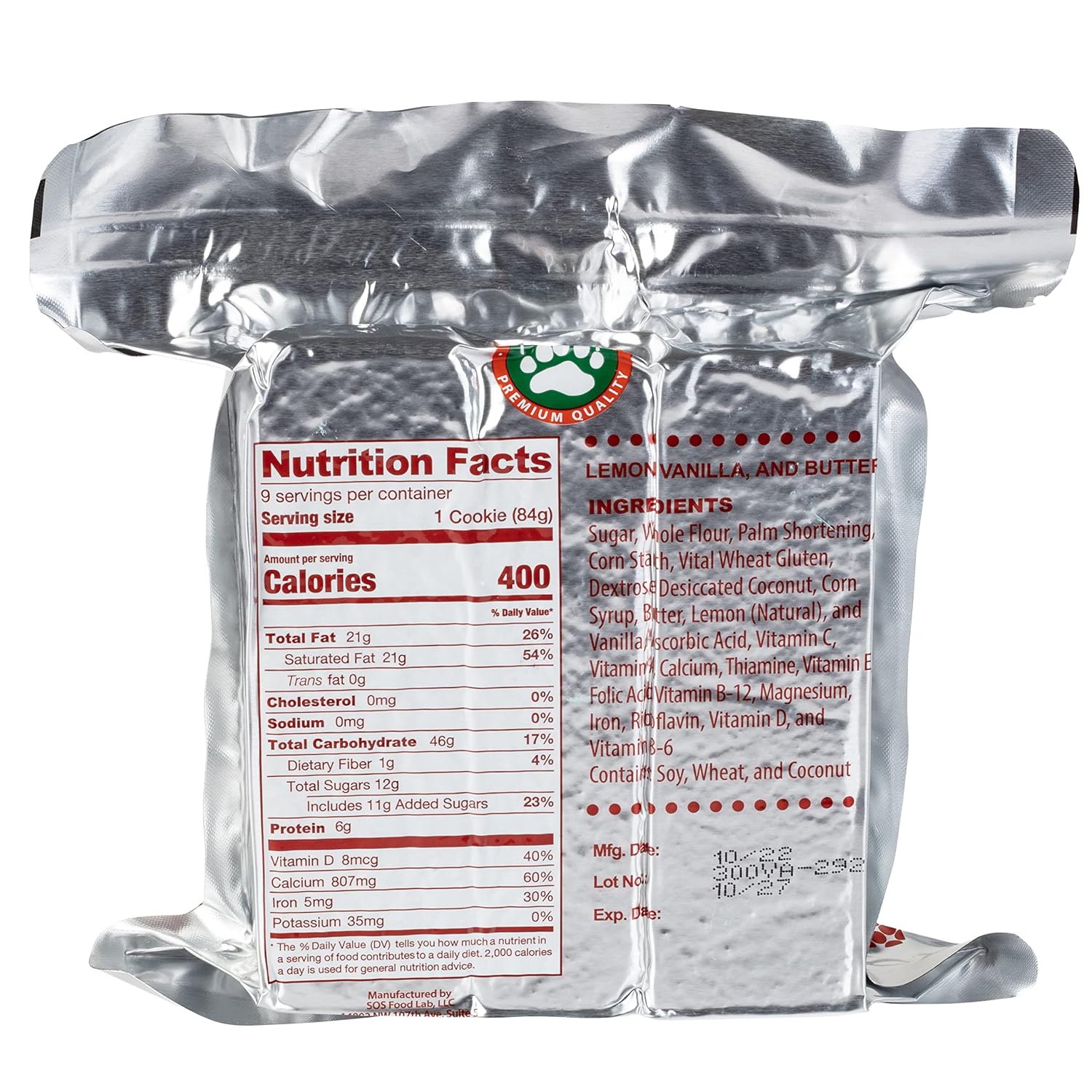
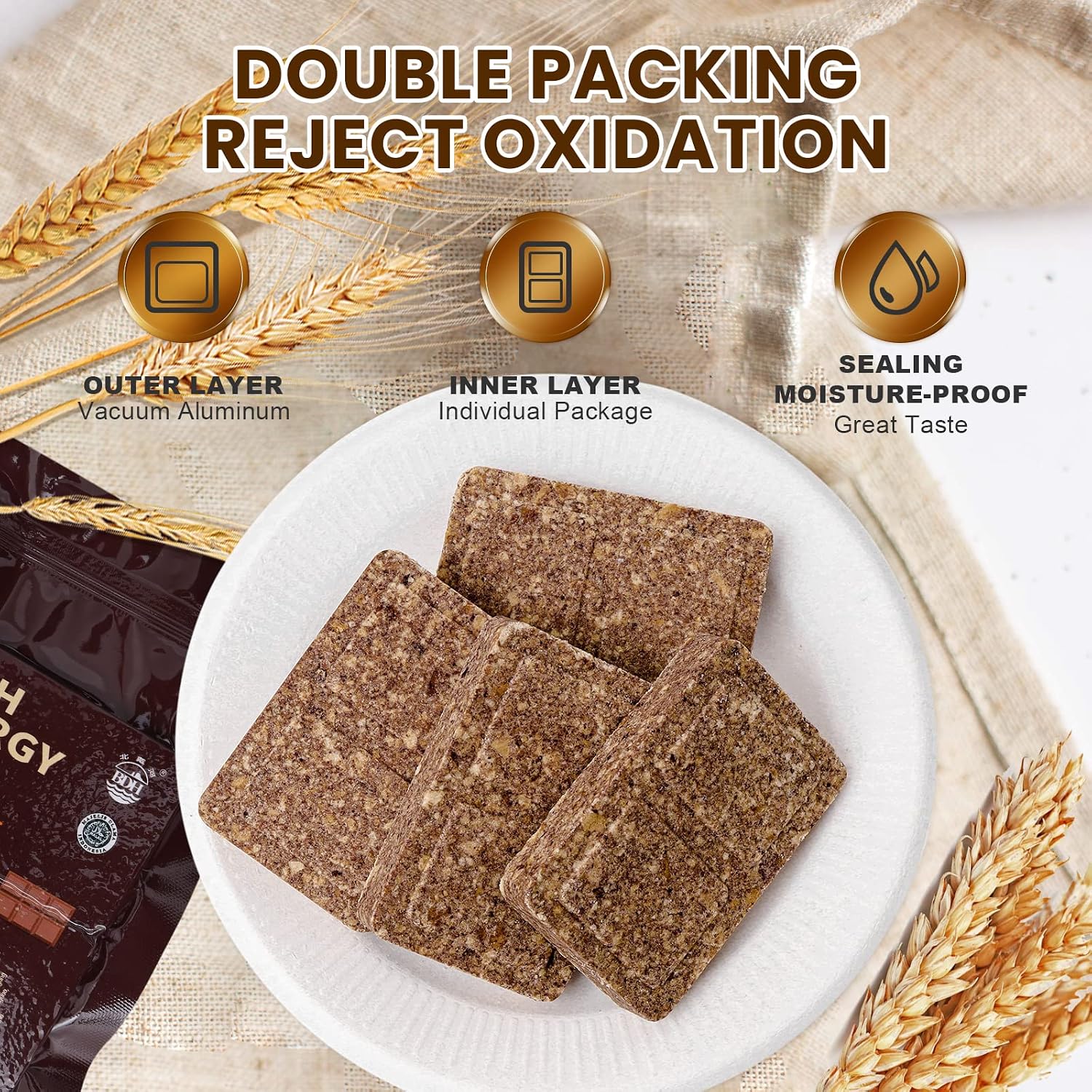
Grizzly Gear Emergency Food Ration Bars are compressed, cookie-like bars — each package typically contains 3,600 calories divided into nine individually wrapped 400-calorie portions. The design is intentional: in a real emergency, you’re not eating a “meal,” you’re eating a measured portion every few hours to keep blood sugar and energy stable. Owners consistently report the taste as a genuine positive surprise — reviewers across aggregated feedback describe them as genuinely filling and more palatable than typical survival rations, which is a low bar for survival food but a meaningful one when you’re eating the same thing for three days straight.
Survival Tabs take a different approach. These are chewable tablet-style supplements — not bars — typically sold in canisters of 180 tablets, with each tablet delivering around 20 calories. At 12 tablets per “serving,” a full serving clocks in at 240 calories, and the manufacturer rates a 180-tablet canister as a 15-day supply at the minimum survival threshold. Available in chocolate and coconut flavors, reviewers consistently emphasize that these are genuinely chewable and palatable rather than chalky or dense. The packaging quality dominates reviewer feedback: vacuum-sealed foil pouches inside heavy polyethylene outer wraps are widely described as exceptionally robust, which matters a great deal in vehicle kits exposed to temperature swings.
By the Numbers
| Grizzly Gear 3,600-Cal Bar | Survival Tabs 180-Tablet Canister | |
|---|---|---|
| Total calories | 3,600 | ~3,600 (180 tabs × 20 cal) |
| Serving size | 400 cal / portion | 240 cal / 12 tabs |
| Shelf life (sealed) | 5 years | 25 years |
| Format | Compressed bar | Chewable tablet |
| Primary packaging concern | Shipping fragility | Nearly none |
The shelf-life gap is the most important number on that table, and we’ll return to it.
Head-to-Head: Three Buying Scenarios
Best Budget Entry Point — Short-Term Home Kit
For households building a standard 72-hour home emergency kit on a budget, Grizzly Gear is the practical starting point. The per-calorie cost is competitive, the bar format is intuitive, and the nine pre-portioned 400-calorie segments make family rationing straightforward without anyone needing to count tablets or do math under stress. Taste matters more than it sounds in this scenario: emergency scenarios are already stressful, and food that doesn’t make you actively miserable is a morale variable — and morale is a performance variable. As covered in Backpacker magazine’s emergency preparedness skills coverage, palatability is one of the most consistently underweighted factors when people build emergency food kits.
The practical minimum for one adult is two packs (7,200 calories) to cover a genuine 72-hour window at moderate exertion. Supplement with jerky and nuts for protein.
Grizzly
$21.99
In stock on Amazon
Check price on AmazonBest Mid-Tier Pick — Vehicle and Go-Bag Kits
For a kit that lives in a truck, SUV, or any environment with uncontrolled temperature exposure, Survival Tabs pull ahead cleanly. Outside Online’s reporting on emergency food storage for vehicles notes that cargo areas in dark-colored vehicles can reach internal temperatures well above 120°F on summer days — a sustained heat environment that accelerates degradation in compressed-bar rations. Survival Tabs’ vacuum-sealed foil and heavy polyethylene canister format is specifically engineered for long-duration storage under adverse conditions, and the 25-year sealed shelf life reflects that engineering.
The rigid canister also resists physical crushing in a tightly loaded MOLLE bag or Pelican case better than a brick-format bar, and the two-flavor split (chocolate and coconut) introduces a small but real amount of variety that partially offsets the menu-fatigue concern that follows any single-product ration strategy.
One canister per person functions as a reliable calorie floor. Pair with freeze-dried proteins for a complete vehicle kit.
Emergency
$37.99
In stock on Amazon
Check price on AmazonBest Premium Long-Horizon Cache
For preppers building a cache meant to sit untouched for five or more years — whether in a remote location, a basement shelter, or a hardened storage container — Survival Tabs again represent the higher-value choice at the premium tier, while Grizzly Gear still earns a supporting role.
The logic is straightforward: Grizzly Gear’s 5-year shelf life means mandatory rotation every few years, which introduces a maintenance burden and a failure mode (forgetting to rotate). Survival Tabs’ 25-year shelf life means a cache stocked today remains viable well into the mid-2040s without intervention. For a long-horizon mindset, that set-and-largely-forget characteristic has real operational value.
That said, neither product should be the sole long-horizon food source. FEMA’s Are You Ready? An In-depth Guide to Citizen Preparedness recommends food supplies that account for variety over extended periods — not because calorie bars don’t work, but because sustained stress, physical exertion, and monotony compound against each other in ways that degrade both physical performance and decision-making. A complete long-horizon cache pairs Survival Tabs as the calorie floor with freeze-dried full-meal systems from providers like Emergency Essentials or Mountain House for the variety layer.
Emergency
$37.99
In stock on Amazon
Check price on AmazonThe Menu Fatigue Problem (Neither Brand Solves This)
This is the honest conversation neither product’s marketing wants to have, and it’s the most important thing in this article: calorie bars — from any brand — are not a standalone nutrition solution for most people beyond 72 hours.
Multiple Grizzly Gear reviewers independently raise this concern, framing the product as a supplement component rather than a full standalone solution. The same pattern holds in Survival Tabs reviews — the product performs as rated, but reviewers who think through multi-day scenarios consistently note that the psychological and physiological toll of eating the same thing, every day, for days on end, is real and should be planned around.
Ready.gov’s Build A Kit guidance addresses this directly: a complete emergency kit includes food that approximates normal eating patterns where possible, because variety supports sustained physical and psychological function. The decision framework by time horizon:
- 72 hours: Either product, alone, is adequate for most adults in a low-physical-exertion scenario. Add electrolytes.
- 72 hours with high exertion (evacuation on foot, physical labor): Both products under-deliver on sodium and protein. Supplement with jerky, nuts, or freeze-dried proteins.
- Beyond 72 hours: Neither product should be the sole food source. Both work as a calorie floor while you rotate in other rations — this is exactly the role they’re designed for.
Frequently Asked Questions
How many bars do you actually need for a full 72-hour emergency?
The standard guidance from Ready.gov is a minimum three-day food and water supply per person. At roughly 2,000 calories per day for a sedentary adult — and closer to 2,500–3,000 under physical stress — one Grizzly Gear 3,600-calorie pack covers approximately 1.5 days at the low end. For a full 72-hour kit for one adult, two packs is the practical minimum, three if you expect to be physically active. For Survival Tabs, a 180-tablet canister provides about 15 “minimum survival” servings at 240 calories per serving; for a true 2,000-calorie-per-day 72-hour kit, one canister covers roughly two days. Plan accordingly.
Can you survive on calorie bars alone, or do you need supplemental food?
For 72 hours: yes, physiologically, for most healthy adults. For longer periods: the answer gets complicated fast. Survival Tabs are vitamin and mineral fortified, which extends their standalone utility somewhat, but neither product adequately addresses sodium, protein, and satiety signals that become important after day two. Calorie bars are an excellent floor — they guarantee you won’t go into caloric deficit — but they work best as one layer of a kit that also includes protein, fat, and variety.
How does the packaging hold up inside a backpack or car kit exposed to heat?
Survival Tabs’ vacuum-sealed foil and polyethylene canister format is substantially more heat-resistant than the compressed-bar format. Grizzly Gear’s bars, like most compressed-bar rations, can soften in sustained heat — they remain edible but may crumble when portioned. For a vehicle kit in a hot climate, Survival Tabs’ packaging is the safer long-term bet. For a bag-based kit stored indoors or in a climate-controlled space, either works fine.
What is the realistic shelf life once the outer packaging is compromised?
Neither manufacturer publishes a formal opened-package shelf life, but the general guidance in emergency preparedness publications including coverage from Backpacker and Outside Online is to consume within two to four weeks once the outer seal is broken, stored in a cool and dry location. The long sealed shelf lives — 5 years for Grizzly Gear, 25 years for Survival Tabs — are predicated on the original seal remaining intact.
Are these appropriate for children or people with dietary restrictions?
Both products are gluten-free as currently formulated — verify current labeling before purchase, as formulations can change. Neither is appropriate for individuals with nut allergies without careful current label review. For children, caloric needs scale down: a child aged 6–12 needs roughly 1,200–1,600 calories per day, meaning portion math changes significantly. Survival Tabs’ tablet format is easier to portion precisely for smaller caloric needs than breaking up a compressed bar. People with diabetes or blood sugar regulation concerns should note that both products are carbohydrate-heavy by design; consult a physician about emergency ration planning before a scenario arises.
The If/Then Decision Rule
You don’t need both products in the same kit — but you need to be deliberate about which one you choose and why.
If your kit lives in a temperature-controlled home and you’re building a standard 72-hour family pack: Grizzly Gear’s bar format is more intuitive to ration, better received as a food experience, and the 5-year shelf life is adequate with an annual rotation check. Buy two packs per adult, supplement with jerky and nuts, and rotate on a calendar reminder.
If your kit lives in a vehicle, a remote cache, or anywhere with uncontrolled temperature exposure: Survival Tabs’ packaging specification and 25-year shelf life make it the right call. The tablet format also survives physical compression better than a bar. Buy one canister per person as a calorie floor, and pair it with freeze-dried meals or other shelf-stable protein sources.
If you’re building a long-horizon prepper cache: Survival Tabs belong there as the foundational calorie layer. Grizzly Gear’s 5-year shelf life means you’re rotating every few years; Survival Tabs let you set and largely forget until the next decade-level review. Neither replaces a full long-term food supply system — FEMA’s Are You Ready? guidance is clear that a complete preparedness food plan requires variety and nutritional completeness beyond calorie density alone — but Survival Tabs slot into that system more cleanly as a long-term component.
Neither product is a magic solution. Both are solid, honest components that do exactly what they claim. The question is whether you’re using them correctly — and now you have the framework to make that call.