If you’ve ever looked at two emergency food buckets side by side — one claiming 60 servings, the other claiming 120 — and wondered why the 60-serving option sometimes costs more, you’re already asking the right question. Emergency food storage means buying shelf-stable meals packaged to last years, so you have something to eat if a power outage, storm, or supply disruption cuts off your normal food access. The problem is that “serving” is a marketing term with no universal standard, and manufacturers use it very differently. A “serving” in one bucket might be 220 calories of potato soup — barely a side dish — while a serving in another is a full 500-calorie entrée. This guide walks you through the exact math you need to compare buckets on a level playing field, so the number on the label stops fooling you and the price-per-real-day becomes your actual decision metric.
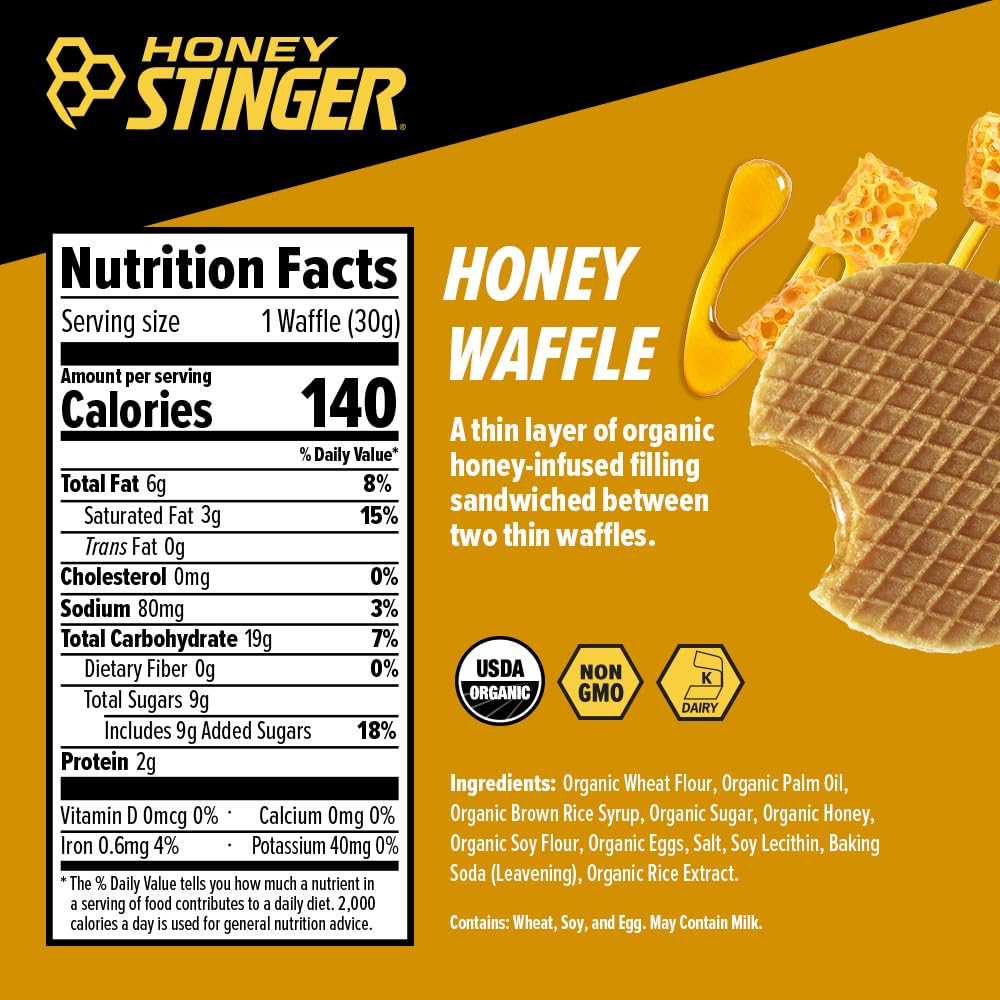
| EDITOR'S PICKReadyWise 30 Day Emergency Food… | Mid-tierMountain House Ground Beef #10… | Budget pickHoney Stinger Organic Honey Waf… | |
|---|---|---|---|
| Servings | 296 | 22 | 16 |
| Container | 2 buckets | #10 can | Box of 16 |
| Shelf life | Up to 25 years | — | — |
| Meal type | Freeze dried | Freeze dried beef | Waffle |
| Gluten-free | — | ✓ | — |
| Net weight | — | — | 16.96 oz |
| Price | $219.99 | $94.99 | $19.88 |
| See on Amazon → | See on Amazon → | See on Amazon → |
Why “Serving Count” Is Almost Meaningless on Its Own
Here’s the core problem: the emergency food industry has no enforced standard for what constitutes a serving. FEMA’s guidance document “Food and Water in an Emergency” recommends storing at least 2,000 calories per person per day as a baseline for adults doing moderate activity — the kind of activity that happens during an actual emergency. But manufacturers routinely design their “servings” around 200–250 calories, which means a bucket marketed as a “30-day supply” might actually deliver fewer than 900 calories per day if you follow the serving count literally.
The Wirecutter / NYT long-term review guide on emergency food supplies makes this point explicitly: calorie density per serving varies so dramatically across brands that straight serving-count comparisons are “nearly useless” for real planning purposes. Consumer Reports echoed this in their emergency food kit category review, flagging that some popular buckets deliver as few as 1,200 calories per day when divided by their advertised serving sizes.
The three numbers you actually need from any bucket:
- Total calories in the bucket (usually printed in small type on the back or in the product specs)
- Number of days that covers at a 2,000 cal/day baseline
- Price divided by those real days — your true cost per day
That last number is your apples-to-apples metric. Everything else is packaging.
The Math: Building Your Comparison Framework
Let’s run this with real-world examples across three tiers — entry, mid, and premium — so you can see how the numbers actually shake out.
By the numbers: sample bucket comparison at 2,000 cal/day baseline
| Product Tier | Advertised Servings | Total Calories | Real Days (÷2,000) | Street Price (May 2026) | $/Real Day |
|---|---|---|---|---|---|
| Entry (Ready America–style, 72-hr) | 36 servings | ~3,600 cal | ~1.8 days | ~$25 | ~$13.90 |
| Mid (Everlit / similar 2-week kit) | 84 servings | ~16,800 cal | ~8.4 days | ~$120 | ~$14.30 |
| Premium (Emergency Essentials 1-yr) | 2,160 servings | ~432,000 cal | ~216 days | ~$900 | ~$4.17 |
Note: Calorie totals are derived from published spec sheets. Street prices reflect aggregated retail listings as of May 2026 and will shift.
A few things jump out immediately. First, the entry and mid tiers actually cost about the same per real day — roughly $14 — despite the mid option advertising more than twice as many “servings.” Second, the premium tier from a brand like Emergency Essentials crushes both on a cost-per-real-day basis, largely because bulk purchasing and long-term contracts allow those brands to optimize calorie density per dollar. Emergency Essentials’ published product spec sheets list calorie counts per SKU, which makes this math straightforward to run yourself before you buy.
The USDA Dietary Guidelines for Americans 2020–2025 are worth referencing here: average adult caloric needs range from roughly 1,600 (sedentary woman) to 2,400+ (active man), with stress and physical labor pushing needs toward the higher end. During an actual emergency — shoveling out after a blizzard, evacuating on foot, managing a household without utilities — 2,000 is a conservative floor, not a ceiling.
The Four Hidden Variables That Change Your Real Cost
Calorie count per dollar is the primary lens, but four other variables can dramatically shift what a bucket is actually worth to you.
1. Sodium Load
High-sodium formulations are the dirty secret of low-cost emergency food. Sodium acts as a preservative and a flavor enhancer, which means budget buckets often hit 1,500–2,500mg of sodium per serving — potentially 3–5x the daily recommended intake if you’re eating multiple servings. This matters for two reasons: health (especially for anyone with cardiovascular concerns) and water consumption. High-sodium food requires more water to process, which directly stresses your water storage calculations. If you’re relying on a Katadyn gravity filter or a LifeStraw Mission to supply your water, a high-sodium food supply increases the throughput burden on that system. Check the nutrition label for sodium per serving before you commit.
2. Calorie Source Breakdown
Not all calories are equivalent in a sustained emergency. Buckets loaded almost entirely with carbohydrates (rice, pasta, potato-based meals) will leave active adults hungry and energy-depleted faster than buckets with a reasonable fat and protein distribution. The USDA Dietary Guidelines recommend roughly 45–65% of calories from carbohydrates, 20–35% from fat, and 10–35% from protein. Premium suppliers like Emergency Essentials publish full macronutrient breakdowns per SKU — a feature worth demanding from any supplier you’re considering.
3. Preparation Requirements
Most freeze-dried and dehydrated emergency foods require water and heat to prepare. That requirement links your food supply directly to your fuel and water systems. A family running a Goal Zero power station should account for electric heating capability. Overlanders and backcountry travelers need to factor BioLite or comparable stove fuel. Some meals require only cold water (slower rehydration), which matters if fuel is limited. Read the preparation requirements on every item in a bucket — some “variety” kits mix no-cook items with items that need 15+ minutes of boiling, which is a non-trivial fuel burn across a multi-day event.
4. Shelf Life Realism
The 25-year shelf life claim is the most aggressively marketed and least contextualized number in emergency food. That figure almost always applies to sealed, unopened #10 cans or pouches stored at 55–70°F. The USDA’s guidance on food storage and the Emergency Essentials spec documentation both note that every 10°F increase above 70°F roughly halves effective shelf life. A garage in Texas or an attic in the Southeast can see sustained temperatures well above 90°F in summer. For most real-world storage conditions outside a climate-controlled basement or dedicated pantry, planning around 10–15 years of effective shelf life is more realistic than 25. Understand where you’re storing before you prioritize shelf life as a deciding factor.
Tier-Specific Decision Rules
This is where we get into the “if X, then Y” framing that makes this actionable.
If you’re building a first 72-hour kit and your ceiling is around $50–$75: Don’t let serving counts on Ready America or Everlit kits influence your choice. Pull the total calorie count from the product specs, divide by 2,000, and check whether the real coverage matches the label. For a 72-hour kit, you need roughly 6,000 calories per adult minimum. If the bucket falls short, supplement with high-calorie shelf-stable additions (nut butters, trail mix) rather than buying a second “starter” bucket.
If you’re assembling a suburban household system in the $300–$800 range and comparing mid-tier brands: Your best value signal is cost per real day at the 2,000-calorie baseline, with sodium per serving as a secondary filter. A bucket that clocks in at $10–$12 per real day with reasonable sodium (<900mg per serving average) beats a lower-sticker bucket at $14+ per real day with a sodium dump. Run the math on at least three options before committing.
If you’re a committed prepper or preparedness professional investing $900–$1,500+ in a multi-year supply: The premium tier from brands like Emergency Essentials genuinely earns its per-day economics at scale — often $4–$6 per real day fully loaded, versus $13–$15 for entry/mid tiers. At that investment level, the variables that matter most are full macronutrient disclosure, rotation-ready packaging (dated cans with clear FIFO — first in, first out — labeling), and the ability to customize your SKU mix to your household’s dietary needs. Brands that publish per-SKU nutrition specs earn that scrutiny; those that don’t should be treated with skepticism regardless of their advertised serving count.
If you’re an overlander or remote-travel enthusiast building a vehicle-mounted kit: Weight and volume per calorie matters as much as cost per day. Freeze-dried meals optimized for backpacking (Mountain House, Backpacker’s Pantry) often carry a calorie-density advantage in compact packaging compared to bucket systems, even if the per-serving cost runs higher. For a vehicle kit, consider mixing a 5-day freeze-dried supply (packed by weight) with a compact bucket as base-camp backup — it lets your kit flex between mobile and stationary scenarios without carrying a 30-lb bucket on every trail.
One More Number Worth Tracking: Price Per Calorie
If you want a single universal metric that cuts through all the marketing noise, it’s this: price per 1,000 calories.
Divide the total bucket price by total calories, then multiply by 1,000. That gives you cost per 1,000 calories — a unit that’s comparable across every format, brand, and tier.
- Entry/mid buckets typically run $6–$10 per 1,000 calories
- Premium multi-year systems run $2–$4 per 1,000 calories
- Freeze-dried backpacking-style meals run $12–$18+ per 1,000 calories
Those ranges reflect May 2026 retail pricing across aggregated product listings and published brand spec sheets. They’ll drift, but the ratio between tiers is structurally stable: premium bulk systems will almost always beat entry kits on cost per calorie, because the per-unit economics of large-format production favor it.
The Wirecutter guide on emergency food supplies and Consumer Reports’ category review both effectively endorse cost-per-calorie as the anchor metric for comparison — not serving count, not day count, not the number on the lid of the bucket.
Once you’ve run the cost-per-1,000-calorie number on your candidates and filtered by sodium and macro balance, you’ve done what most buyers never do: you’ve compared what you’re actually buying, not what the label wants you to believe you’re buying. At that point, the decision is yours to make clearly.