Most emergency food guides assume you will be able to boil water. But the scenarios where you most need calories — an extended power outage, a vehicle breakdown in a remote area, a multi-day work crisis with no kitchen access — are exactly the ones where cooking is off the table. That is where no-cook emergency rations come in: compact, shelf-stable bars, tablets, or waffle-style snacks you eat straight from the wrapper. This guide focuses specifically on that category: products designed to deliver meaningful calories with zero preparation, compared honestly on taste, hydration impact, calorie density, and shelf life. If you already have a 72-hour kit with freeze-dried meals and a Goal Zero power station, think of this layer as the fast lane — what you reach for at 2 a.m. when the stove is not happening.
What These Products Actually Are (and Are Not)
No-cook emergency rations fall into three distinct product types, and conflating them leads to poor purchasing decisions.
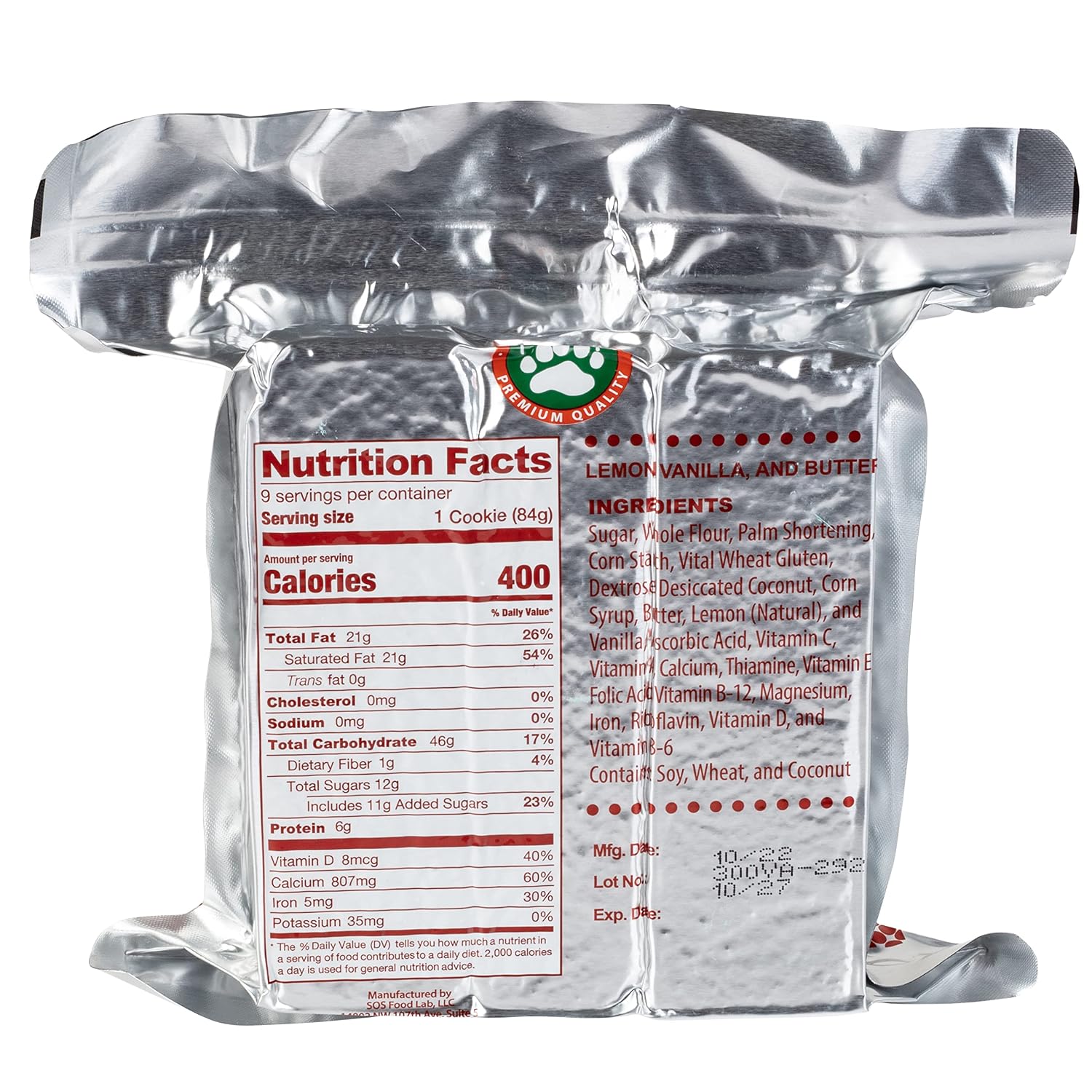
Compressed calorie bars — like Grizzly Gear Emergency Food Ration Bars and Datrex 3600 Emergency Food Ration Bars — are dense, crumbly blocks engineered around a single metric: calories per ounce at minimum water cost to digest. They are not designed to be enjoyed. FEMA’s Build A Kit guidance (2024 revision) specifically lists “ready-to-eat foods” as a kit staple and recommends products that require no water for preparation, which puts these bars at the top of the compliant list.
Tablet-format rations — most prominently Survival Tabs — compress nutrients into a chewable tablet roughly the size of a large vitamin. The format is unusual enough that buyers are often skeptical, but the concept is sound: concentrated calories and micronutrients in a nearly weightless delivery system.
Energy waffles and performance snacks — Honey Stinger Organic Waffles sit in a third category. They are not purpose-built survival rations. They are a mainstream athletic snack that earns a legitimate emergency-kit role for a specific reason: psychological comfort. That distinction matters and this guide will return to it.
Understanding which category you need — or whether you need all three in rotation — is the core decision this article will help you make.
The Grizzly Gear Stress Test: Honest Performance Under Pressure
One of the most practically useful data points in this category comes from a real-world account of a Grizzly Gear Emergency Food Ration Bar being used across multiple days of a high-pressure work project — not a wilderness scenario, but an extended, no-kitchen-access situation where the bars replaced meals entirely. The verdict from that reviewer is worth quoting closely because it captures exactly what these products are for: the bars did exactly what they claimed. Sustained energy, no preparation, no mess. But the reviewer would not choose them recreationally. That is the honest framing every buyer needs.
That is not a product failure. That is a design success. Grizzly Gear bars are formulated to the U.S. Coast Guard survival ration standard — approximately 400 calories per segment, with the full bar delivering around 3,600 calories. The flavor profile is described across reviews as “bland but inoffensive,” somewhere between shortbread and compressed flour. What reviewers consistently do not report is gastric distress, which matters enormously when stress is already elevated and sanitation options are limited.
By the Numbers — Grizzly Gear vs. Survival Tabs vs. Honey Stinger (per serving)
| Product | Calories/serving | Shelf life | Water required | Thirst-provoking? |
|---|---|---|---|---|
| Grizzly Gear Bar (1 segment) | ~400 | 5 years | None | Low |
| Survival Tabs (15 tabs) | ~240 | 25 years | None | Reported low |
| Honey Stinger Waffle (1 unit) | ~160 | ~12 months | None | Moderate |
Sources: manufacturer-published spec sheets; aggregated review data as of Q2 2026.
The calorie math here is important. FEMA’s minimum guidance for adults in a survival situation is roughly 1,200–2,000 calories per day depending on activity level, per REI’s Emergency Food Planning expert advice page. A full Grizzly Gear bar covers that range for a full day in one package. Survival Tabs require more volume to hit the same number. Honey Stinger waffles are supplemental, not primary.
Survival Tabs: The Unusual Format That Earns Its Place
Survival Tabs occupy a unique position in this market. The format — small, chewable tablets — reads as gimmicky until you do the math on shelf life. Per manufacturer-published specs, Survival Tabs carry a 25-year shelf life in sealed packaging, which dramatically outperforms most bar-format competitors. For a preparedness system built around multi-year storage (the kind of thinking that also drives purchases of Emergency Essentials food buckets and Katadyn Expedition filters), that shelf advantage is real.
One reviewer provided a rare explicit taste rating — 8 out of 10 for the chocolate flavor variant — and made two observations that are worth highlighting. First, the packaging quality was described as “almost too good,” a signal of manufacturer confidence that reviewers interpreted as a trust indicator rather than overengineering. Second, and more critically for emergency use: the tabs were not thirst-provoking. That detail deserves its own section.
Why “Not Thirst-Provoking” Is a Tactical Specification, Not a Marketing Line
When water supply is constrained — which is the baseline assumption in most emergency scenarios — the foods you eat directly affect how fast your water reserves deplete. High-sodium, high-protein, or high-sugar foods increase your body’s water demand. Backpacker’s real-world calorie testing on long routes (2024) consistently found that high-protein bars spiked perceived thirst within 90 minutes of consumption, putting additional pressure on water-carrying decisions.
Products formulated with lower sodium and moderate protein — like Survival Tabs — reduce that burden. In a 72-hour scenario where each adult is working with a fixed water supply (Datrex recommends a minimum of 9 water packets per adult per 24 hours to hit the roughly 125 ml per packet minimum), every food item that does not accelerate thirst extends that supply’s usability.
This is not a minor comfort preference. It is a systems-level decision: your food selection directly affects your water consumption rate, which affects how long your cache lasts, which affects whether you need to purify additional water and whether your Katadyn or LifeStraw Mission is in the loop.
Datrex Water Packets: A Dual-Use Item Most People Miss
Datrex emergency water packets are best known as the compact, foil-sealed water portion that ships alongside survival rations. Most buyers treat them as strictly a drinking product. One reviewer — who works in animal rescue and was experiencing homelessness at the time of the review — identified a use case that rarely makes it into gear guides: pinprick the corner of the packet and use the pressurized stream for wound irrigation.
This is not an off-label improvisation; wound flushing with clean water is a standard first-aid technique cited in wilderness medicine literature, and Outside Online’s 2023 calorie-dense trail food review notes that dual-use gear thinking is one of the core principles of lightweight preparedness packing. A 4 oz Datrex packet produces enough controlled water pressure to irrigate a minor wound before applying a dressing. That makes each packet a dual-purpose item — hydration and first aid — which changes the cost-benefit math for how many you carry.
For a family of four on a 72-hour plan, the baseline hydration math is:
- 4 adults × 9 packets minimum per 24 hours × 3 days = 108 packets minimum
- Add a 20% buffer for wound care and medication needs: ~130 packets
That volume is worth knowing before you buy, because it shifts Datrex from “a few packets in the kit” to a genuine storage-volume consideration.
Honey Stinger Waffles: The Psychological Layer Your Kit Is Probably Missing
Honey Stinger Organic Waffles are not a survival ration. They will not sustain an adult for 72 hours, their shelf life is roughly 12 months (manufacturer-rated), and they are not designed around calorie-per-ounce efficiency. None of that is the point.
Across aggregated reviews, Honey Stinger waffles consistently generate emotional language that is almost entirely absent from emergency ration reviews: “treat,” “mood-lifting,” “perfect balance,” “something to look forward to.” The thin honey-filled waffle format is gentle on the stomach, sweet without being aggressive, and — critically — familiar. In a multi-day emergency scenario, familiar tastes function as psychological anchors. Per REI’s emergency food planning guidance, morale-sustaining foods are listed alongside calorie-dense staples as a legitimate kit component, particularly for families with children.
The honest framing: Honey Stinger waffles belong in an emergency kit as the item you ration out for day 2 and day 3, when the monotony of compressed ration bars is starting to wear on the group. One per adult per day costs very little caloric budget and potentially an outsized morale dividend. If your kit is built for real-world use — not just theoretical shelf-time performance — that is a reasonable allocation.
Frequently Asked Questions
How long can I realistically survive on Grizzly Gear bars or Survival Tabs alone before I need real food?
Both products are designed for short-duration survival, not indefinite subsistence. Grizzly Gear bars meet U.S. Coast Guard 3-day ration standards. Survival Tabs are marketed for 15-day emergency use at 12 tablets per day (approximately 240 calories per serving, multiple servings daily). Nutritionally, neither provides complete long-term sustenance — both are low in fiber and may cause digestive changes after several days. The practical ceiling before most people should reintroduce varied food is around 3–5 days. Beyond that, you are in multi-week preparedness territory that requires freeze-dried meal systems.
Are emergency calorie bars actually not thirst-provoking, and why does that matter?
Some are, some are not — it varies by formulation. Survival Tabs reviewers explicitly note low thirst response. Standard Grizzly Gear bars are formulated to minimize sodium content for the same reason. High-protein or high-sodium bars, by contrast, accelerate thirst. In a constrained water scenario, the thirst response directly determines how fast your water supply depletes, which is why this is a systems-level concern rather than a comfort preference.
Can I use Datrex water packets for wound irrigation, or only for drinking?
Reviewers and field-use accounts describe pinpricking a corner of the sealed packet and using the resulting stream for wound flushing — a standard first-aid irrigation technique. The packets contain purified water rated for drinking, which meets the cleanliness standard for wound care. Carry a sterile needle or safety pin in your kit and the packets become dual-use. This is not a manufacturer-recommended use, so apply your own judgment and supplement with proper wound care supplies.
How many Datrex packets does one adult need for 72 hours of minimum hydration?
The math is straightforward: Datrex 125 ml packets at a minimum intake of roughly 1.5 liters per day equals approximately 12 packets per person per day, or 36 packets for 72 hours of baseline hydration. Add more if temperatures are high, if physical exertion is expected, or if you plan to use packets for wound care. A conservative household plan should budget 40–45 packets per adult for a 72-hour window.
Do Honey Stinger waffles belong in an emergency kit or are they just a camping snack?
Both, and the distinction matters less than the use case. Their 12-month shelf life makes them a rotation item rather than a set-and-forget ration, but within that window they serve a legitimate role as a morale food — a familiar, palatable item that helps sustain group cohesion and compliance during a stressful multi-day scenario. Build them into your kit as a supplemental layer, not a primary calorie source, and rotate them into regular use before they expire.
What is the shelf life of each product, and how do I store them in a hot car or garage?
Grizzly Gear and Datrex rations carry 5-year shelf lives under manufacturer specs. Survival Tabs are rated for 25 years in sealed containers. Honey Stinger waffles are approximately 12 months. Heat is the primary enemy of all four: sustained temperatures above 90°F (32°C) accelerate degradation and can cause wrappers to fail. For vehicle storage, use an insulated bag or a small cooler-style container to buffer temperature swings. Garage storage is more stable than a car but should still be kept away from direct sunlight and seasonal heat spikes. Rotate vehicle-stored rations every 12–18 months regardless of labeled shelf life.
The Decision Rule
If you are building a 72-hour kit for the first time: anchor on Grizzly Gear or Datrex bars for your calorie base, add one Datrex water packet case, and include a small supply of Honey Stinger waffles as a morale layer. That combination covers calories, hydration, and the psychological dimension most kits ignore.
If you are extending toward a multi-week preparedness system: Survival Tabs’ 25-year shelf life makes them the better long-horizon storage choice, ideally alongside a freeze-dried meal system for nutritional completeness after day 5. Treat the tabs as your always-ready fallback layer while freeze-dried meals serve as the primary diet.
If your primary concern is water scarcity: prioritize low-thirst-response rations (Survival Tabs, standard Grizzly Gear) over higher-protein alternatives, and factor Datrex packet volume into your water budget before assuming your current supply is sufficient. The food you choose determines how long your water lasts. Plan accordingly.