A portable power station is essentially a large rechargeable battery — the same basic idea as your phone’s battery, just scaled up to run small appliances, charge multiple devices at once, or keep critical equipment alive when the grid goes down. The capacity of these units is measured in watt-hours (Wh), which tells you roughly how much total energy is stored. An 88Wh unit holds about as much energy as a mid-range laptop battery; a 288Wh unit holds nearly three times that. The price gap between those two tiers is real — often $80 to $250 depending on features — and the capability gap is just as significant. This article maps that gap directly to the use cases that come up in emergencies and extended outages, so you can match the right tier to your actual situation rather than overspending on headroom you’ll never use, or underspending and discovering the hard way that your unit can’t do what you needed it to do.
| EDITOR'S PICKAnker Portable Power Station SO… | Mid-tierJackery Portable Power Station… | Budget pickMARBERO Portable Power Station… | |
|---|---|---|---|
| Capacity | 288Wh | 292Wh | 88Wh |
| Battery type | LiFePO4 | LiFePO4 | Lithium |
| AC output | 300W | — | 120W peak |
| Fast charging | 140W two-way | — | — |
| Solar panel | — | Optional | Optional |
| Price | $249.98 | $199.00 | $71.99 |
| See on Amazon → | See on Amazon → | See on Amazon → |
What the Capacity Numbers Actually Mean in Practice
Watt-hours are straightforward math once you anchor them to real loads. A modern smartphone draws roughly 10–15Wh per full charge. A laptop sits around 45–60Wh. A CPAP machine — the device used to treat sleep apnea by keeping your airway open while you sleep — typically runs between 30–60Wh per night on low-to-medium pressure settings, though heated humidifiers can push that significantly higher.
By the numbers — common loads vs. capacity tiers:
| Device | Typical draw per use | 88Wh gives you | 288Wh gives you |
|---|---|---|---|
| Smartphone (3,500mAh) | ~13Wh | ~5–6 charges | ~17–19 charges |
| Laptop (60Wh battery) | ~65Wh AC | ~1 full charge | ~3 full charges |
| CPAP (no humidifier) | ~35Wh/night | ~1.5 nights | ~5–6 nights |
| Power wheelchair charger | ~80–150Wh/cycle | Not realistic | 1–2 cycles |
| Compact LED work light | ~5Wh/hour | 10+ hours | 40+ hours |
Those numbers assume roughly 85–90% conversion efficiency, which is typical for quality units in this range. Wirecutter’s 2025 portable power station update — a plain-text editorial source — confirms that real-world usable capacity often runs 5–10% below the rated watt-hour figure due to inverter losses, a margin worth factoring in before cutting things too close.
Comparing the Three Tiers: Budget, Mid, and Capable
The 88Wh Tier — Phones, Lighting, and Short-Duration Laptop Power
The 88Wh units — the MARBERO M82 and HOWEASY portable stations are the names that surface most consistently in aggregated owner reviews in this sub-$100 segment — are genuinely useful tools within a narrow but important scope. Owners consistently report these units excelling at three things: phone and tablet charging, powering LED lighting for a room or campsite, and keeping a laptop alive for four to six hours of work during a short outage.
What they cannot do is run anything with a significant continuous load. A mini fridge draws 50–80W constantly. A CPAP with a humidifier pulls 75–100W. These loads hit the 88Wh ceiling fast, and the units’ inverter ratings — typically 100–150W maximum output — mean some devices will trigger overload protection before they even begin operating.
One genuine emergency feature that owners of the HOWEASY unit flag in reviews — and that almost nobody notices on the spec sheet — is a built-in LED strobe mode. Emergency personnel and owners who travel in remote areas report using this strobe for location marking during nighttime incidents, functioning comparably to a dedicated emergency beacon light. Consumer Reports’ Portable Power Stations Buying Guide (2025) notes that integrated lighting with emergency modes is an undervalued feature at this price tier.
Honest ceiling: phones, laptops, lighting, and short-duration small-device charging. If that genuinely describes your scenario — apartment dweller, 72-hour kit, no medical devices — this tier is correctly sized.
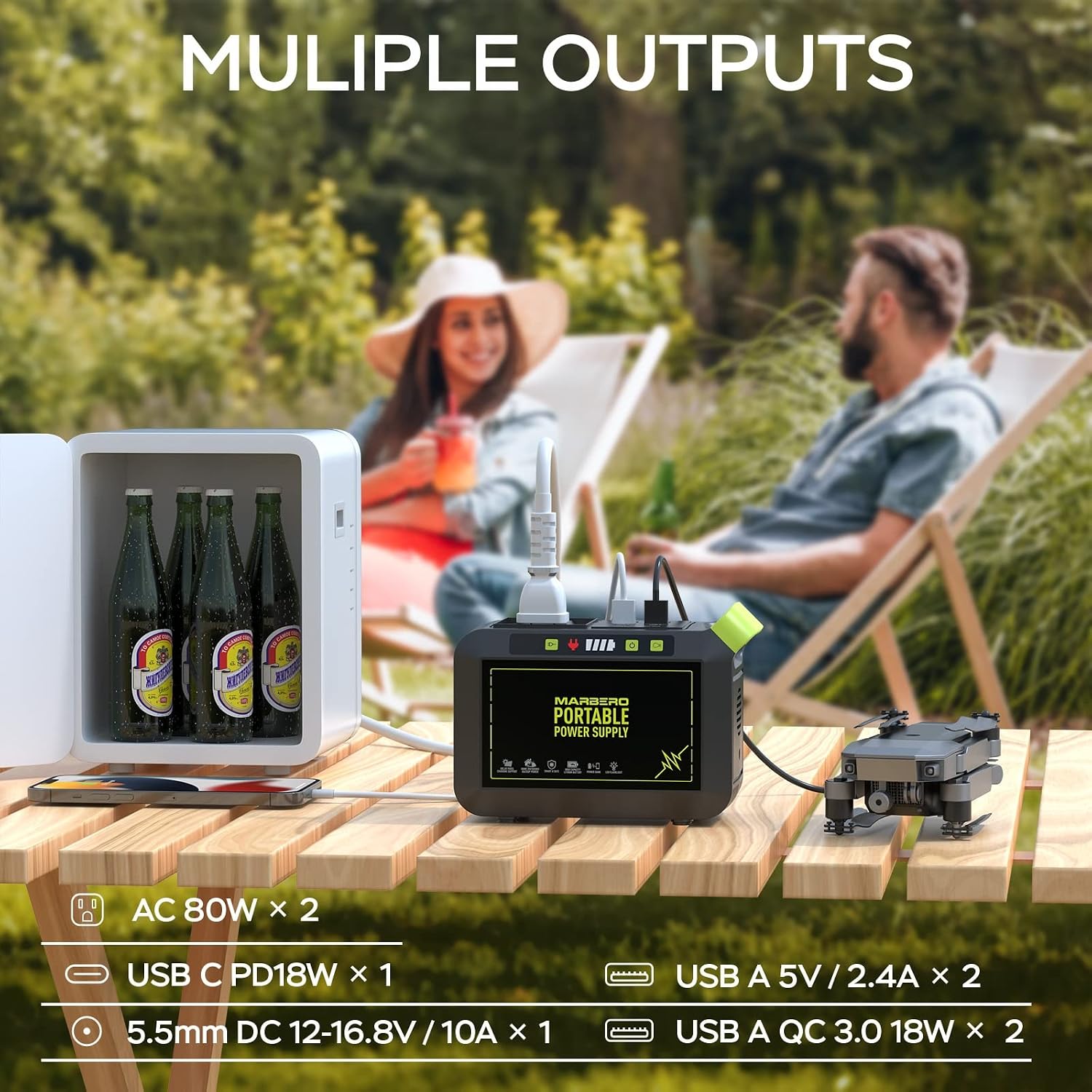
MARBERO
$71.99
In stock on Amazon
Check price on AmazonThe 240–300Wh Mid-Tier — Medical Devices and Mobility Equipment
The Jackery Explorer 300 (296Wh) occupies a meaningfully different tier in practical terms. The capacity jump to roughly 288–300Wh is enough to cross thresholds that 88Wh units simply cannot reach.
The use case that surfaces most prominently across owner reviews is power wheelchair charging. A standard power wheelchair charger draws 75–150W and requires 80–150Wh per cycle. Owners report successfully completing one to two partial charge cycles on the Explorer 300, which is enough to extend mobility meaningfully during a multi-hour outage or during vehicle travel. The unit’s 12V car adapter compatibility means charging via a running vehicle’s outlet is viable as a supplemental source. FEMA’s Power Outages preparedness guidance, published on ready.gov, specifically calls out mobility-device charging as a critical need for vulnerable household members — and the 300Wh tier is where that need becomes addressable with an entry-level unit.
The Explorer 300 also features pure sine wave output, a 300W AC inverter, and pass-through charging — meaning it can power devices while simultaneously being recharged from a solar panel or wall outlet. Wirecutter’s 2025 portable power station update cites the Explorer 300 as a reliable mid-tier option for users who need occasional appliance support beyond basic electronics.
What it cannot do: meaningfully sustain a full-size refrigerator. At 300Wh, a 100W fridge load drains the unit in roughly three hours. For fridge coverage, the math changes dramatically at the next capacity tier.
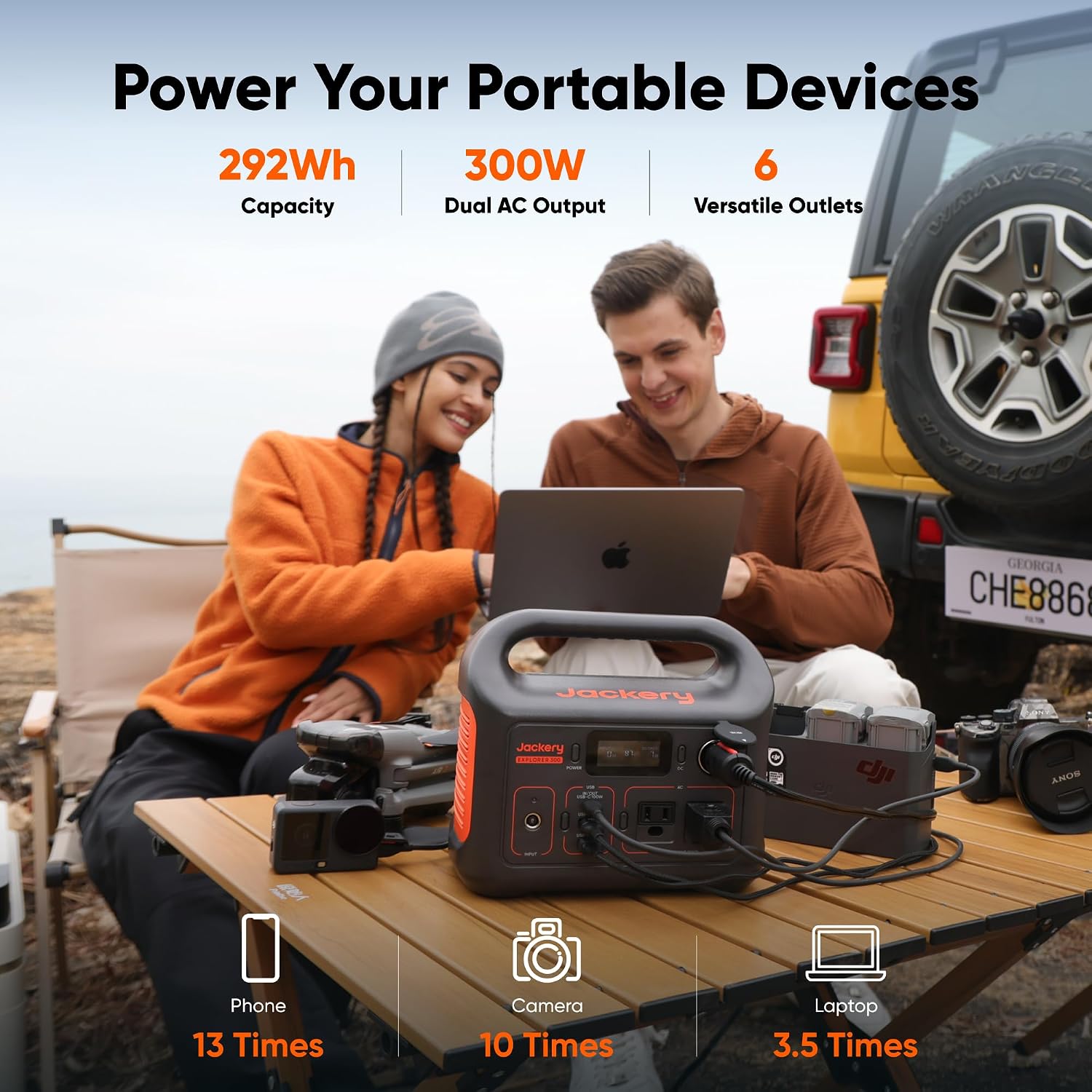
Jackery
$199.00
In stock on Amazon
Check price on AmazonThe 288Wh Ceiling Tier — UPS Behavior, Ham Radio, and the Multi-Unit Strategy
The most surprising pattern in owner reviews at this capacity tier — particularly for the BLUETTI Elite 30 V2 and the Anker SOLIX C300 — is how many owners have discovered a UPS use case that manufacturer marketing barely mentions.
A UPS (uninterruptible power supply) is a device that keeps connected equipment running instantly and seamlessly when grid power fails, with no perceptible interruption. Traditional UPS units are heavy, stationary, and designed for single-purpose server or modem protection. A portable power station isn’t marketed as a UPS — but at the 288Wh tier, with pass-through charging enabled and a fast enough switchover time, it functionally behaves like one for light loads.
Owner reviews document two specific real-world deployments worth examining. One ham radio operator — ham radio refers to licensed amateur radio, widely used in emergency communications — used the Anker SOLIX C300 specifically to bridge the 10–15 second cutover delay when a Generac backup generator kicks on during a grid outage. The C300’s pass-through mode allowed the radio stack to stay live through that gap, tested across a 72-hour outage window. For emergency communications operators, seamless bridging through a generator start cycle matters operationally.
The second deployment involves a BLUETTI Elite 30 V2 owner running a home server and full networking stack — modem, router, managed switch, and NAS device — through extended grid instability. The total load was reportedly 80–120W, yielding meaningful runtime on a 288Wh unit. Popular Mechanics’ 2024 portable power station testing overview notes that the 288Wh class has become the minimum viable tier for light home-office UPS applications, a use case that has grown significantly as remote work creates hard dependency on continuous connectivity.
The ALLWEI multi-unit strategy: One pattern emerging from ALLWEI portable station owner reviews is a deliberate multi-unit purchase — buyers acquiring two or three identical units to collectively address loads no single entry-level unit can handle. Three units at roughly 300Wh each create approximately 900Wh of combined capacity, which owners report as sufficient to run a compact refrigerator and a small chest freezer for 24-plus hours in rotation, manually swapping units as each depletes. The cost of three entry-level units often remains below a single mid-range 1,000Wh unit while offering the redundancy benefit of independently deployable units.
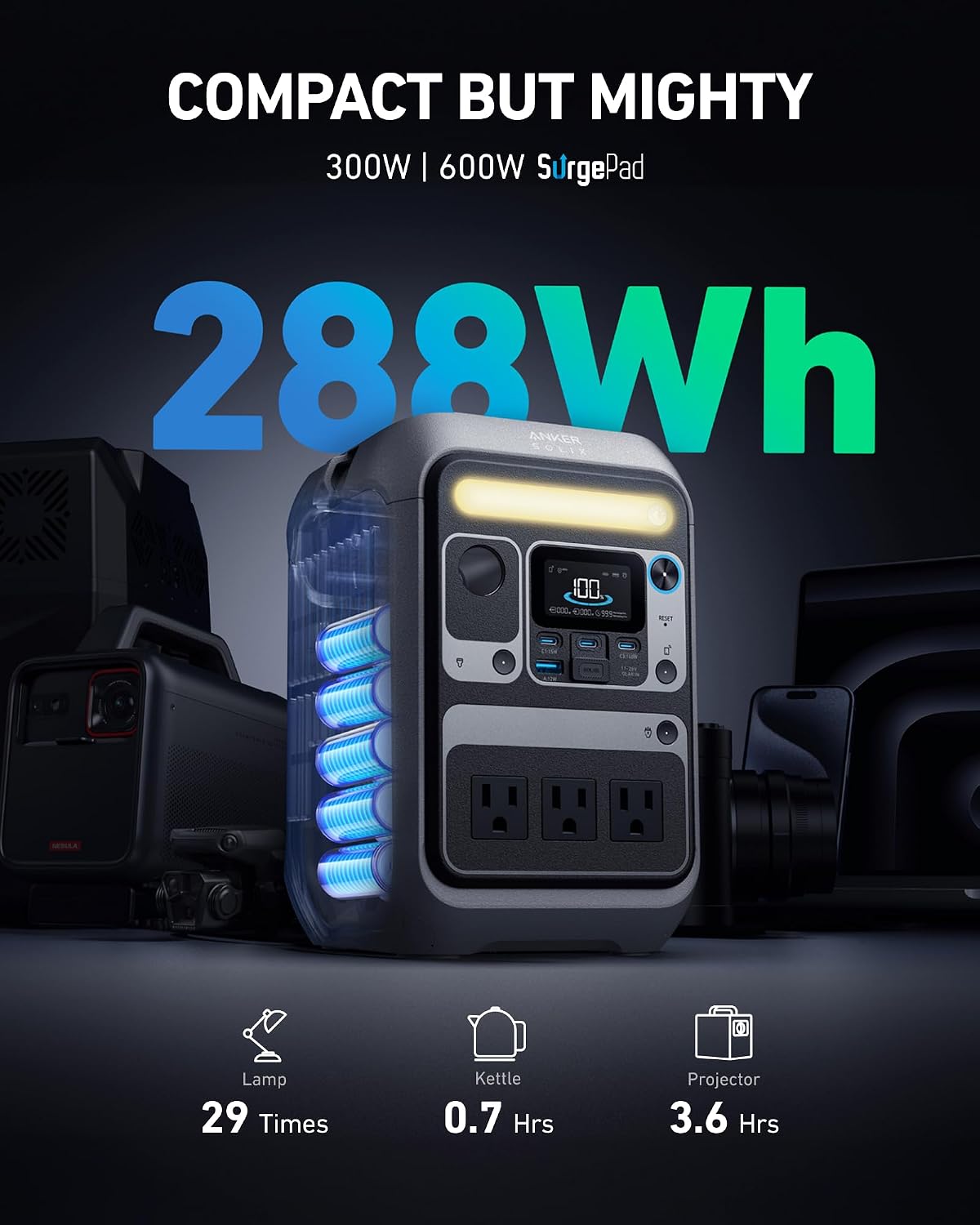
Anker
$249.98
In stock on Amazon
Check price on AmazonDecision Framework: If X, Then Y
If your primary scenario is a 72-hour kit for an apartment, with a household of one to two people and no medical devices, then the 88Wh tier covers phones, lighting, and a laptop. It is correctly sized, it is portable enough to take anywhere, and the cost-per-watt-hour is favorable.
If your household includes anyone who depends on a CPAP machine, power wheelchair, or home oxygen concentrator, then 88Wh is not a safety margin — it is a failure point. The 288–300Wh tier is the minimum, and the CPAP humidifier question specifically should drive you toward 288Wh-plus even for single-night coverage.
If your use case includes bridging a generator cutover for communications equipment, keeping a modem and router live during rolling outages, or running a home server through instability, then the Anker SOLIX C300’s documented UPS behavior makes it the decision-specific pick in this tier.
If you are outfitting a vehicle for overlanding or remote travel and need the unit to charge from a 12V car outlet or solar panel while powering devices simultaneously, pass-through capability and solar input compatibility become the filter — not just raw capacity.
If budget is genuinely the binding constraint and a single 288Wh unit won’t do what you need but the next tier up is out of reach, the ALLWEI multi-unit strategy is a legitimate workaround worth modeling against your specific load requirements before dismissing it.
Frequently Asked Questions
Can an 88Wh power station run a CPAP machine for one full night? It depends heavily on the CPAP model and settings. A basic CPAP without a humidifier, running at low pressure, typically draws 30–45Wh per night — making one full night feasible on an 88Wh unit. However, if you use a heated humidifier, which dramatically increases comfort but also increases draw to 75–100Wh per night, 88Wh is not sufficient for a full night. Check your specific device’s label for wattage; most CPAP machines list it on the power supply brick. Consumer Reports’ Portable Power Stations Buying Guide advises users of medical devices to confirm unit compatibility and draw before relying on any portable station in an emergency.
What is the difference between a UPS and a portable power station for home use? A traditional UPS is a single-purpose device, typically 200–1,500Wh, designed to switch to battery power in milliseconds — fast enough that connected computers never register the interruption. A portable power station is primarily designed for outdoor and off-grid use, but higher-quality units in the 288Wh-plus tier with pass-through charging enabled can function similarly for light loads. The key variable is switchover speed; most portable stations take 20–30 milliseconds, which is imperceptible for most devices but can cause brief resets on particularly sensitive equipment.
Does the Anker SOLIX C300 switch to battery instantly during an outage, or is there a delay? Manufacturer published specifications indicate the C300 has a switchover time rated at under 30ms in UPS mode with pass-through enabled. The ham radio operator use case referenced earlier documented successful bridging across multiple 10–15 second generator cutover events, suggesting the switchover is fast enough for communications equipment. For truly zero-interruption requirements — such as a running computer mid-write operation — a dedicated UPS remains the more reliable choice.
Can you charge a power wheelchair with a Jackery Explorer 300 in a moving vehicle? The Explorer 300 supports 12V car charging input from a vehicle outlet while simultaneously outputting power from its AC or USB ports. Multiple owners confirm successful wheelchair charger operation from the AC outlet. However, a standard 12V cigarette-lighter outlet typically supplies only 10–12A, meaning the charging input while driving replenishes the unit slowly. Plan for the unit to be pre-charged before departure and treat vehicle charging as a supplement rather than a primary source.
Is pure sine wave output required for a MacBook, or will modified sine wave work? Apple’s MacBook power adapters are switch-mode power supplies, which are generally tolerant of both pure and modified sine wave AC. Most owners report no issues running MacBooks from modified sine wave inverters for occasional emergency use. However, Popular Mechanics’ 2024 portable power station testing notes that modified sine wave can cause additional heat in some power adapters and may shorten adapter lifespan over extended use. For daily UPS-style use through rolling outages, pure sine wave is the safer long-term choice — and all of the named 288Wh-tier units in this article output pure sine wave.
How many phone charges does an 88Wh power station realistically provide? A modern smartphone battery holds roughly 12–16Wh of capacity. With inverter losses and charging inefficiency, each charge cycle consumes approximately 15–18Wh from the power station. On an 88Wh unit, that yields approximately four to five full charges in real-world use — not the six to seven that theoretical math might suggest. Owners of the MARBERO M82 and HOWEASY units consistently report four to five phone charges as the practical ceiling, which aligns with FEMA’s Power Outages preparedness guidance on ready.gov, which recommends planning for enough capacity to maintain communication across a 72-hour window — not unlimited power.