If you’ve ever stood in a sporting goods aisle staring at a wall of shiny pouches and giant cans, wondering which version of “emergency food” is actually worth buying, you’re not alone. The two main formats you’ll encounter are complete meal pouches — pre-seasoned, ready to rehydrate dishes like beef stroganoff or chicken fried rice — and freeze-dried ingredient cans, which are single-ingredient products like whole blueberries, diced chicken, or sweet corn that you cook with yourself. Both are shelf-stable for years, meaning the water has been removed to slow spoilage, but they serve very different roles in a practical food supply. This guide explains the real tradeoffs between the two, shows you how to check whether your “30-day bucket” actually covers 30 days, and ends with a clear decision framework so you can stop second-guessing and start stocking.
The Ingredient Can Advantage Nobody Talks About
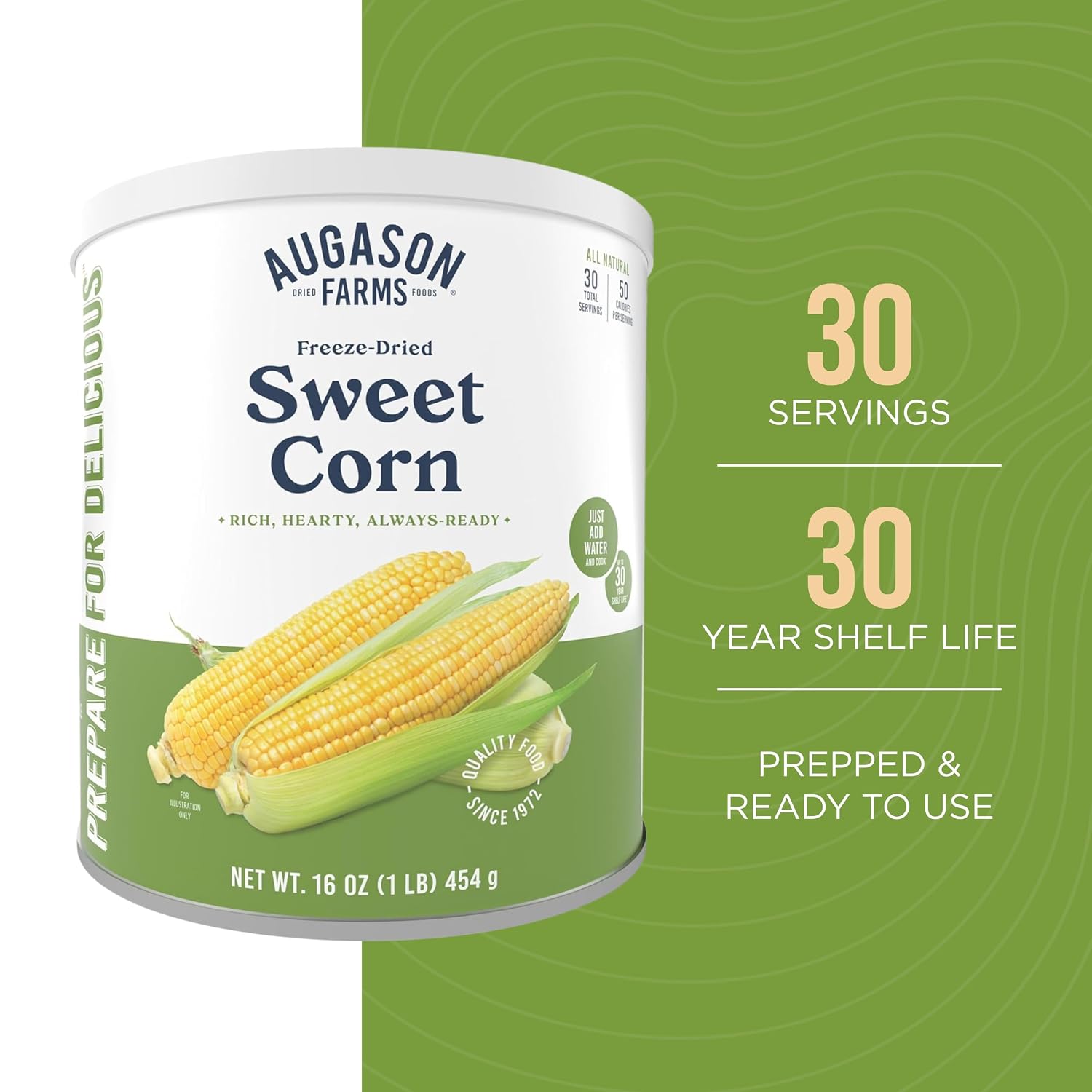
Here’s the underappreciated truth about large freeze-dried ingredient cans — the #10 can format, which is roughly the size of a large coffee can — from brands like Augason Farms: the people who get the most value out of them are using them every week, not just saving them for disasters.
Owners consistently report integrating these cans into daily cooking in ways that would surprise you. Freeze-dried corn goes into salads and trail mix. Freeze-dried blueberries get folded into muffins and morning cereal. Freeze-dried chicken works as a protein topper — some owners even report using it as a dog food supplement. This rotation matters because it solves one of the central problems with emergency food: the product actually gets used before it expires, instead of sitting in a basement until the best-by date quietly passes.
But daily-use rotation introduces a real shelf-life trap that the marketing understates. One Augason Farms blueberry can reviewer tracked opened-can quality over time and noted visible degradation within three months of opening — color loss, texture changes, flavor dulling. That directly contradicts the implied promise of “open it when you’re ready.” The sealed, unopened shelf life for a #10 can is legitimately 25–30 years under proper conditions, per Augason Farms’ own published documentation. Once the oxygen absorber is broken and the can is open, you’re working with a much shorter window.
The practical implication: if you buy ingredient cans, you need a plan for using them after opening. A 6-pound can of freeze-dried corn is a lot of corn to work through in 60–90 days. Either buy smaller quantities more frequently or commit to genuinely rotating them into your cooking.
Complete Meal Pouches: Variety Is a Real Emergency Variable
Complete meal pouches from brands like Mountain House and Peak Refuel take a different approach — the seasoning, protein, and starch are already combined, and you just add boiling water. The appeal is obvious for emergency use: minimal decision-making, predictable prep time, no measuring.
The psychological factor here is genuinely underrated. Mountain House assortment kit owners frequently highlight variety as a morale necessity — not just a preference. One reviewer noted that the variety in their kit was good enough that they didn’t avoid any item in the rotation, which is notable. In an actual emergency lasting more than 48 hours, food fatigue is real: people will undereat if they find the food unappealing, which compounds stress and impairs decision-making. FEMA’s emergency preparedness guidance (ready.gov, “Food and Water in an Emergency”) explicitly calls out palatability and dietary variety as factors in maintaining normal function during extended disruptions.
But complete meal pouches have a math problem you need to verify before buying.
Peak Refuel pouches are consistently flagged in owner reviews for a calorie-planning trap: the pouches are labeled as two servings, but the total calorie count is often 400–600 calories per pouch — meaning each “serving” is roughly 200–300 calories. For a sedentary adult, FEMA recommends planning for a minimum of 2,000 calories per day. For someone doing physical work during a disaster scenario — moving debris, hauling water, managing family logistics — 2,500–3,000 calories is more realistic. If you plan your emergency supply assuming one pouch equals one meal for one adult, you will run short. This isn’t a Peak Refuel-specific problem; it appears across the category. The only fix is to read the total calorie count per pouch, not the serving-count label.
The 30-Day Bucket Math Problem
Budget-tier 30-day emergency buckets, like the Augason Farms 30-Day Emergency Food Supply, are among the most-purchased emergency food products on the market. And the good news is that the food can actually be good: owners who tested the Augason Farms Spanish rice before any emergency reported it as genuinely delicious and easy to prepare — a direct counter to the common assumption that affordable bucket food is always a punishment to eat.
The problem is the calorie math, and it’s worth running yourself every time you evaluate a bucket.
A quick example:
| Metric | Manufacturer Claim | Real-Use Check |
|---|---|---|
| Daily calories stated | ~1,800 cal/day | Sedentary adult minimum |
| Active adult need | — | 2,200–2,800 cal/day |
| Effective coverage (active) | “30 days” | ~19–23 days |
| Cost-per-day (active, 2,500 cal) | — | Multiply unit cost ÷ real days |
The Katadyn Group’s emergency food planning guide notes that 1,800 calories per day is a widely-used floor in emergency food labeling, but it reflects sedentary conditions. If your household includes teenagers, manual laborers, or anyone managing physical stress, your real-world coverage window is shorter than the label suggests. Always divide the total calories in a bucket by your household’s actual daily calorie need — not the manufacturer’s stated daily figure.
How to Actually Mix the Two Systems
The strongest emergency pantry combines both formats, and the logic is straightforward once you map it to your scenarios.
Use ingredient cans for:
- Multi-week or multi-month supply depth, where cost-per-calorie matters
- Households that cook regularly and can rotate stock into daily meals
- Situations with reliable fuel and water for cooking
- Building nutritional variety (vegetables, fruits) that complete meal pouches tend to underweight
Use complete meal pouches for:
- The first 72 hours of any emergency, when stress is highest and cognitive bandwidth is lowest
- Situations with limited water or fuel (some pouches require less water than from-scratch cooking)
- Go-bags and vehicle kits where weight and bulk are constrained
- Households where cooking from scratch during a crisis is genuinely unlikely
A practical hybrid architecture: keep a 72-hour supply of complete meal pouches accessible (grab-and-go ready), layer in a 2–4 week supply of ingredient cans for longer disruptions, and use the ingredient cans in daily cooking to maintain rotation. This way your emergency food isn’t a separate “survival stash” — it’s an extension of your regular pantry with a longer horizon.
Frequently Asked Questions
How long does a freeze-dried #10 can actually last once it has been opened?
The honest answer is 6–12 months for best quality under good storage conditions — cool, dry, away from light — but degradation can begin faster than that. As noted above, at least one Augason Farms blueberry reviewer documented noticeable quality loss within three months of opening. Mountain House’s published FAQ places opened-can quality at “1 year or less depending on product and storage conditions.” Treat the opened-can window as a 6-month planning horizon and build your rotation around that. Do not assume “opened” equals “still shelf-stable indefinitely.”
Can freeze-dried ingredients be eaten without cooking or rehydrating?
Yes, for many products — with caveats. Freeze-dried fruits (blueberries, strawberries, raspberries) are commonly eaten dry, and the texture is like a crisp, concentrated version of the fruit. Freeze-dried vegetables and proteins are technically safe to eat dry, but the texture and palatability are poor for most people, and rehydration is strongly recommended for anything that’s meant to be a meal component. In a true no-cook emergency, fruits are your best bet for eating straight from the can. Everything else: plan for water access.
How do you calculate whether a 30-day food bucket actually covers 30 days of real calories?
Pull the total calorie count from the nutrition label (usually listed on the bucket or in the product documentation), divide by your household’s actual daily calorie requirement, then divide by the number of people in your household. Example: a bucket with 36,000 total calories ÷ 2,500 calories/day ÷ 2 people = 7.2 days of real coverage, not 30. This math is uncomfortable but essential. Per FEMA’s emergency food guidance (ready.gov), 2,000 calories per day is the stated minimum; plan higher for active adults and children going through growth phases.
Is it worth mixing ingredient cans with complete meal pouches, or should you pick one system?
Mixing is worth it — they solve different problems. Complete meal pouches reduce decision fatigue and prep complexity during high-stress, short-duration situations. Ingredient cans provide better cost-per-calorie for extended supplies and integrate into daily cooking for rotation. If you must pick one system, complete meal pouches are more forgiving for people who are new to emergency food planning. If you’ve been building your pantry for more than six months and cook regularly, ingredient cans add meaningful value.
How should freeze-dried food be stored after opening to maximize post-open shelf life?
Three levers matter: oxygen, moisture, and light. After opening a #10 can, transfer unused product to an airtight container — a mason jar with an oxygen absorber, or a well-sealed zip storage container — and keep it in a cool, dark location. The original can lid can be reseated but is not airtight after the first opening. Avoid storing near appliances that generate heat. Humidity is the primary enemy: even brief exposure to humid air accelerates degradation significantly. Silica gel packets (food-safe) added to the storage container help in humid climates. For pouches, reseal immediately with a clip or transfer to a small container — do not leave a partially-used pouch open.
The Decision Rule
If you’re stocking a 72-hour emergency kit, optimizing for a vehicle or go-bag, or building your first emergency food supply: start with complete meal pouches. They require less planning, less cooking skill under stress, and less risk of calorie-planning errors.
If you’ve already got a working 72-hour supply and you’re extending to 2 weeks or beyond, or if you cook at home regularly and want your emergency food to actually get used: add ingredient cans. Focus on high-use staples you’ll rotate — corn, blueberries, chicken — rather than products you’ll only open in an emergency.
In both cases: run the calorie math before you buy, not after. Divide total calories by your household’s real daily need. A 30-day bucket that genuinely covers your household for 30 days is a strong investment. One that covers 11 days at your real calorie level is a gap you want to know about now.