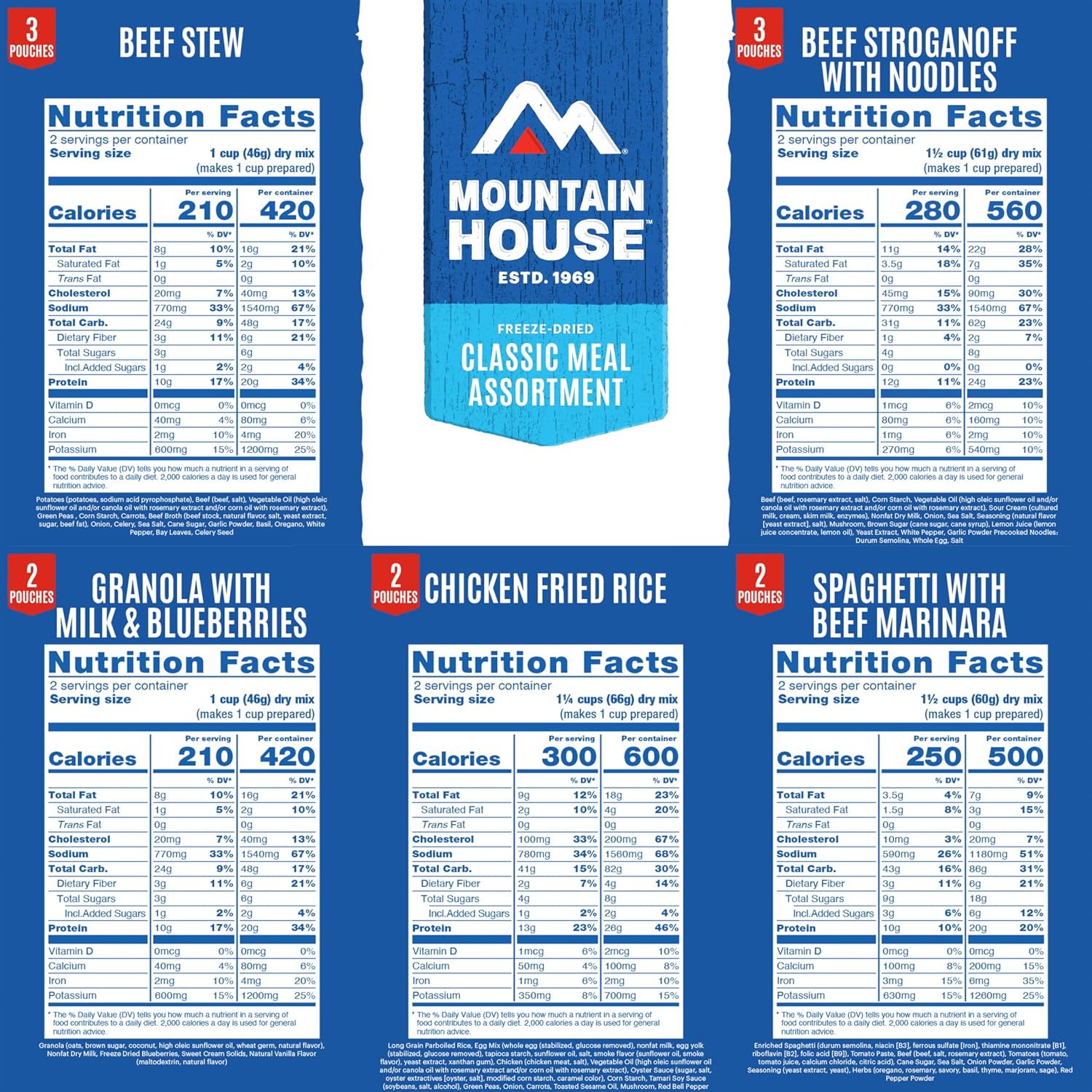
Freeze-drying is a preservation method where food is frozen solid and then dried under a vacuum so that nearly all moisture evaporates without ever becoming liquid — leaving the texture, color, and flavor almost exactly intact. Add hot water and the food reconstitutes in minutes. That’s the technology behind the growing shelf of colorful pouches at camping retailers and emergency-prep stores. If your only experience with these meals dates back to the chalky, sodium-bomb military rations of the 1990s, the current generation is genuinely different. Mountain House, Peak Refuel, and a handful of other brands have raised the bar enough that many people eat this food recreationally on camping trips — not just as a backup plan. This guide cuts through the marketing to tell you which brands and products hold up under scrutiny, how to calculate how much you actually need, and what the label won’t tell you about portions and cold-water prep.
What Makes a Freeze-Dried Meal Worth Stocking
Not all freeze-dried pouches are created equal, and the gap between a good one and a disappointing one is wider than you’d expect. The main variables are caloric density, sodium level, texture after rehydration, and — the one most manufacturers gloss over — whether the “servings per pouch” number reflects how a genuinely hungry adult eats.
The portion problem, quantified:
| Brand | Label Servings | Labeled Calories/Serving | Calories per Pouch |
|---|---|---|---|
| Mountain House Classic (most entrées) | 2.5 | ~250 | ~625 |
| Peak Refuel entrées | 2 | ~290–340 | ~580–680 |
| Mountain House Pro-Pak single-serve | 1 | ~440–480 | ~440–480 |
A moderately active adult doing emergency-scenario physical work — hauling water, moving supplies, managing stress — needs roughly 2,000–2,500 calories per day according to FEMA’s “Food and Water in an Emergency” guidance. A single standard two-serving pouch of either Mountain House or Peak Refuel delivers somewhere between 580 and 680 calories. You would need three to four full pouches per person per day to meet basic energy needs under physical stress, not the two pouches many first-time buyers assume.
REI’s Co-op Learning Center puts it plainly in their backpacking food guide: plan for a minimum of 1.5 to 2.5 pounds of dry food per person per day on strenuous outings, with calorie targets trending toward the higher end when weight loss is not a goal. Emergency situations are closer to strenuous outings than rest days.
Mountain House: The Brand With a Track Record Nobody Can Fake
Mountain House has been sold via mail-order catalog since the 1960s. There are reviewers currently writing online who reference buying their first pouches before the internet existed — a depth of brand loyalty that no newer entrant has earned yet. That longevity is itself a data point: the company has had decades to iron out quality control, oxygen-barrier pouch technology, and the formulas that hold up to scrutiny.
What owners consistently say: The Spaghetti with Beef Marinara comes up repeatedly in aggregated reviews for one specific practical quality — it is forgiving of inexact water measurement. In a real emergency, you may be boiling water over a camp stove in the dark, measuring by feel rather than a marked cup. Mountain House’s Spaghetti dishes tolerate a modest underpour or overpour without becoming gummy or watery in a way that other entrées don’t. That’s not a small thing. Stress degrades fine motor control and attention to detail; a meal that works even when you eyeball the water is genuinely more useful than one that requires precision.
The Mountain House Pro-Pak line addresses the portion problem directly by offering single-serve pouches with higher per-pouch calorie counts (typically 440–480 calories). For a 72-hour kit — the standard emergency-preparedness minimum recommended by ready.gov — these are worth the small premium over the classic multi-serving pouches, simply because the math is easier: one Pro-Pak per meal, no leftovers to store.
Shelf life: Mountain House’s published spec on their classic pouches is a 30-year taste guarantee. The Prepared’s long-term emergency food supply review notes this is one of the few manufacturer claims in the category that independent testers have found credible, because Mountain House publishes oxygen and moisture specs for their pouch seals rather than just asserting a number.
Peak Refuel: Best Taste, Honest Caveats
Peak Refuel generates the most consistent pattern of any brand in aggregated reviewer feedback: the taste is genuinely praised — not “good for emergency food” praised, but flat-out good. Reviewers who eat backpacking meals recreationally tend to rank Peak Refuel entrées above Mountain House on flavor. The Beef Pasta Marinara and the Chicken Alfredo Pasta come up most often in this context.
The caveat is equally consistent and worth naming directly: the two-serving label is misleading for genuinely hungry people, especially after physical exertion. Across multiple independent reviews, buyers report eating the entire pouch in one sitting and being satisfied — not because they were being gluttonous, but because the actual calorie count per pouch (typically 580–640 calories) is appropriate for one moderately hungry adult, not two. One reviewer’s account of finishing the Beef Pasta Marinara solo is not an outlier; it is the norm. Plan your Peak Refuel quantities accordingly: buy per person, not per “serving.”
Outside Online’s review of the best freeze-dried backpacking meals notes that Peak Refuel specifically earns high marks for ingredient quality and protein density compared to category averages, which translates directly to satiety — you stay full longer per calorie consumed. For athletic or physically active emergency scenarios, that matters.
Shelf life: Peak Refuel’s published shelf life is 25 years for sealed pouches, stored under the standard conditions (cool, dry, away from direct light). That’s five years shorter than Mountain House’s claim, which is worth factoring into long-term rotation planning but not a dealbreaker for most households.
The Cold-Water Question Nobody Puts on the Label
Here is one of the most useful practical data points in this category, and it rarely gets space in official marketing materials: freeze-dried meals can be rehydrated with room-temperature or cold water in a genuine emergency — just more slowly.
A reviewer of Peak Refuel’s Biscuits and Sausage Gravy documented successful cold-water rehydration. The meal took considerably longer than the standard hot-water prep time (roughly 20–30 minutes versus 8–10 minutes), the texture was slightly different, and warm is clearly preferable — but the meal was edible and functionally reconstituted without a heat source.
This matters because the disaster scenario that disrupts your food supply may also eliminate your ability to boil water. A broken camp stove, a gas line shut-off, an extended power outage without a propane backup — these are not edge cases. The Outside Online review of freeze-dried meals makes the same point: knowing cold-water rehydration works is a meaningful capability gap between freeze-dried pouches and the hot-water-only options like instant noodles or dehydrated (not freeze-dried) meals.
Practical cold-water protocol based on aggregated reviewer reports:
- Add cold or room-temp water at the standard volume listed on the pouch
- Seal the pouch, knead gently, and wait 20–30 minutes minimum
- Expect slightly softer or slightly firmer texture depending on the entrée
- Entrées with larger protein chunks (beef stew, chicken dishes) rehydrate less completely than pasta or grain-based meals
Storing Open Pouches: The Detail Most Buyers Skip
The pouch technology that gives these meals a 25–30-year shelf life depends entirely on the oxygen barrier staying intact. Once you open a pouch, that protection is gone. If you eat half a Mountain House or Peak Refuel pouch and want to save the rest, here is what the guidance supports:
- Roll and clip the top tightly — the pouch’s mylar construction slows but does not stop oxygen ingress after opening
- Consume within 1–2 weeks maximum if stored in a cool, dry location; the meal will not spoil immediately but will begin absorbing ambient moisture and lose texture quality
- Do not refrigerate an open mylar pouch — condensation accelerates moisture absorption
- Transfer leftovers to an airtight container (like a zip-lock bag with air pressed out) if you anticipate not finishing the pouch within 24 hours
For emergency-kit purposes, the cleanest solution is to build your rotation around single-serve formats — the Mountain House Pro-Pak line, or Peak Refuel’s smaller-format options — so that every pouch is a complete meal for one person. This eliminates the partial-pouch problem entirely and simplifies calorie counting under stress.
Mountain House vs. Peak Refuel: The Decision Frame
If your priority is long-term emergency storage (5+ years, buy-and-forget rotation): Mountain House is the clearer choice. The 30-year taste guarantee is backed by more published technical documentation than any other brand in the category, the brand has a four-decade track record of consistent product, and the forgiving water-measurement tolerance makes it more practical under real-emergency conditions. The Prepared’s emergency food review explicitly calls Mountain House the benchmark for this use case.
If your priority is palatability for frequent camping use with emergency backup: Peak Refuel wins on taste by a meaningful margin in aggregated reviewer consensus. The 25-year shelf life is still excellent. The tradeoff is the portion label issue — account for it in your purchase quantity and you eliminate the frustration entirely.
If you are building a first 72-hour kit on a budget: Start with Mountain House classic pouches, buy per-person rather than per-serving, and plan for three to four pouches per person per day. The math is simple and the brand’s reliability removes one variable from an already complicated planning process.
The one decision that belongs in both camps: verify cold-water rehydration works with at least one pouch from your actual stock before you need to rely on it. The scenario where you have freeze-dried food but no heat source is realistic enough that confirming your specific product handles it is thirty minutes well spent.
Frequently Asked Questions
Can freeze-dried meals be prepared with cold or room-temperature water in an emergency? Yes. Aggregated reviewer accounts — including a documented cold-water rehydration of Peak Refuel Biscuits and Sausage Gravy — confirm it works. Expect 20–30 minutes of soak time instead of 8–10, and slightly altered texture. Pasta and grain-based entrées rehydrate better cold than large protein chunks. It is not ideal, but it is genuinely functional.
How many pouches does one adult actually need per day? Based on FEMA’s published calorie guidance for emergency situations (2,000–2,500 calories for an active adult) and the actual calorie counts on standard Mountain House and Peak Refuel pouches (580–680 calories per pouch), plan for three to four standard pouches per person per day under physical stress. Two pouches per day is a survivable minimum for a sedentary adult but not a comfortable baseline.
What is the actual serving size discrepancy? The label says two servings. Aggregated reviewer data consistently shows that one hungry adult — particularly after physical exertion — eats the entire pouch in one sitting and reports appropriate satiety. The “two-serving” label appears calibrated for sedentary conditions or lighter appetites, not emergency-scenario physical output.
How should you store an open freeze-dried pouch? Roll the top tightly and store in a cool, dry location away from direct light. Consume within one to two weeks. For longer storage, transfer contents to an airtight bag with air pressed out. Do not refrigerate (condensation accelerates moisture damage). The cleanest solution is to buy single-serve formats so every pouch is consumed in one sitting.
Is Mountain House or Peak Refuel better for long-term emergency storage versus camping use? Mountain House for long-term storage: 30-year published taste guarantee, more technical documentation, forgiving prep tolerances. Peak Refuel for recreational camping where palatability is the priority: stronger taste reviews across the board, with a 25-year shelf life that remains excellent for most planning horizons. Both work for either use case; the distinction matters most at the margins of each scenario.