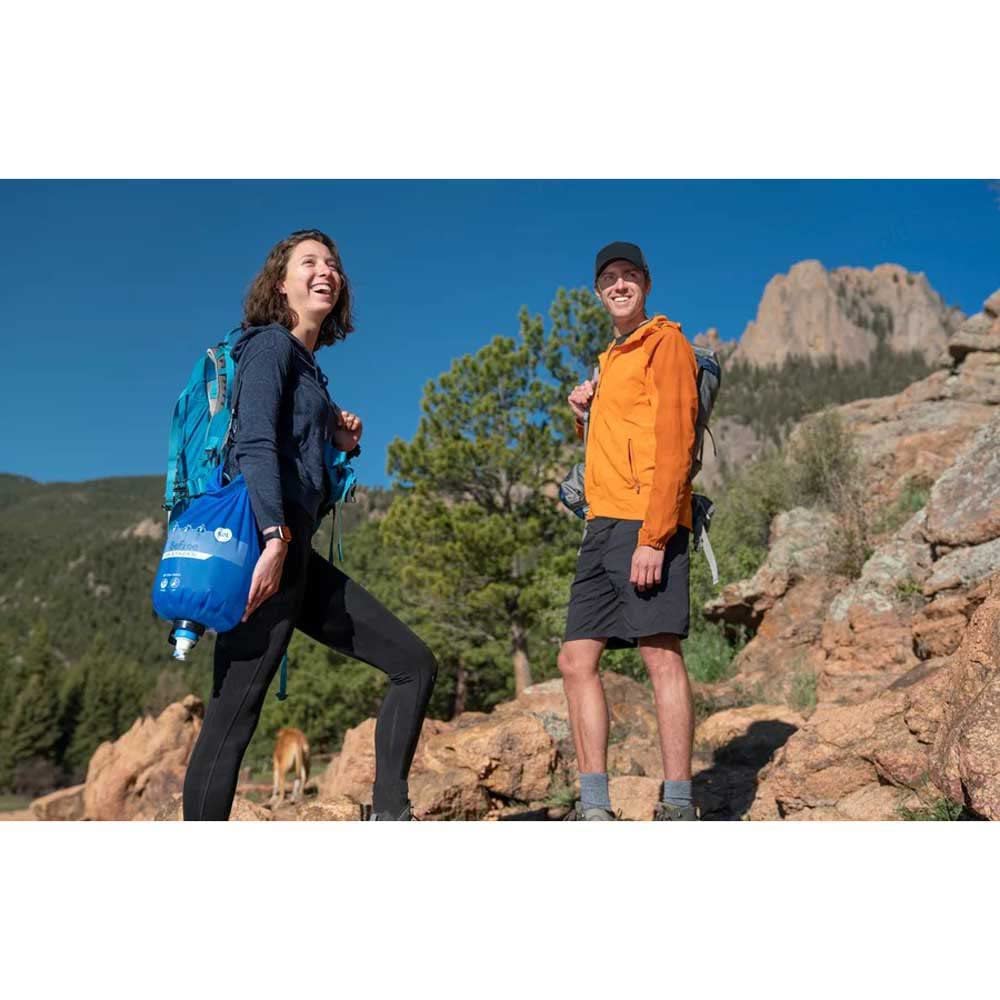
A gravity water filter works exactly the way it sounds: you hang a bag of untreated water up high, let gravity pull it down through a filter cartridge, and clean drinking water collects in a reservoir below — no pumping, no batteries, no hand cranking required. That simplicity makes gravity filters the default choice for group camping, but it also makes them surprisingly useful for home emergency preparedness, where you may need to process large volumes of water during an extended power outage after a hurricane or major storm. This article compares three systems that consistently dominate expert reviews — the Platypus GravityWorks, the Katadyn BeFree Gravity, and the LifeStraw Mission — across the variables that actually matter when you’re buying for a group: output speed, pack weight, durability under sustained use, and emergency-home viability. By the end, you’ll have a clear decision rule based on your group size and use case.
| EDITOR'S PICKPlatypus GravityWorks Group Cam… | Mid-tierKatadyn BeFree Gravity Water Fi… | Budget pickLifeStraw Mission — High-Volume… | |
|---|---|---|---|
| Capacity | 6L | 6L | 12L |
| Filter Pore Size | — | 0.1 micron | — |
| Filter Life | — | 1,000L | — |
| BPA-Free | — | ✓ | — |
| Storage Bag | ✓ | — | — |
| Price | $154.95 | $119.73 | $114.00 |
| See on Amazon → | See on Amazon → | See on Amazon → |
The Three Contenders at a Glance
Before going deep on each system, here is the numeric baseline drawn from published manufacturer specifications and aggregated owner reporting:
| System | Rated Flow Rate | Filter Life | Weight (system) | Virus Removal |
|---|---|---|---|---|
| Platypus GravityWorks 6L | 1.75 L/min | 1,500 L | ~340 g (12 oz) | No |
| Katadyn BeFree Gravity 3L | ~2 L/min | 1,000 L | ~195 g (6.9 oz) | No |
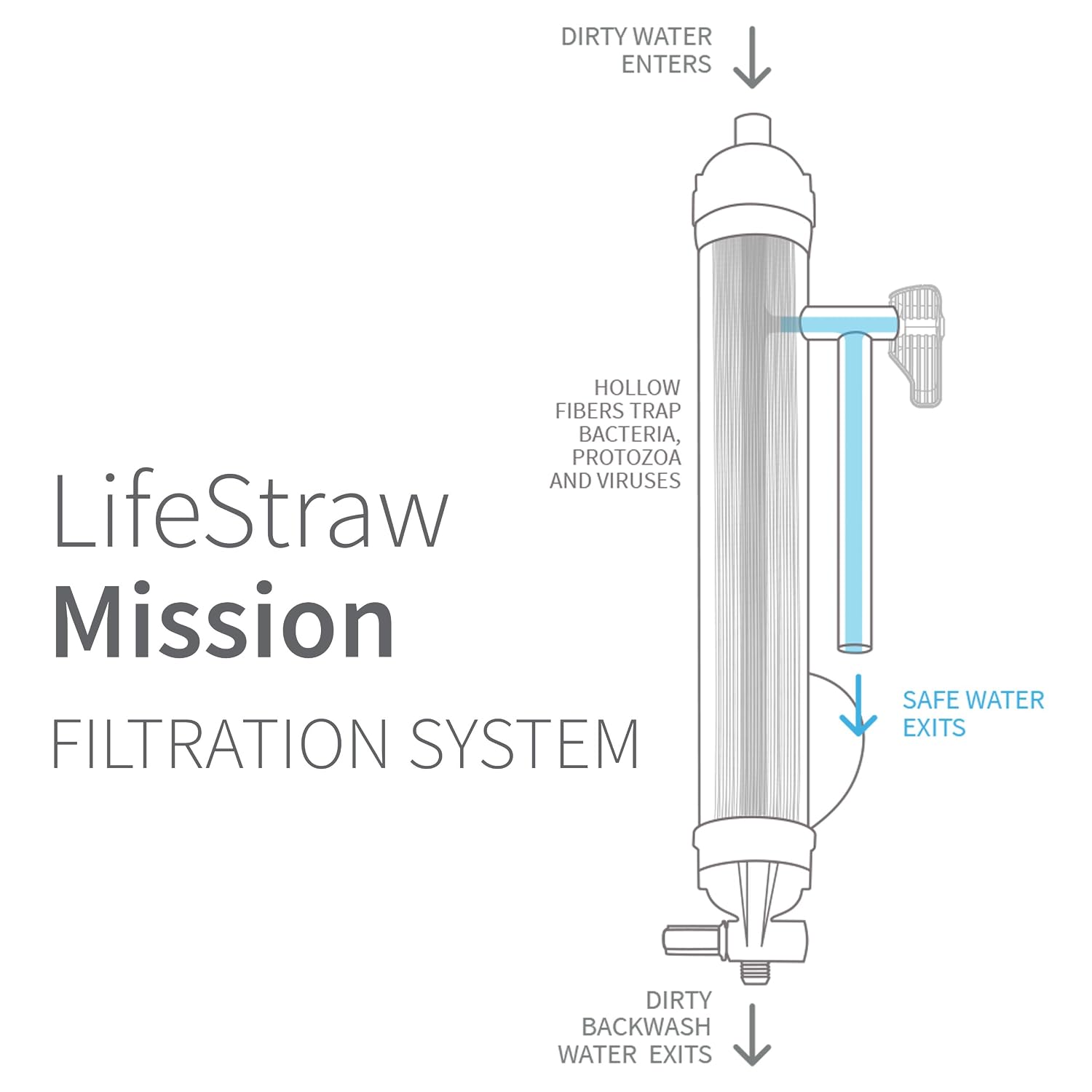
| LifeStraw Mission 12L | 9–12 L/hr | 18,000 L | ~480 g (17 oz) | Yes |
A few clarifications before moving on: “filter life” is the manufacturer’s rated capacity before the cartridge must be replaced or backflushed into retirement. Flow rates reflect ideal lab conditions; owners consistently report somewhat slower real-world speeds, especially as filters load up with particulates. The virus removal column is the single biggest decision variable for emergency preparedness use — more on that below.
Head-to-Head: Each System Evaluated
Platypus GravityWorks: The Group Camper’s Workhorse
The GravityWorks has earned a reputation as the most reliable everyday system for camping groups of four to eight people. The 6L version is the one most long-run reviewers recommend for groups — the 4L is adequate for two people, but owners consistently report that actual household or campsite water demand runs higher than they estimated going in. More on that size-regret pattern later.
What owners and reviewers say: The flow rate is steady and predictable. The included carrying case keeps the dirty bag, clean bag, hose, and filter organized as a single kit, which matters when you are breaking camp in low light. The shutoff clamp on the hose is a small feature that earns outsized praise — it stops you from losing water when you swap containers. REI Expert Advice documentation on water filter selection identifies the GravityWorks as a benchmark system for groups, citing its combination of output volume and ease of use as primary strengths.
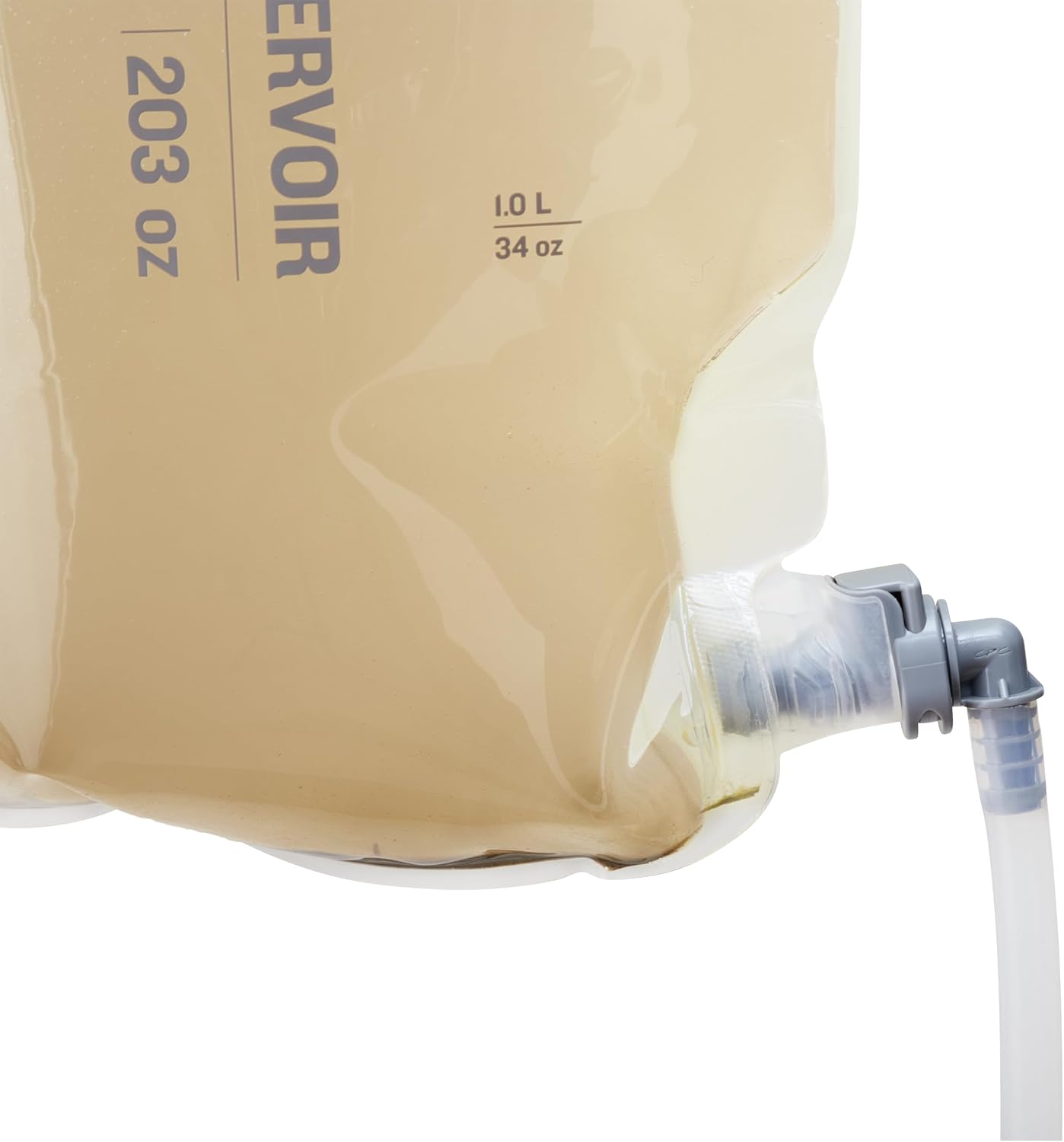
The DIY basecamp spigot mod: A recurring tip in long-run owner reviews is worth implementing immediately. Replace the standard outlet hose barb with a hydration tube quick-connect adapter (the same style used on most hydration reservoir brands). With a low-cost adapter from any outdoor gear shop, you can connect the GravityWorks clean reservoir directly to a standard camp kitchen dispenser, a collapsible jug with a spigot tap, or a countertop mount. The result is a gravity-fed basecamp water station that does not require you to hold the bag every time someone fills a bottle — it becomes infrastructure rather than equipment.
The tradeoff: GravityWorks does not remove viruses. It removes bacteria and protozoa — including Giardia and Cryptosporidium — through hollow-fiber membrane filtration. For backcountry use in North America where viral contamination is rare, this is not a practical limitation. For international travel or post-disaster urban water sources where sewage contamination is possible, it is a meaningful gap. Backpacker Magazine’s annual water filter review series consistently notes this distinction when separating filter-class from purifier-class products.
Katadyn
$119.73
In stock on Amazon
Check price on AmazonKatadyn BeFree Gravity: Speed and Packability at a Price
The BeFree Gravity system uses Katadyn’s EZ-Clean membrane — the same technology in the popular BeFree personal bottle filter — scaled up into a hang-and-drip configuration. The result is the fastest flow rate of the three systems per liter of reservoir capacity, and by far the lightest overall package.
What owners and reviewers say: Speed and compactness are the consistent highlights. The EZ-Clean membrane is field-cleanable by swishing the filter in clean water or backflushing — Outside Online’s backcountry purifier roundup consistently identifies the BeFree cartridge as the easiest gravity filter membrane to maintain in the field. For overlanders and adventure travelers already managing tight pack space, that packability has genuine operational value.
Where it earns criticism: The 3L reservoir is the system’s practical ceiling, which means for a group of four on a full-day outing, you are hanging and waiting multiple times. The filter life is rated at 1,000 L — the lowest of the three systems reviewed here — which means higher long-run cartridge replacement costs if this becomes your primary system. Like the GravityWorks, the BeFree Gravity does not remove viruses. Katadyn’s published product documentation is explicit: the BeFree membrane removes bacteria and protozoa only. While packability is a genuine advantage for solo travelers, it tips the other direction for base camps where you want to set up a water station and walk away.
Decision frame: BeFree Gravity is the right call when packability and flow speed per ounce are your primary constraints and your group is two to three people. For groups of four or more, the smaller reservoir starts working against you.
LifeStraw
$114.00
In stock on Amazon
Check price on AmazonLifeStraw Mission: Built for Emergencies, Proven in the Field
The LifeStraw Mission operates on a different design philosophy than the other two systems. It is a high-volume hollow-fiber purifier — that word matters — meaning its membrane is independently rated to remove viruses in addition to bacteria and protozoa. That single specification makes it categorically different for emergency preparedness use.
What owners and reviewers say: Aggregated reviewer data shows a markedly different buyer profile for the Mission compared to the GravityWorks or BeFree. Multiple owners describe purchasing the Mission specifically for hurricane aftermath scenarios, where municipal water may be offline or contaminated for days. Outside Online’s water purifier roundup explicitly positions the Mission as the benchmark system for international and emergency use cases where water source quality is unknown. At 18,000 L of rated filter life, the Mission is in a different durability class from the other two systems — enough water for a family of four drinking the FEMA-recommended minimum of one gallon per person per day for several years of storage life.
The 12L reservoir processes a meaningful batch without requiring constant attention. The roll-top dirty bag earns consistent praise for durability. The system ships with a backwash syringe for field maintenance, and LifeStraw’s technical documentation rates the Mission for use in high-turbidity (cloudy, sediment-heavy) water with basic pre-filtering.
The tradeoff: The Mission is heavier than either competing system at approximately 480 grams, and it is priced above both. For backpacking where every gram is negotiated, that weight budget is hard to justify unless virus removal is a real operational requirement. For emergency home preparedness, vehicle emergency kits, or group overlanding where the Mission lives in a dry bag until needed, those tradeoffs largely disappear.
Platypus
$154.95
In stock on Amazon
Check price on AmazonThe Size-Regret Pattern — Read This Before You Buy
Across owner reviews for all three systems, a recurring theme emerges: buyers consistently wish they had purchased a larger size. This pattern is nearly universal and worth internalizing before you finalize a purchase. Real consumption — accounting for cooking, dish rinsing, and the tendency to drink more when water is freely available — runs meaningfully higher than the “two liters per person per day” figure most first-time buyers use for planning.
FEMA’s emergency water guidance, published at ready.gov under the Emergency Water Supply Planning Guide, recommends one gallon (approximately 3.8 liters) per person per day as the minimum planning figure, not two liters. That is nearly double the common estimate, and it means a group of four needs roughly 15 liters per day at FEMA’s floor — before cooking or hygiene use.
The practical implication: if you are on the fence between the 4L and 6L GravityWorks, reviewers with camping groups of four or more consistently land on the 6L version as the correct call. If you are considering the Mission and wondering whether 12L is excessive, the owners who use it for extended home emergency preparedness almost universally report it is not.
Frequently Asked Questions
How many liters per hour does each gravity system produce? Published manufacturer specifications put the Platypus GravityWorks at approximately 1.75 liters per minute under ideal conditions, the Katadyn BeFree Gravity at approximately 2 liters per minute, and the LifeStraw Mission at 9–12 liters per hour. Owners consistently report real-world rates at the lower end of those figures, especially as filters accumulate use between cleanings. REI Expert Advice on water filter selection notes that hanging height and source water turbidity are the two variables with the greatest effect on real-world gravity filter output.
Can I use a gravity filter for in-home emergency preparedness, not just camping? Yes, and this is an underused application. All three systems function indoors — you hang the dirty bag from a cabinet handle, shower rod, or purpose-built hook and let it drip into a clean container below. The LifeStraw Mission is the strongest choice for this application because its virus-removal rating accounts for the uncertainty of post-disaster municipal water contamination. FEMA’s ready.gov Emergency Water Supply Planning Guide explicitly recommends treating tap water as potentially unsafe following major infrastructure events, which is exactly the scenario where the Mission’s purifier-class rating matters.
What is the difference between the 4L and 6L Platypus — is the weight difference worth it? The 4L GravityWorks weighs approximately 255 grams; the 6L weighs approximately 340 grams — an 85-gram difference. For solo backpacking, that delta is meaningful. For group camping of four or more people, owner consensus reported across Backpacker Magazine’s filter coverage is consistent: the 6L is the right size, and the weight difference is irrelevant compared to the re-fill frequency you avoid.
How do you clean and store a gravity filter between uses? Standard practice per manufacturer documentation and REI Expert Advice on water filter maintenance: backflush the filter cartridge with clean water after each trip, allow it to air-dry completely before sealing in storage, and never store a damp filter in an enclosed bag due to mold risk. For long-term storage between seasons, check your specific system’s manual for guidance — procedures for long-duration storage vary between the GravityWorks, BeFree, and Mission.
Does the Katadyn BeFree remove viruses? No. Katadyn’s published product documentation for both the BeFree bottle filter and the BeFree Gravity system is explicit: the EZ-Clean membrane removes bacteria and protozoa only and is not rated for virus removal. For North American backcountry use, this is rarely a practical concern. For international travel or post-disaster urban water sources, it matters — and the LifeStraw Mission is the appropriate alternative.
How do I rig a gravity filter as a permanent countertop water station? The GravityWorks spigot mod described above is the most accessible approach. Mount a hook to suspend the clean reservoir at countertop height, replace the outlet hose barb with a hydration tube quick-connect adapter, and route the outlet hose to a food-grade container below. For a more permanent setup, several Mission owners describe securing the dirty bag to a kitchen shelf bracket and routing the outlet into a BPA-free storage container — creating a gravity-fed purifier station that requires only daily re-filling of the dirty bag.
The Decision Rule
- Groups of four to eight people — camping or basecamp: Platypus GravityWorks 6L. Do the spigot mod on day one.
- Solo traveler, adventure motorcyclist, or weight-constrained overlander: Katadyn BeFree Gravity 3L.
- Home emergency preparedness, hurricane readiness, international travel, or any situation where sewage contamination of the water source is plausible: LifeStraw Mission 12L — no close second.
The universal caveat applies across all three: whatever size you are considering, the owner data and FEMA’s minimum planning figures both point the same direction — go one size larger than your initial estimate. Water demand in groups, and in sustained home emergencies, is reliably higher than it looks on paper.