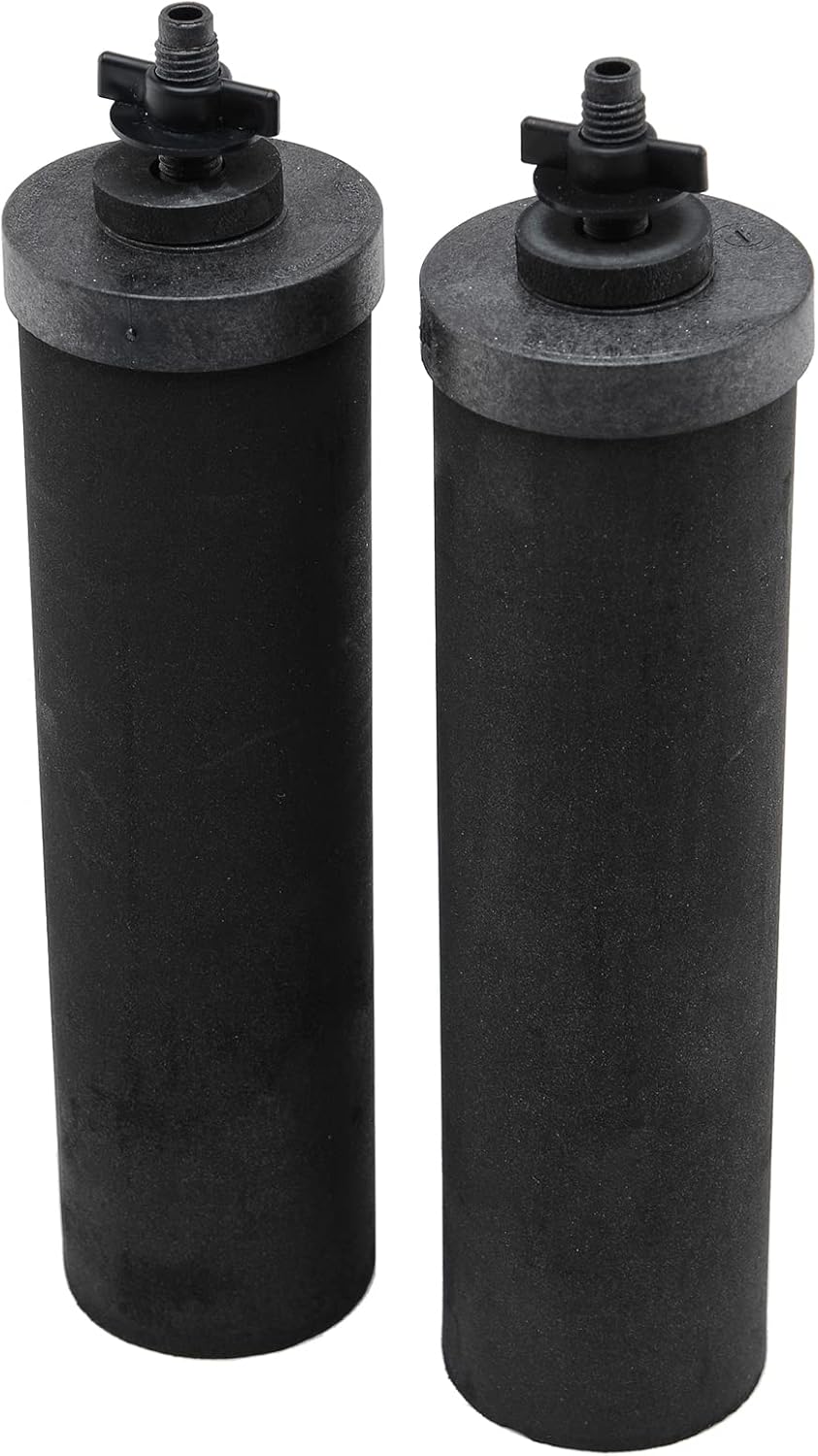
A gravity water filter is exactly what it sounds like: you pour untreated water into an upper chamber, gravity pulls it down through one or more filter elements, and purified water collects in a lower reservoir — no electricity, no pump, no plumbing required. That simplicity is why gravity filters have become a staple for home preparedness kits, off-grid cabins, and vehicle-based travel setups alike. But “simple” does not mean “problem-free.” The questions that surface six to eighteen months into ownership — why is it dripping instead of flowing? Why does my filter element smell musty after a cleaning? Does this thing actually remove fluoride? — almost never appear on the product page. This guide works through those long-term ownership realities with concrete numbers and honest tradeoffs, so you can decide before you’re stuck with a system that doesn’t fit your situation.
Flowrate: The Number That Separates a Useful System from a Frustrating One
Flowrate is the single most underestimated spec in this category, and it’s the first place buyers get burned.
Gravity filters work slowly by design — the filter media (usually ceramic, carbon block, or a composite of both) creates the resistance that removes contaminants. Manufacturers typically publish a rated output in gallons per hour (GPH) or gallons per day (GPD). The problem is those figures are measured under ideal conditions: new elements, warm water, and a full upper chamber. Real-world performance diverges quickly.
The Culligan MaxClear case study. One documented review complaint is unusually specific and worth naming directly: an owner reported 18-plus hours to filter just 2 gallons through a single filter element, explicitly calling the unit “practically unusable” for a family. That is not a misprint. Eighteen hours for 2 gallons translates to roughly 0.11 GPH — far below what most manufacturer spec sheets suggest as typical output. Whether this reflects a defective unit, a clogged element that needed priming, or a genuine design limitation, the outcome is the same: a family of four cannot rely on that throughput in a 72-hour emergency scenario.
By the numbers — minimum useful throughput for common household sizes:
| Household size | Daily drinking + cooking target | Minimum GPH needed (12-hr filter day) |
|---|---|---|
| 1–2 people | 1–2 gallons | 0.10–0.17 GPH |
| 3–4 people | 2–4 gallons | 0.17–0.33 GPH |
| 5–6 people | 4–6 gallons | 0.33–0.50 GPH |
The Big Berkey, which uses two to four Black Berkey elements depending on configuration, is rated at approximately 3.5 GPH with two elements installed — a meaningful margin over the single-element alternatives. Owners consistently report that running two elements rather than one is the practical minimum for anything larger than a two-person household.
What actually degrades flowrate over time:
- Sediment loading on the filter surface (scrubbing with a clean Scotch-Brite pad restores it temporarily)
- Air locks after dry storage or improper re-installation
- Cold water — viscosity increases, flow slows noticeably in winter conditions
- Elevation above 6,000 feet affects gravity-fed systems less than pressurized ones, but partial air locks worsen at altitude
If your system is dripping rather than flowing in a steady stream, the fix is usually re-priming the element before assuming it’s defective. Manufacturers including Berkey and Katadyn document a wet-prime process in which you submerge the filter and squeeze or use a hand pump to force water through the element, displacing trapped air. Consumer Reports’ water filter buying guide notes that skipping this step is the most common reason new users report slow flow.
Mold After Washing: What the Waterdrop Pattern Tells Us
Mold growth on gravity filter elements after cleaning is a documented pattern, not an isolated defect, and the Waterdrop TK-FS situation illustrates why.
One owner’s review of the Waterdrop TK-FS is notably specific: mold appeared after a washing cycle. The reviewer directly attributed the problem to washing technique rather than a defective unit — their daughter owned the identical system and had no issues. That’s an important distinction. The mold wasn’t a product failure; it was a storage and handling failure that the product’s design didn’t prevent.
The mechanism: Gravity filter elements — particularly composite ceramic and carbon block types — have a porous outer surface that traps organic material during normal use. If the element is washed and then stored damp, even for 24–48 hours, that organic material becomes a growth medium. Silver-impregnated ceramic elements (like those in the Waterdrop TK-AB-FS and the Berkey system’s Black elements) are designed to inhibit bacterial growth on the filter surface. But silver ion inhibition has limits, particularly if the element is left wet in a warm, low-airflow environment.
Practical rules that experienced owners follow:
- After washing, allow elements to air-dry completely before storing — this typically means 24–48 hours in a low-humidity environment, not just an hour on the counter.
- If storing the system for more than two weeks, remove elements entirely and store them dry in a sealed bag with a food-grade desiccant packet.
- Never store wet elements sealed in the filter housing — that’s the environment mold needs.
Can you save a moldy element? The honest answer is: it depends on the extent of the contamination and the filter type. Surface mold on a ceramic element can sometimes be removed by scrubbing with clean water and a non-soap pad, then re-priming. However, mold that has penetrated a carbon block element is not recoverable — carbon block is porous throughout, not just on the surface, and you cannot verify that cleaning reached the interior. If there’s any doubt, replacement is the correct call. For a system where you’ve invested $30–$80 per element pair, that’s a real cost, but it’s smaller than the risk of filtering water through contaminated media.
Fluoride, Sodium, and the Mineral Reduction Gap
Most gravity filters sold for home preparedness are certified to NSF/ANSI Standard 42 (aesthetic reduction — chlorine, taste, odor) or Standard 53 (health effects — lead, cysts, certain VOCs). Neither standard covers fluoride removal. That’s a harder problem requiring a different filter technology.
Standard activated carbon and ceramic composite elements do not meaningfully reduce fluoride. If fluoride reduction is your goal, you need one of three approaches:
- Alumina (bone char or activated alumina) media — used in Berkey’s PF-2 post-filter elements, which attach to the base of Black Berkey elements as a secondary stage
- Ion-exchange resin — found in some multi-stage countertop systems
- Reverse osmosis — highly effective but requires pressure, which a pure gravity system can’t generate
The Waterdrop TK-AB-FS illustrates a real regional use case here. A reviewer from east Texas noted that their doctor warned patients about high sodium content in municipal water — a documented issue in parts of Texas where water sources have naturally elevated sodium levels. That reviewer chose a silver-ion-enhanced gravity filter partly for mineral management. Standard gravity filters won’t fix sodium or fluoride problems; they’re doing different work. The EPA’s drinking water standards and contaminant list (publicly available on EPA.gov) is the right reference for identifying which contaminants are present in your specific supply before choosing a filter technology.
The Purewell 6-stage system review from a cabin owner adds another dimension worth documenting: that owner had persistent chlorine taste issues despite filtering — and solved them not by replacing the filter, but by pre-filtering incoming water through a shower-head filter before it reached the gravity unit. That’s creative, low-cost system design. Chlorine is a volatile compound; it off-gasses relatively easily, and pre-filtering warm water (where chlorine is more active) before it enters a gravity system’s activated carbon stage can extend element life as well as improve taste.
Filter Element Longevity: The Big Berkey Owner Pattern vs. the Replacement-Cycle Trap
One of the clearest consistent signals from long-term Big Berkey owners is multi-year filter life before replacement — a pattern reviewers explicitly contrast with the frequent replacement cycles of Brita pitchers and faucet-mount systems. Berkey rates Black Berkey elements at 3,000 gallons per element, or 6,000 gallons per pair. For a household filtering 1 gallon per day, that’s 16-plus years per pair on paper. Real-world use puts the practical figure lower, because element life also depends on source water quality — heavy sediment or high turbidity accelerates loading.
What that multi-year figure means for cost analysis: if you buy a two-element Black Berkey system and use it at 1 gallon per day, your element replacement cost amortizes to pennies per gallon over three to five years of typical use. That math favors the higher upfront investment relative to cartridge-based systems that require replacement every 2–6 months.
The Filterlogic generic element question is one the community debates consistently. Filterlogic replacement elements are marketed as compatible with Berkey-style systems, and buyers report good taste and fit. The gap that reviewers do not address — and that matters for a preparedness use case — is independent third-party testing. Wirecutter’s water filter coverage consistently notes that generic or off-brand filter elements rarely carry NSF certification on the specific element itself, even if the housing is designed to NSF-certified specs. That doesn’t mean they’re unsafe, but it does mean you’re relying on the manufacturer’s self-reporting rather than audited testing. For a system you’re storing for emergency use and may not run continuously, the testing provenance of the element matters more, not less.
Frequently Asked Questions
Why is my gravity filter flowing so slowly — is it defective or is that normal? Slow flow in a new filter almost always points to an air lock in the element, not a defect. Re-prime the element by submerging it and forcing water through manually before reinstalling. If flow is still well below the manufacturer’s rated GPH after priming, contact the manufacturer — defective elements do occasionally ship. A single-element setup on any system will flow roughly half the rate of a two-element configuration; if you’re filtering for a family, two elements is the practical minimum.
My gravity filter elements got moldy after I washed them. Can I save them or do I need to replace them? Surface mold on a ceramic element can sometimes be scrubbed off with a clean pad and water, then the element re-primed. Mold that has reached a carbon block element is not safely recoverable — replace it. Going forward, dry elements completely before storage and remove them from the housing if the system won’t be used for more than two weeks.
Does a countertop gravity filter actually remove fluoride, or do I need a specific model for that? Most standard gravity filters do not remove fluoride. You need either an activated alumina post-filter add-on (like Berkey’s PF-2 elements) or a system that explicitly lists fluoride reduction and carries NSF certification for that contaminant. Check the filter’s NSF certification scope, not just the marketing copy.
How long do Black Berkey elements really last before I need to replace them? Berkey rates them at 3,000 gallons per element. At 1 gallon per day household use, that’s roughly 8 years per element — longer than most people keep any single kitchen appliance. Heavy source-water sediment will shorten that. Owners in long-run reviews regularly report 3–5 years of use before noticing any performance decline.
Are Filterlogic generic replacement elements actually safe to use in my Berkey system? Owners report good taste and physical fit. The honest gap: Filterlogic elements don’t carry independent NSF certification on the element itself, so performance claims rest on manufacturer self-reporting. For daily household use that’s a reasonable tradeoff if cost is a primary driver. For a dedicated emergency system you’re storing long-term and may deploy under stress, the original certified elements carry less uncertainty.
Can I use a gravity filter system in an RV or does the constant movement damage the filters? Gravity systems work fine in a parked or stationary RV. Movement while driving can slosh water between chambers and create air locks in the elements — the same condition that causes slow flow. The fix: drain both chambers before driving, or at minimum ensure the spigot is closed and the lid is secured. Reinstall and re-prime if flow is sluggish after a driving day. The filters themselves are not damaged by movement; it’s purely a setup and air-lock management issue.