A personal water filter is exactly what it sounds like: a straw-shaped device that pulls contaminated water through a hollow-fiber membrane — essentially thousands of microscopic tubes — and traps bacteria and protozoa (parasites like Giardia and Cryptosporidium) before the water reaches your mouth. You don’t need batteries, pumping, or chemical tablets. You put one end in a water source and drink. LifeStraw has built a decade-long reputation around this concept, and the brand’s two most-discussed personal filters — the original LifeStraw and the newer Peak Series — cover most emergency preparedness use cases from a 72-hour kit all the way to vehicle-mounted redundancy. If you’re deciding which to buy (or whether to buy both), the choice is more nuanced than “newer = better.” This article maps the real capability ceiling of each, names every tradeoff, and ends with a clear decision rule.
What Each Filter Actually Does — and Doesn’t Do
Before comparing the two products, it’s worth getting explicit about the threat categories a personal water filter does and does not address, because this is where most buyer confusion originates.
Biological threats are the ones both filters address: bacteria (like E. coli and cholera) and protozoa (like Giardia and Cryptosporidium). These are the pathogens most commonly found in backcountry streams, flood-affected wells, and compromised surface water. The LifeStraw Original filters both categories to EPA and NSF standards, rated at 0.2 microns — one-millionth of a meter, small enough to catch most harmful organisms.
Viruses — norovirus, hepatitis A, rotavirus — are a different category entirely. They’re far smaller than bacteria and require either a finer membrane (ultrafiltration), UV treatment, or chemical purification to neutralize. The original LifeStraw does not filter viruses. Neither does the standard Peak Series filter. This is a frequently misunderstood ceiling: hollow-fiber filters at 0.2 microns are not purifiers. Wirecutter’s “Best Water Filters for Backpacking” guide and REI Co-op Expert Advice, “How to Choose a Backpacking Water Filter,” both flag this explicitly — in regions or disaster scenarios where viral contamination is a known risk, you need a different or additional tool.
Chemicals, heavy metals, and microplastics are a third category. The original plastic LifeStraw does not address these. Here is where the product line diverges in a meaningful way.
The Steel LifeStraw: What the Upgrade Buys You
LifeStraw makes a stainless steel variant of the Original. The steel body is more durable and the product is marketed for long-term reuse, but the material difference is not the primary value driver. The steel version includes an activated carbon filter stage in addition to the hollow-fiber membrane. Activated carbon is the standard mechanism for reducing chlorine, some pesticides, certain volatile organic compounds (VOCs), and improving taste. Per LifeStraw product documentation (Peak Series spec sheet, 2024), the carbon stage is rated for approximately 100 liters before it becomes saturated and needs replacement.
That 100-liter carbon ceiling is the number to hold in your head: it’s enough for meaningful taste and light chemical improvement in short-term scenarios, but it is not a solution for a household filtering tap water through a compromised municipal system over weeks. The hollow-fiber stage, by contrast, is rated at 1,000 liters on the Original.
LifeStraw Original vs. Peak Series: Side-by-Side
This section breaks down the comparison across three tiers of buyer need — budget redundancy, everyday go-bag use, and primary-system upgrade — so you can identify where each product fits your scenario rather than simply asking which is “better.”
H3: Budget Redundancy — The LifeStraw Original
For buyers who want to stage multiple units across a household emergency kit, a vehicle, and a go-bag without committing significant budget to each position, the LifeStraw Original is the rational choice.
The plastic Original filters bacteria and protozoa at 0.2 microns, carries a 1,000-liter hollow-fiber capacity, weighs approximately two ounces, and requires no batteries or chemicals. It does not filter viruses, chemicals, or heavy metals. The carbon stage present in the steel version is absent here.
REI Co-op Expert Advice, “How to Choose a Backpacking Water Filter,” distinguishes between primary filtration systems — pump filters, gravity filters, squeeze systems — and backup personal filters, noting that hollow-fiber straw filters occupy a specific and well-defined niche. The Original is precisely that: inexpensive enough to buy in quantity, reliable against biological threats, and small enough to tuck into any kit without rethinking the kit’s weight budget.
One pattern that surfaces clearly in owner reviews is multi-unit purchasing — keeping one in a vehicle, one in a go-bag, and one staged in a home kit not because any single unit is insufficient, but because personal filters are low-cost insurance against the scenario where one unit gets lost, damaged, or loaned out. The Original’s lower price per unit makes this approach financially realistic for most households.
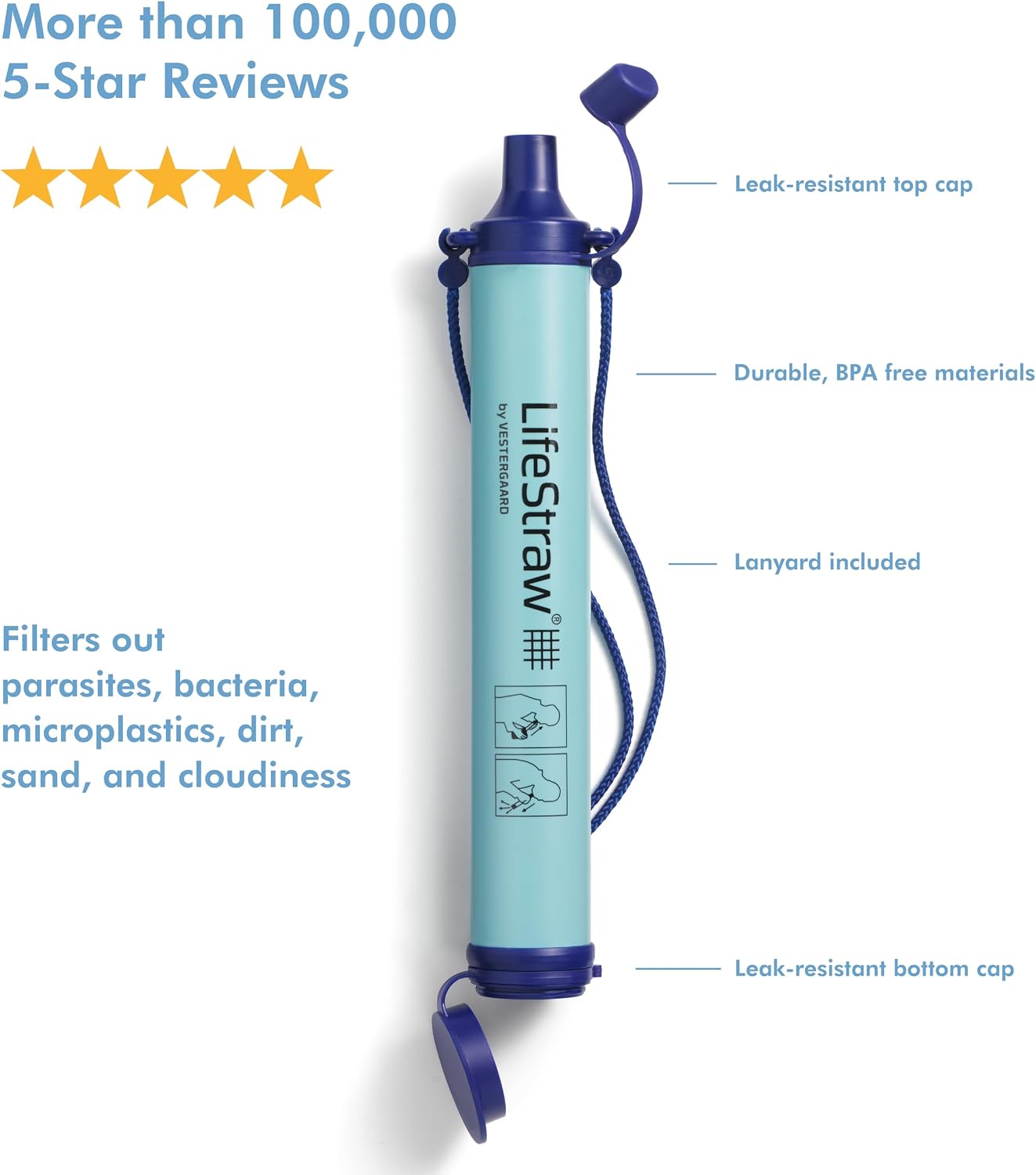
LifeStraw
$13.49
In stock on Amazon
Check price on AmazonH3: Everyday Go-Bag and Trail Use — The LifeStraw Peak Series (Standard)
For buyers who want a single personal filter they will carry as their first-line option — in a go-bag, on trail, or in an overlanding rig — the Peak Series standard filter is the better choice at a modest price premium over the Original.
The Peak Series filters at 0.1 microns, tightening the membrane by half compared to the Original. This does not confer virus protection, but it catches a broader range of biological contaminants and improves performance against microplastics per LifeStraw’s published documentation. The redesigned housing is more ergonomic for extended use, and the integrated activated carbon stage addresses taste, chlorine, and some light chemical reduction in a way the plastic Original cannot.
Backpacker Magazine’s gear review archive (LifeStraw Peak coverage, 2024) notes that the membrane showed no measurable performance degradation at the manufacturer’s rated capacity threshold under normal trail use conditions — a useful data point for buyers planning for sustained deployment rather than occasional emergency use.
The carbon stage capacity on the Peak Series varies by specific configuration; consult the current LifeStraw spec sheet for the model you’re purchasing, as the lineup has expanded. The hollow-fiber stage is rated at 1,000 liters minimum, consistent with the Original.
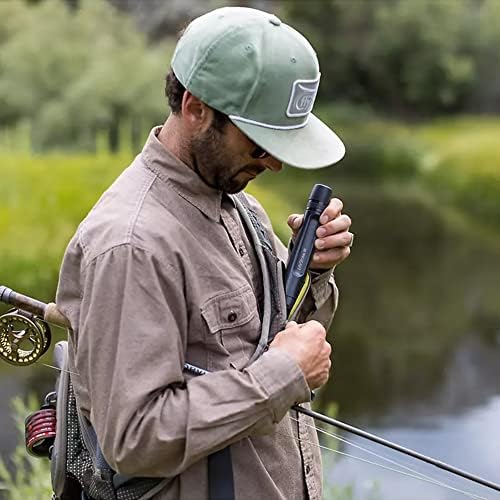
LifeStraw
$24.80
In stock on Amazon
Check price on AmazonH3: Primary-System Upgrade — The Peak Purifier with Iodine Resin
For buyers whose scenario includes regions or disaster events where viral contamination is a plausible threat — international travel, densely populated urban disaster scenarios, or flood events where sewage infrastructure has failed — the standard Peak Series straw is not sufficient. LifeStraw’s purifier-tier configurations add an iodine resin stage that addresses viral contamination.
This is a meaningfully different product category. Iodine resin purification addresses norovirus, hepatitis A, and rotavirus — the threats hollow-fiber membranes cannot touch. The tradeoff is cost, and the iodine stage has its own capacity ceiling that requires tracking.
For buyers who do not need viral protection but want the most capable chemical and biological filtration in a personal straw format, the steel LifeStraw with its carbon stage is the alternative. Per LifeStraw’s documentation, the carbon stage on the steel version handles approximately 100 liters of chemical/taste improvement before saturation, which makes it a meaningful upgrade for short-duration use and a limited one for extended deployment.
UV purifiers such as the SteriPen (a separate product category) provide another path to viral protection without iodine, though they require batteries and a vessel rather than direct-straw drinking. Wirecutter’s “Best Water Filters for Backpacking” guide covers this category in detail for buyers who want to compare approaches.
LifeStraw
$24.80
In stock on Amazon
Check price on AmazonFlood Water, Municipal Taps, and Disaster Scenarios
This question comes up consistently and deserves a direct answer: Can you use a LifeStraw to drink from a flood-contaminated tap or municipal source during a disaster?
The Centers for Disease Control and Prevention, in their emergency preparedness guidance “Making Water Safe in an Emergency,” distinguishes between biological contamination and chemical contamination in disaster scenarios. A flood event typically introduces both — biological pathogens from sewage and agricultural runoff, and potential chemical contamination from industrial sites, gasoline storage, and infrastructure damage.
A LifeStraw in any configuration handles the biological side. It does not handle chemical contamination — herbicides, fuel, industrial solvents — to any meaningful degree, even with the activated carbon stage. CDC emergency water safety guidance recommends against relying on a personal hollow-fiber filter alone if chemical contamination is suspected, because the filter will not remove those threats reliably.
For a municipal tap during a boil-water advisory — which is typically a biological contamination event — the LifeStraw is a functional backup. For flood water of unknown provenance, it reduces biological risk but leaves chemical risk unaddressed. Knowing which scenario you’re planning for changes the calculus significantly.
If your emergency plan includes scenarios involving chemically compromised water, a dedicated activated carbon gravity filter (such as a Katadyn or similar gravity system) addresses that gap more completely than any LifeStraw configuration. Stage the LifeStraw as personal redundancy, not as a primary chemical filter.
How to Know When the Filter Is Exhausted
Neither filter has an indicator light or usage gauge. The practical signals are:
Flow rate drops noticeably. This is the most reliable early sign that the hollow-fiber membrane is clogging. Backflushing — blowing air backward through the filter to clear sediment — typically restores flow. If flow doesn’t recover after backflushing, the filter is near end of life.
You’ve tracked usage against rated capacity. If you’re using the filter regularly and logging liters, the manufacturer-rated capacity is a reasonable planning ceiling. Owners report in long-run reviews aggregated by Backpacker Magazine that heavily silty water accelerates clogging, while clear backcountry water extends filter life well past nominal ratings.
The filter has frozen. Both LifeStraw variants are permanently damaged if water trapped in the membrane freezes. There is no way to test whether a frozen filter has been compromised. LifeStraw’s documentation is explicit: a filter that has frozen should be replaced, not trusted. This is an important staging consideration for vehicle kits in cold climates — store personal filters in a temperature-controlled location, not in an exposed gear box.
Frequently Asked Questions
Does the LifeStraw filter viruses, chemicals, or heavy metals? The standard LifeStraw Original and standard Peak Series filter bacteria and protozoa only. They do not filter viruses, heavy metals, or most chemicals. The steel LifeStraw and certain Peak Series configurations include an activated carbon stage that reduces some chemicals and improves taste, but this is not comprehensive chemical filtration. For viral protection, LifeStraw’s purifier-tier configurations with iodine resin are required, or a separate UV purifier.
What is the difference between the original plastic and the steel LifeStraw? The steel version adds an activated carbon filter stage (rated approximately 100 liters) and uses a more durable housing. The hollow-fiber membrane is the same core technology at the same 0.2-micron rating. The carbon stage is the functional upgrade, not the steel body — it addresses taste, chlorine, and some light chemical reduction that the plastic version cannot provide.
How do you know when the filter is exhausted? Track usage against rated capacity, monitor for flow rate reduction that backflushing does not fix, and replace any filter that has been exposed to freezing temperatures regardless of logged use.
Can you use a LifeStraw during a boil-water advisory or flood event? For a boil-water advisory (biological contamination), yes — it is a functional backup. For flood water with suspected chemical contamination, no — the filter will not reliably remove industrial chemicals, fuel, or heavy metals. Per CDC emergency preparedness guidance, “Making Water Safe in an Emergency,” chemically contaminated water requires more than a hollow-fiber filter.
Is it worth buying multiple units for a household emergency kit? Yes, for most households. Stage one in a vehicle, one in a go-bag, and one in a home kit. The LifeStraw Original’s lower price makes it the rational choice for redundancy positions. The Peak Series earns its place as the primary personal filter for go-bag or vehicle use where you’d reach for it first.
The Decision Rule
If your primary scenario is backcountry hiking, overlanding, or go-bag use where this filter will be your first-line option — buy the LifeStraw Peak Series standard. The tighter 0.1-micron membrane, integrated carbon stage, and redesigned housing are worth the premium for a tool you’ll actually depend on first.
If you’re building household redundancy and want multiple units staged across a vehicle, kit, and home — the LifeStraw Original is the right call. Buy two or three at the lower price point rather than one premium unit. Per-unit cost matters when you’re buying for coverage rather than primary use.
If viral or chemical filtration is a meaningful part of your scenario — neither the Original nor the standard Peak Series closes that gap. Move up to the Peak Purifier configuration with iodine resin for viral threats, or add a gravity filter system for chemical threats. Don’t buy either straw filter expecting comprehensive protection against those categories.
The capability ceiling on both products is the same: they are excellent biological filters and not chemical purifiers or virus filters. Build your system around that fact, and both products earn their place in a layered emergency water plan.