If you’ve started building an emergency food supply — the stash of ready-to-eat meals you’d lean on if the power went out for three days, a storm cut off road access, or you simply couldn’t cook — you’ve almost certainly run into two options that dominate the conversation: MREs and freeze-dried meals. An MRE (Meal, Ready-to-Eat) is a self-contained military-style ration that needs no water and no cooking — you tear it open and eat. A freeze-dried meal is a lightweight pouch or can where water has been removed from real cooked food under vacuum and low temperature, and you rehydrate it before eating. Both will keep you fed when the grid goes down, but they are built for different constraints, different budgets, and different shelf lives. This guide breaks down exactly where each format wins, where it falls short, and — because the decision is almost always both — how to proportion them in a practical kit.
| EDITOR'S PICKMountain House Emergency Meal A… | Mid-tierEmergency Food Ration Bars | Budget pickGrizzly Gear Emergency Food Rat… | |
|---|---|---|---|
| Type | Freeze-dried meals | Ration bars | Ration bar |
| Flavor | Assortment | Chocolate | Vanilla poundcake |
| Shelf life | 30 years | — | — |
| Calories | — | — | 3600 |
| Count | — | 12 bars | — |
| Days of supply | — | — | 3 days |
| Price | $127.77 | $37.99 | $21.99 |
| See on Amazon → | See on Amazon → | See on Amazon → |
The Core Tradeoff: Water Independence vs. Long-Term Storage
The single most important decision frame here isn’t calories or taste — it’s your water situation.
MREs require zero water to eat. Every component — the entrée, the crackers, the accessory packet — is shelf-stable at ambient moisture. The flameless ration heater included in military-spec MREs and most civilian equivalents activates with roughly two tablespoons of water, but the meal itself requires none. Ready.gov’s food preparedness guidance consistently emphasizes that water access is frequently the first resource to fail in a disaster scenario, which is why MREs hold a structural advantage in the opening 24–72 hours of a disruption.
Freeze-dried meals, by contrast, require one to two cups of hot or cold water per serving — with hot water producing dramatically better texture and palatability. Mountain House’s published product specification sheets indicate their entrées typically need approximately 8–10 oz of boiling water and an 8–12 minute rehydration window. That’s a real dependency. If your water supply is compromised or rationed, freeze-dried meals become harder to use responsibly. If you have a gravity filter running or a sufficient water cache already in place, that dependency largely disappears.
The decision rule at this level: If you’re stocking for a 72-hour urban disruption — apartment, suburb, situation where water access is uncertain — lean MRE-heavy in your rotation. If you’re building a two-week-plus supply with a reliable water source or filtration system already in place, freeze-dried becomes the more economical and palatability-superior format.
Shelf Life, Storage Footprint, and the Real Cost Math
This is where the two formats diverge most dramatically, and where manufacturer claims deserve scrutiny.
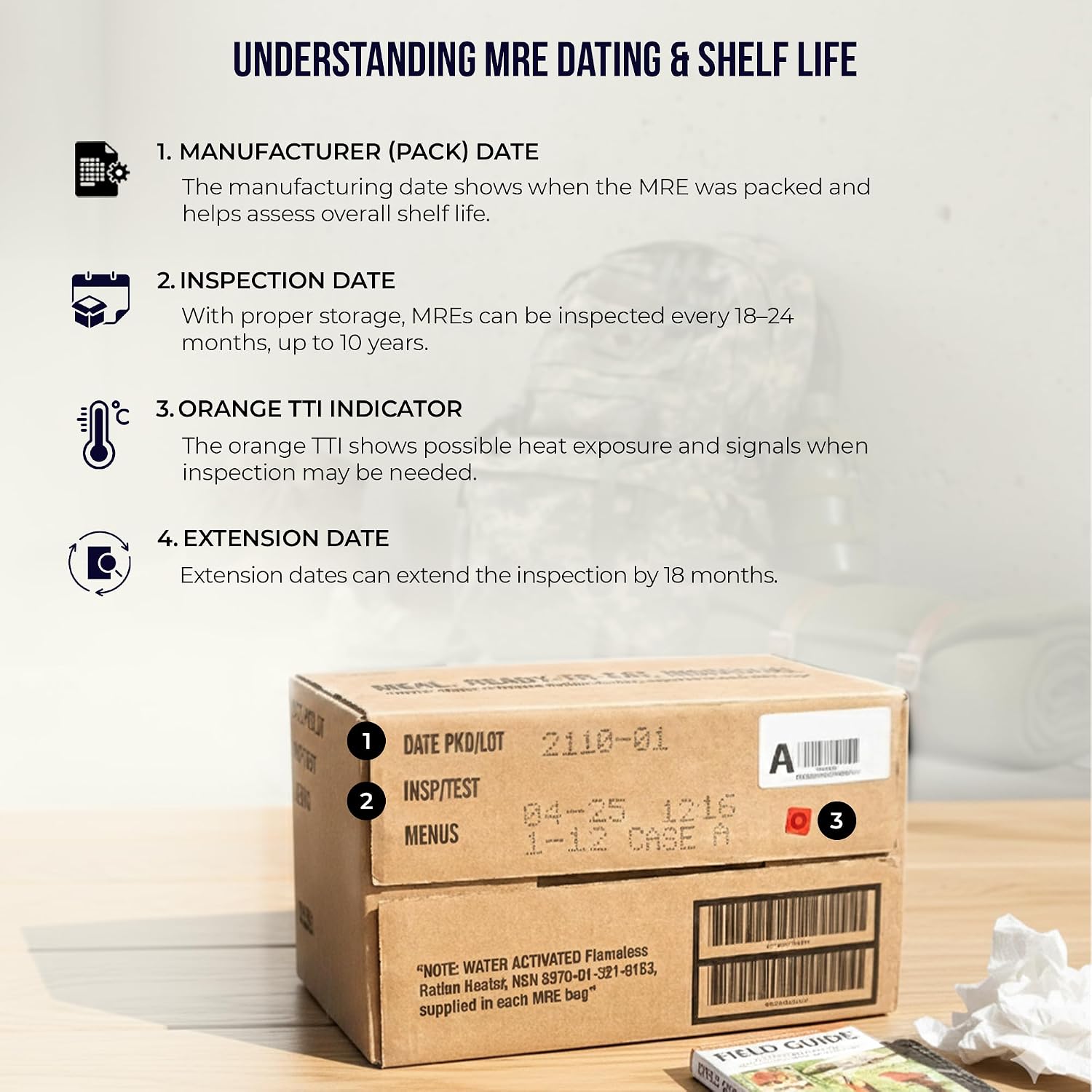
MREs are rated by U.S. Army Natick Laboratories published specifications at 3–5 years at 80°F and up to 10 years at 60°F — but that range is temperature-sensitive in ways most civilian storage situations don’t account for. A garage in Phoenix hitting 100°F in July is actively degrading your MRE stock faster than the label suggests. Per Natick Laboratories’ published time-temperature tolerance research, every 10°F increase above 60°F roughly halves effective shelf life.
Freeze-dried meals, stored in sealed #10 cans or nitrogen-flushed mylar pouches, are rated at 25–30 years by manufacturers including Mountain House and Emergency Essentials. Mountain House’s own published 30-year shelf-life taste-test documentation suggests these claims are largely credible for caloric and nutritional retention, though some texture and flavor degradation is expected after the 15-year mark. Popular Mechanics’ “Best Emergency Food Kits” analysis notes that freeze-dried formats stored in cool, dark environments genuinely outperform MRE counterparts on longevity by a wide margin.
By the numbers:
| Format | Calories per lb | Water required | Shelf life (60°F) | Avg. cost per 2,000-cal day |
|---|---|---|---|---|
| MRE (civilian case) | ~450–500 | None to eat | 5–10 years | $22–$35 |
| Freeze-dried (pouch) | ~350–450 | 1–2 cups/serving | 25–30 years | $18–$28 |
| Freeze-dried (#10 can) | ~400–500 | 1–2 cups/serving | 25–30 years | $12–$20 |
MREs are heavier and bulkier per calorie — a full 12-meal case typically weighs 18–20 lbs and occupies roughly 1.5 cubic feet. Freeze-dried pouches are significantly lighter per meal, which matters enormously for vehicle kits, go-bags, and backpack-style evacuation loads. For a stationary pantry or basement cache, bulk #10 cans compress the cost-per-calorie substantially while maintaining the long shelf-life advantage.
Comparing Your Options: Three Tiers of Emergency Food
The MRE-versus-freeze-dried decision plays out differently depending on budget and use case. Here’s how the formats compare across three practical tiers.
H3: Budget Tier — Short-Rotation, No-Frills Coverage
For households building a first 72-hour kit on a constrained budget, civilian MRE cases from brands like Meal Kit Supply or XMRE represent the most direct path to unconditional calorie coverage. A case of 12 meals runs roughly $90–$110 and delivers around 1,200–1,300 calories per meal with no water or cooking required. Augason Farms’ freeze-dried bucket kits — available in 72-hour and 1-week formats — compete at this tier in price but require a water source, making them a secondary choice until water storage is solved. FEMA’s “Food and Water in an Emergency” guidance document specifically recommends storing at least one gallon of water per person per day alongside any emergency food supply, a baseline that unlocks freeze-dried use even at the budget tier.
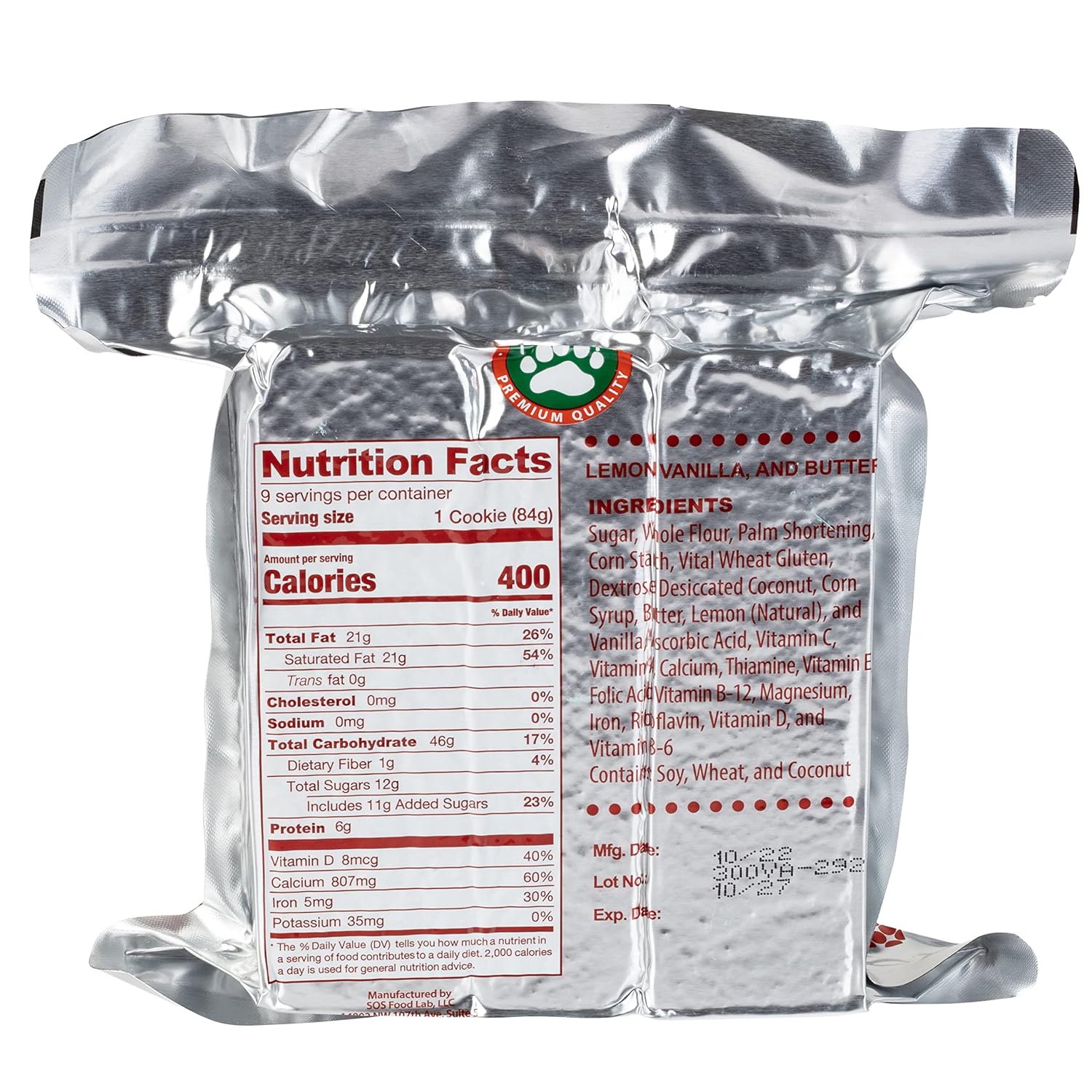
Grizzly
$21.99
In stock on Amazon
Check price on AmazonH3: Mid-Tier — Two-Week Supply With a Water Plan
Once a household has water storage or a filtration system in place — a Sawyer Squeeze, a gravity-filter setup, or a sufficient jug cache — freeze-dried pouches from Mountain House or Backpacker’s Pantry become the better investment for days 4 through 14 of a disruption. Outside Online’s backcountry nutrition coverage consistently highlights freeze-dried pouches as the preferred format for sustained calorie delivery where weight and palatability both matter. A two-week supply for two adults running Mountain House pouches alongside a small canister stove costs roughly $350–$450 and fits in a single large tote. Ready.gov’s food preparedness page identifies a two-week minimum supply as the planning baseline for most U.S. households, and freeze-dried pouches address that window efficiently once the water dependency is resolved.
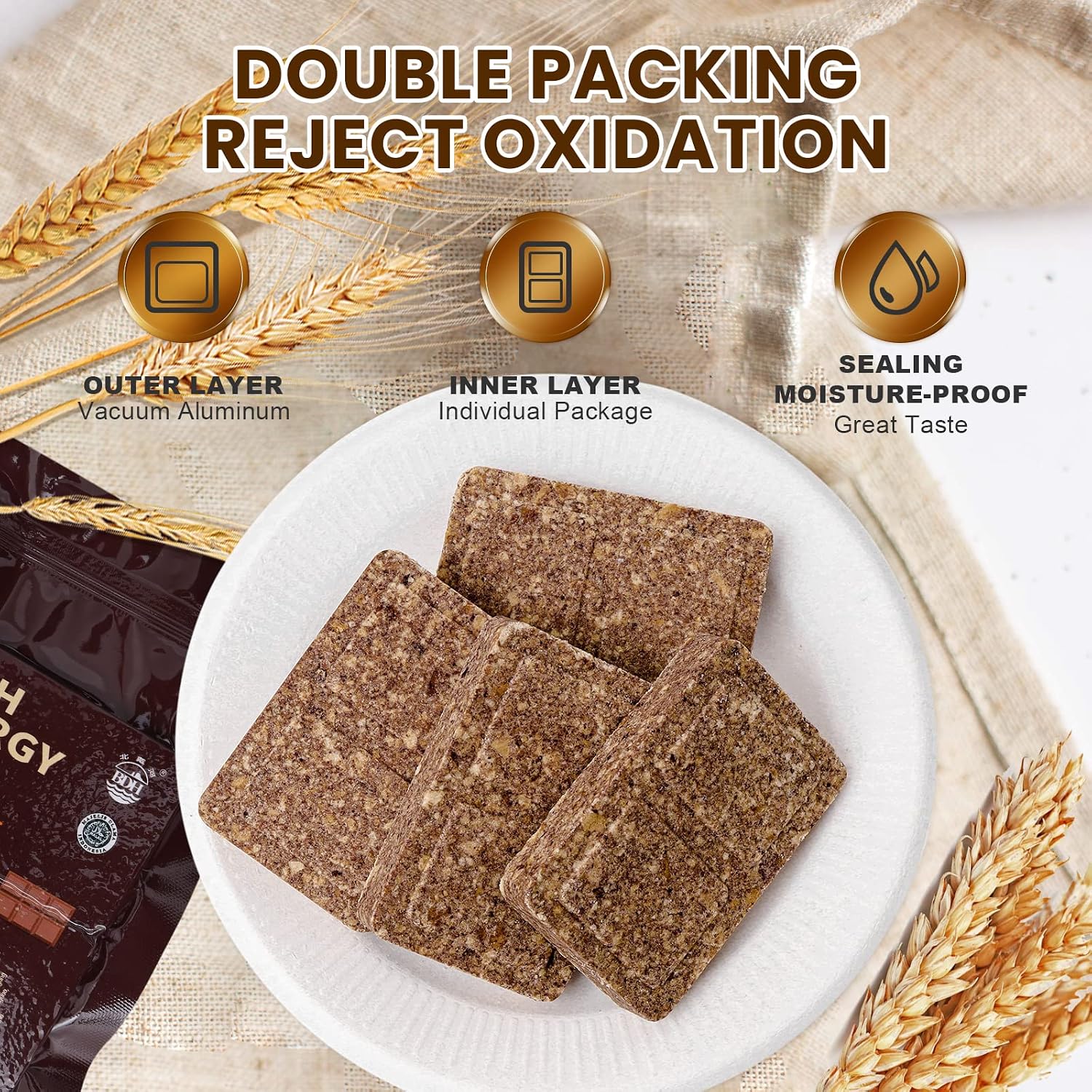
Emergency
$37.99
In stock on Amazon
Check price on AmazonH3: Premium Tier — Multi-Year Bulk Storage
For committed preparedness households building a 3-month to 1-year supply, bulk freeze-dried in #10 cans from Emergency Essentials or Augason Farms is the cost-efficient long-shelf-life anchor. Popular Mechanics’ “Best Emergency Food Kits” analysis specifically calls out #10 can format as the most economical per-calorie option for extended storage, with per-day costs as low as $12–$20 at volume. Mountain House’s published 30-year shelf-life documentation makes the case that this format genuinely holds its nutritional value over multi-decade storage timelines, unlike MREs, which degrade meaningfully past the 10-year mark even under ideal conditions. At this tier, MREs still earn a role — one or two cases per adult as the unconditional 72-hour backstop — but freeze-dried bulk cans are the core of a premium, long-duration system.
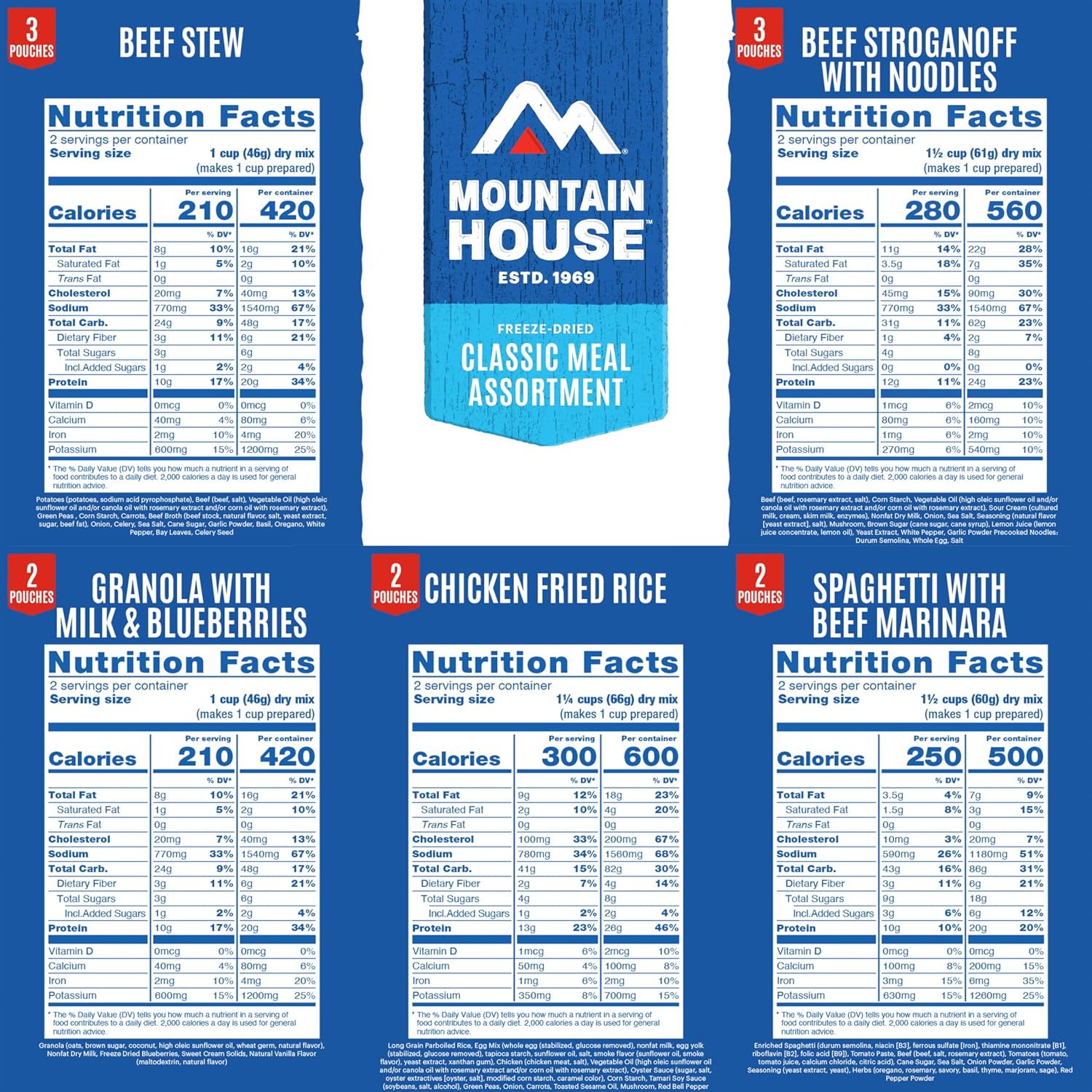
Mountain
$127.77
In stock on Amazon
Check price on AmazonNutrition, Palatability, and the Fatigue Factor
Preparedness planning tends to underweight what’s sometimes called appetite fatigue — the documented tendency for people under stress to stop eating when food is unpalatable, even when they need calories. FEMA’s “Food and Water in an Emergency” guidance document explicitly calls out palatability as a factor in maintaining nutrition during multi-day disruptions, particularly for children and elderly household members.
MREs are calorie-dense by design — a standard military MRE delivers approximately 1,200–1,300 calories per meal, intentionally high for physical exertion. That density is an asset if you’re doing physical work (clearing debris, managing an off-grid situation) but can feel heavy and sodium-loaded in a sedentary shelter scenario. The sodium load — typically 1,000–2,500 mg per meal — becomes a real consideration if water is rationed, since high sodium intake increases thirst and water demand.
Freeze-dried meals from Mountain House, Backpacker’s Pantry, and the upper tier of Emergency Essentials occupy a genuinely different palatability range. Outside Online’s coverage of backcountry nutrition notes that well-made freeze-dried entrées are recognizable and well-textured once rehydrated — acceptable to household members who haven’t been conditioned to emergency-food norms. That matters for multi-week scenarios where buy-in from the whole household determines whether food actually gets eaten consistently.
The Hybrid Stack: How Most Intermediate Kits Actually Work
The framing of MRE versus freeze-dried is somewhat artificial once you move past a 72-hour starter kit. Most practitioners end up running a layered stack:
Layer 1 — 0 to 72 hours: MREs or emergency ration bars (such as Datrex or Mainstay bars) requiring no water and no preparation. This layer covers the scenario where you don’t yet know what you’re dealing with and can’t afford to commit water or cooking fuel.
Layer 2 — Days 4 through 14: Freeze-dried pouches, which require only a stove and filtered water. A canister stove or a small wood-gas stove handles rehydration with minimal fuel commitment. This is where palatability starts to matter, and where freeze-dried earns its per-meal cost premium.
Layer 3 — Weeks 3 and beyond: Bulk freeze-dried in #10 cans, supplemented with shelf-stable pantry staples — rice, oats, canned goods. The price-per-calorie at this tier drops into ranges that make multi-year stocking economically sustainable for most households.
Ready.gov’s food preparedness page identifies a two-week minimum supply as the planning baseline for households in most regions. That two-week threshold is exactly where the freeze-dried format’s advantages in shelf life, cost, and palatability begin to compound over the MRE format’s water-independence benefit.
The Decision Rule
If your current kit has less than a 72-hour water supply and no filtration system: Start with MREs. They work unconditionally. Add freeze-dried once your water plan is solid.
If you have a filtration system or at least one gallon per person per day in storage: Freeze-dried, especially in #10 can format, delivers better cost-per-calorie, better long-term shelf life, and better palatability for a sustained disruption.
If you’re outfitting a vehicle or evacuation bag: MREs for the no-cook layer; one or two freeze-dried pouches for warmth and morale if you can carry a compact stove.
If you’re building a multi-year supply for a family: Freeze-dried bulk cans are the core. Add one or two cases of MREs per adult as the unconditional backstop for the first 72 hours of any scenario.
The goal isn’t to pick the “best” format in the abstract — it’s to make sure you have calories that actually work given the specific failure mode you’re likely to face. Both formats have a legitimate role in a complete system, and the intermediate practitioner move is knowing which one to deploy first.
Sources consulted: FEMA “Food and Water in an Emergency” guidance document; Ready.gov food preparedness page; U.S. Army Natick Laboratories MRE shelf-life and nutritional published specifications; Mountain House published product specification sheets and 30-year shelf-life documentation; Popular Mechanics “Best Emergency Food Kits” analysis; Outside Online backcountry nutrition and emergency preparedness coverage.