Freeze-dried food works by removing nearly all moisture from a fully cooked meal and sealing it in a pouch or can — the result is a shelf-stable meal that rehydrates in minutes when you add hot water. For years, that process came with an understood tradeoff: the food would be edible and calorie-dense, but you wouldn’t exactly look forward to eating it. That assumption is now worth questioning. Peak Refuel and Mountain House have both pushed the category forward, and if you’re deciding which brand to anchor your emergency food supply or trail kit around, the differences between them are meaningful enough to affect what actually ends up in your pack — and whether you’ll reach for it willingly when conditions are miserable.
This article breaks down both brands across taste, texture, real-world portion reality, sodium load, altitude behavior, and the kind of ingredient flexibility that more experienced preparedness buyers are starting to care about. If you have a purchase decision pending — a 72-hour kit you’re rounding out, a rotation of pouches for your vehicle, or a first bulk order — this is the comparison that should close it.
| EDITOR'S PICKMountain House Ground Beef #10… | Mid-tierPeak Refuel Biscuits & Sausage… | Budget pickPeak Refuel Beef Pasta Marinara | |
|---|---|---|---|
| Servings | 22 | 2 | 2 |
| Protein | — | — | 49g |
| Calories | — | — | 1040 |
| Gluten-free | ✓ | — | — |
| Real meat | — | — | ✓ |
| Packaging | #10 can | Pouch | Pouch |
| Price | $94.99 | $14.95 | $14.95 |
| See on Amazon → | See on Amazon → | See on Amazon → |
Taste and Texture: Where the Two Brands Diverge
Peak Refuel: Protein Texture as the Differentiator
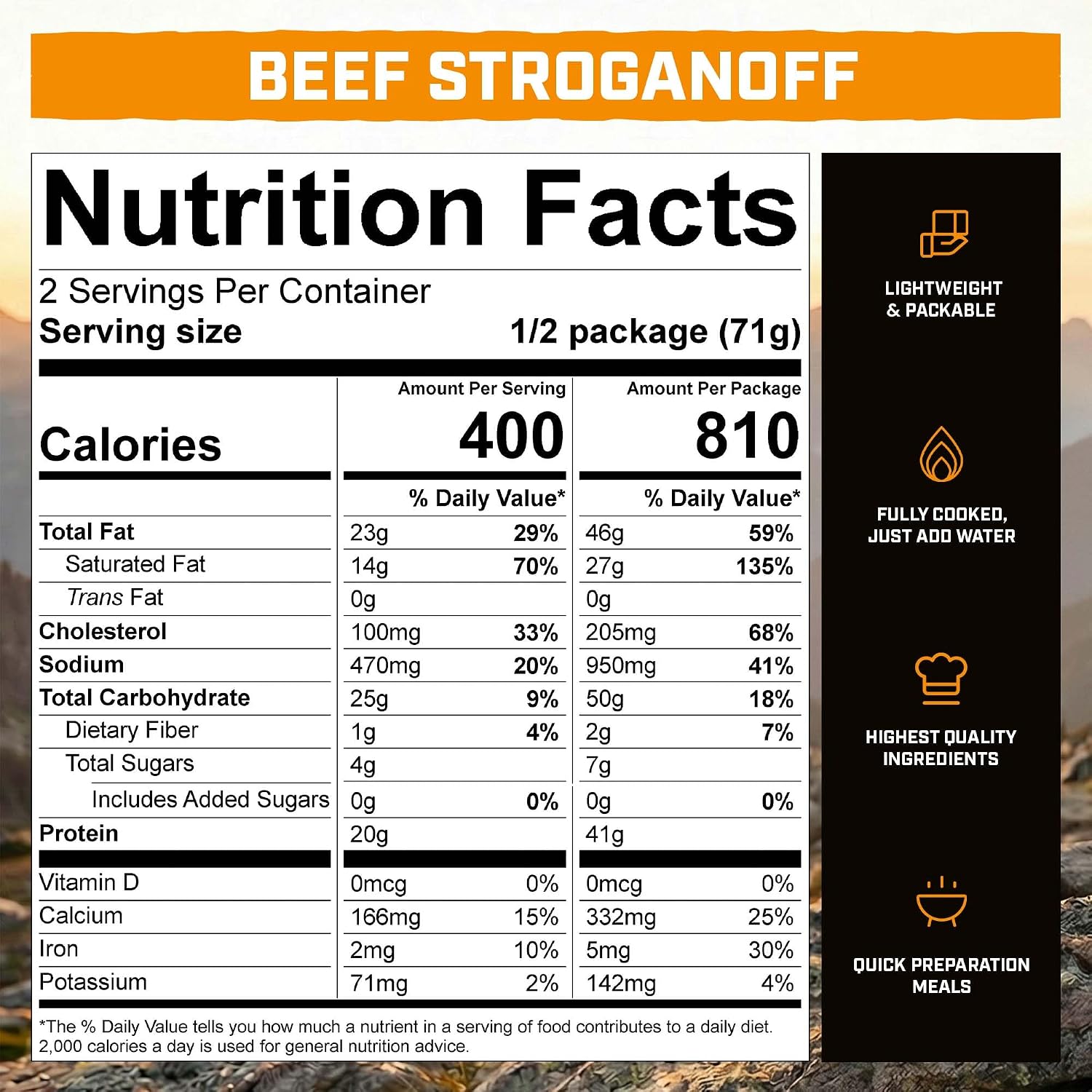
Peak Refuel’s Beef Stroganoff has an unusual distinction in the freeze-dried category: reviewers reach for superlatives in a genre where that almost never happens. Phrases like “best freeze-dried meal I’ve ever had” appear independently across multiple verified purchase accounts aggregated in Outside Online’s “Best Freeze-Dried Backpacking Food” review roundup, 2025. The pattern is consistent enough to treat as signal rather than noise.
What drives that reaction is texture fidelity. The beef chunks, egg noodles, and mushroom pieces all rehydrate to something approaching real food — not mushy, not rubbery, not identical in texture the way heavily processed ingredients tend to become. Backpacker Magazine’s “Best Backpacking Meals” gear guide, 2024 edition, notes that Peak Refuel’s use of higher-fat protein sources contributes to better cell-structure preservation in the meat during the freeze-dry process, which translates directly to the non-processed mouthfeel reviewers keep describing.
Peak
$14.95
In stock on Amazon
Check price on AmazonMountain House: Sauce Quality and Lineup Consistency
Mountain House’s Spaghetti with Beef Marinara earns a different but equally meaningful compliment: the tomato base rehydrates with more depth than the thin, slightly metallic flavor profiles that plague budget competitors. For a meal that’s been shelf-stable for potentially years, that’s a real achievement — and it’s one reason Mountain House appears as a default recommendation in the REI Co-op Learning Center’s “How to Choose Backpacking Food” resource, which is updated regularly and reflects consistent field testing across the brand’s lineup.
Mountain House edges Peak Refuel on sauce complexity and consistency across their full range of SKUs. If your household eats more pasta-style dishes, Mountain House’s lineup is broader and more reliable across multiple entries. If protein texture is your litmus test for what’s tolerable after a hard day, Peak Refuel’s stroganoff specifically is worth the premium placement in your rotation.
Mountain
$94.99
In stock on Amazon
Check price on AmazonBudget Tier and Value Positioning
Neither brand occupies a true budget position — freeze-dried meals command a premium over pantry staples regardless of brand. But within the category, Mountain House’s per-pouch pricing on pasta-based entrées tends to land slightly lower than Peak Refuel’s flagship protein-forward SKUs, and Mountain House pouches are more widely available through warehouse retailers and emergency supply distributors. If cost per calorie is your primary filter, Mountain House is the more accessible entry point to the category.
Peak
$14.95
In stock on Amazon
Check price on AmazonPortion Reality and True Cost-Per-Meal Math
This is where the comparison gets uncomfortable for Peak Refuel, and where you need to do your own math before committing to a bulk order.
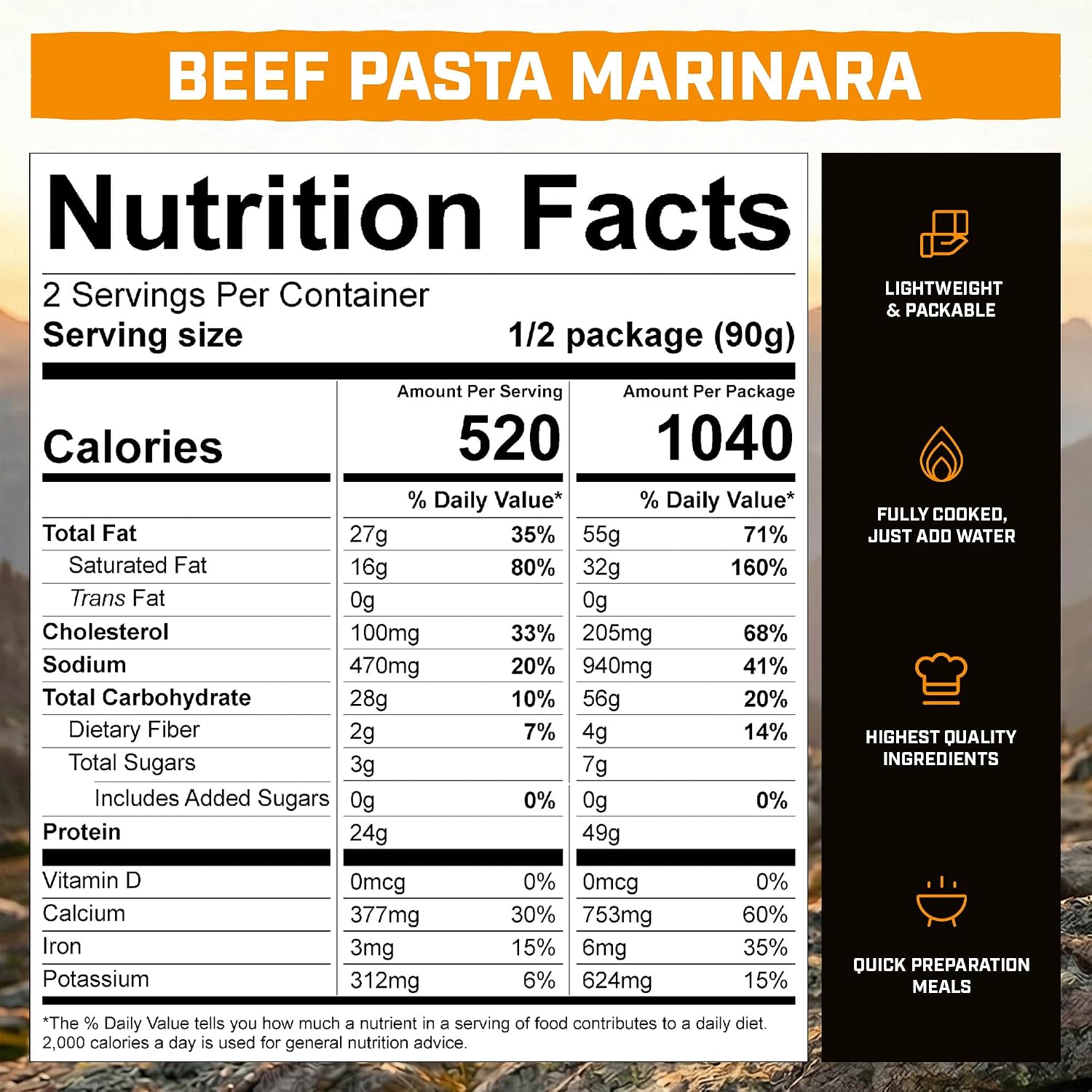
The Peak Refuel Beef Pasta Marinara is labeled as two servings. The consistent complaint across owner accounts is that this is realistically one hungry adult’s dinner — not two. Popular Mechanics’ “Best Freeze-Dried Emergency Food” buyer’s guide, 2025, flags the same issue: Peak Refuel’s serving-size labeling tends toward the optimistic end of the industry, which affects the actual cost per meal when you calculate honestly.
By the numbers — Beef Pasta Marinara pouch:
| Metric | Labeled | Real-World (active adult) |
|---|---|---|
| Servings per pouch | 2 | 1 |
| Calories per labeled serving | ~340 | ~680 (full pouch) |
| Implied cost per meal | ~$6–7 | ~$12–14 |
Mountain House is more straightforward about this. Their pouches are also labeled for two servings, but the calorie density per serving is slightly higher on most comparable SKUs, and the two-serving claim is at least plausible for lower-exertion scenarios — car camping, shelter use, or sedentary days when caloric need is significantly reduced.
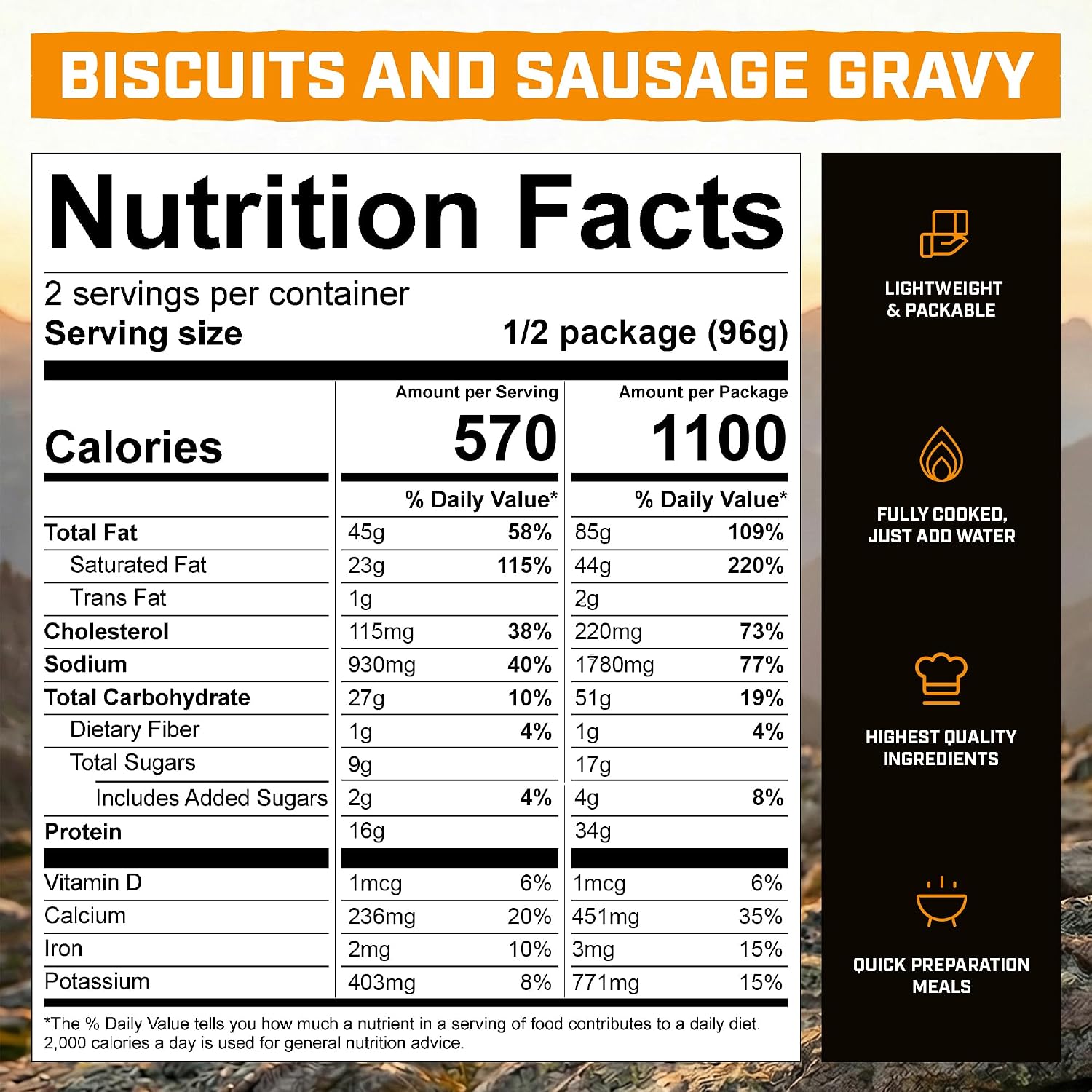
One detail that illustrates the scaling problem well: owner accounts of Peak Refuel’s Biscuits and Sausage Gravy describe eating roughly one-third of the pouch per meal across consecutive low-activity days. That’s genuinely useful information. It reveals how dramatically serving-size need scales with activity level. Stock your pouches accordingly — your 72-hour emergency supply math should assume one full pouch per person for any scenario involving physical stress.
Sodium Load, Ingredient Flexibility, and Altitude Behavior
Sodium: The Number Most People Skip
Sodium content in freeze-dried meals runs high across the category, and neither brand is an exception. Mountain House’s published nutrition panels show most entrées landing in the 700–1,000 mg sodium range per labeled serving — meaning a full single-person portion can approach 1,400–2,000 mg, which is close to a full day’s recommended intake in one meal. Peak Refuel’s published panels are similar, with figures typically showing 600–900 mg per labeled serving.
For most emergency scenarios, this isn’t a dealbreaker — it’s a known tradeoff for palatability and shelf life. But it matters if you’re stocking for someone managing hypertension, or if your water supply is limited, since high sodium intake increases water demand. The REI Co-op Learning Center’s backpacking food guidance specifically flags sodium load as a factor worth tracking on multi-day trips. Account for it in your kit planning; don’t discover it after you’ve bought a case.
The Mountain House Ground Beef Ingredient Use Case
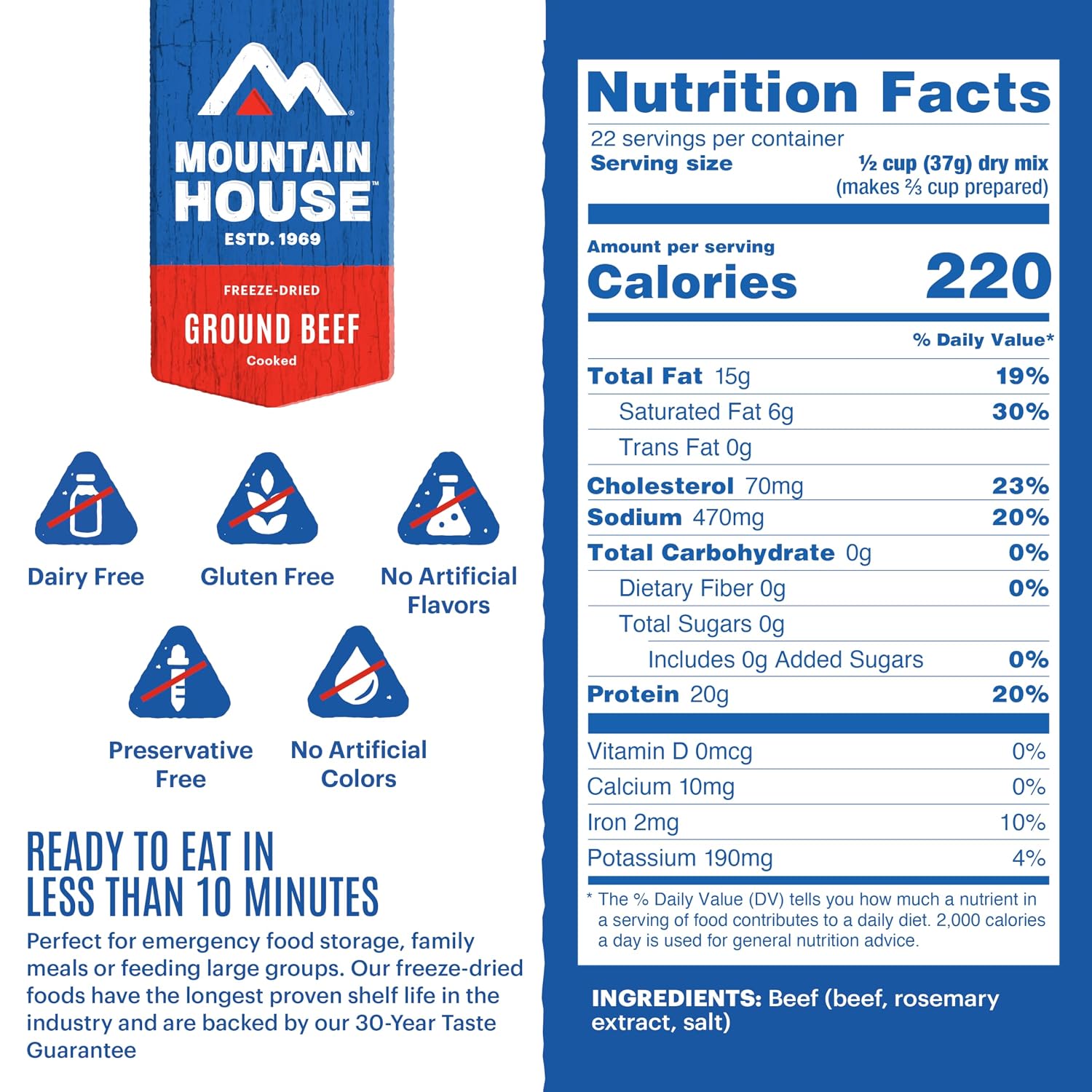
Here’s a pattern that shows up among more experienced preparedness buyers and overlanders: Mountain House’s Ground Beef can is being purchased not as a standalone meal, but as a shelf-stable protein ingredient for scratch cooking in a camp or grid-down kitchen scenario.
Owners using it this way describe incorporating it into homemade pasta sauce, adding it to instant rice with seasoning packets, or building tacos and rice bowls from their own pantry staples. This is a more sophisticated use case than eating a pre-made pouch, and it signals a kind of preparedness maturity — building a flexible pantry system rather than just stacking identical pouches. The Mountain House Ground Beef can’s 25-year shelf life makes it a defensible anchor ingredient if you’re thinking in multi-year terms.
Peak Refuel does not offer a comparable standalone ingredient SKU at this level, which is a genuine gap if you’re building a flexible cooking system rather than a pouch-based meal plan.
Altitude and Rehydration Behavior
Water boils at lower temperatures at elevation — at 10,000 feet, boiling point drops to roughly 194°F, and at 14,000 feet it falls to around 186°F. Both brands’ instructions assume sea-level boiling point. The documented adjustment is to extend soak time by approximately 5 minutes per 2,500 feet above sea level, and to use an insulating wrap — a folded jacket or neoprene cozy works — to retain heat during the longer soak. Pasta-based meals from Mountain House tend to hold up better under warm-water and extended-soak conditions than rice-based meals from either brand. Plan accordingly for any trip or deployment scenario above 6,000 feet.
Frequently Asked Questions
Is Peak Refuel Beef Stroganoff actually filling enough for a full dinner after a long hike?
Based on owner accounts, yes — but treat the labeled two-serving pouch as a single hungry adult portion after significant exertion. The protein and fat content from the beef and sour cream base provide meaningful satiety. If you’re planning for a hiking partner sharing one pouch after a high-output day, either plan a second pouch or supplement with a calorie-dense side.
Do Mountain House pouches rehydrate properly with warm water if I can’t reach a full boil?
Mountain House’s published rehydration instructions call for boiling water, but owner accounts confirm that warm water at approximately 160–170°F produces acceptable results with extended soak time — usually 15–20 minutes versus the standard 8–10. Pasta-based meals hold up better than rice-based meals under this approach. It’s a viable fallback for emergency scenarios, but expect slightly firmer pasta and less fully reconstituted sauce.
Is the serving count on Peak Refuel pouches realistic for a hungry adult?
It’s optimistic for active adults. The two-serving label assumes moderate activity and appetite. Owner accounts across multiple SKUs, including the Beef Pasta Marinara, consistently report eating the full pouch as a single meal after physical activity. Plan your supply quantities on a one-pouch-per-person-per-meal basis for any scenario involving real exertion, and treat the two-serving label as a sedentary-use benchmark only.
Can Mountain House Ground Beef be used as a cooking ingredient in other recipes?
Yes, and this is one of the more underutilized options in the Mountain House lineup. Experienced preparedness buyers report using it as a base protein — adding it to homemade pasta sauce, building rice bowls, or stretching it across multiple meals with pantry staples. The texture after rehydration is described as close to browned ground beef, making it a versatile ingredient. If you’re building a multi-year pantry system rather than a pouch-only kit, the Ground Beef can is worth treating as a cooking ingredient rather than a complete meal.
How do Peak Refuel and Mountain House compare on sodium content per serving?
Both brands run high, consistent with the freeze-dried category overall. Mountain House’s published nutrition panels show most entrées at 700–1,000 mg sodium per labeled serving; Peak Refuel’s published panels show a similar range of 600–900 mg per labeled serving. Because both brands label two servings per pouch and most active adults consume the full pouch, real-world sodium intake per meal is typically 1,200–2,000 mg — close to a full day’s recommended limit. Factor this into your water planning and dietary context, especially for anyone in your group managing sodium-sensitive health conditions.
The Decision Rule
If you’re stocking for taste satisfaction under stress — long hikes, high-output emergency scenarios, people in your group who will openly resist eating food they find unpleasant — Peak Refuel Beef Stroganoff is the benchmark to buy first and taste-test against. The owner consensus is unusually strong for the category, and the texture fidelity on the protein is the clearest differentiator from competitors at a similar price point.
If you’re building a multi-year pantry system, want flexible ingredient options rather than fixed pouches, or need a brand with a longer track record in bulk and can formats, Mountain House is the more complete ecosystem. The Spaghetti with Beef Marinara holds up across conditions, the Ground Beef can opens up real cooking flexibility, and the rehydration reliability across scenarios — including warm-water workarounds at altitude — is better documented across independent sources including Outside Online’s 2025 freeze-dried food roundup and Backpacker Magazine’s 2024 gear guide.
If budget and portion honesty matter most: run the full-pouch-per-person math on Peak Refuel before committing to a case. The per-pouch price looks competitive until you account for realistic serving size — at which point Mountain House often wins on true cost-per-meal at comparable calorie counts, as Popular Mechanics’ 2025 freeze-dried buyer’s guide notes when evaluating value across the category.
Stock both in small quantities first. Taste is personal, and the best emergency food supply is one your household will actually eat.