If your tap stopped working tonight and you had three gallons of pond water or a bathtub you’d filled just before the pressure went out, how would you make it safe to drink? That’s the exact problem portable water filters solve. A water filter is a device that removes bacteria, protozoa (like Giardia and Cryptosporidium), and in some cases chemical contaminants from untreated water, making it safe to consume without boiling. Two formats dominate the emergency-prep market: personal straw filters, which are compact straws you drink through directly, and gravity-fed systems, which hang from a hook or branch and drip clean water into a container below while you do other things. This article will show you exactly which format makes sense for your situation — and where each one quietly fails you.
The short answer is that personal straws are optimized for mobility and individual use, while gravity systems are optimized for volume and household throughput. But the tradeoff goes deeper than that, and the math around daily water needs is where most buyers get it wrong.
Why Household Size Is the Variable That Changes Everything
FEMA’s Emergency Supply List (ready.gov) recommends one gallon of water per person per day — and that’s a floor, not a comfortable target. Factor in cooking, minimal hygiene, and any heat-related or medical needs, and the REI Co-op Expert Advice guide on backcountry water treatment notes that realistic consumption for a multi-day scenario runs closer to two gallons per person per day.
Run those numbers against each filter format and the decision becomes clearer fast.
By the numbers:
| Scenario | Daily need | Personal straw | 6L gravity system |
|---|---|---|---|
| Solo bug-out | 1–2 gal / day | ✅ Adequate | Overkill — extra weight |
| Couple sheltering in place | 2–4 gal / day | Possible, slow | ✅ Practical |
| Family of four | 4–8 gal / day | Exhausting, borderline | ✅ Necessary |
| Extended group (6+) | 8–12 gal / day | Not workable | Consider dual units or high-capacity ceramic |
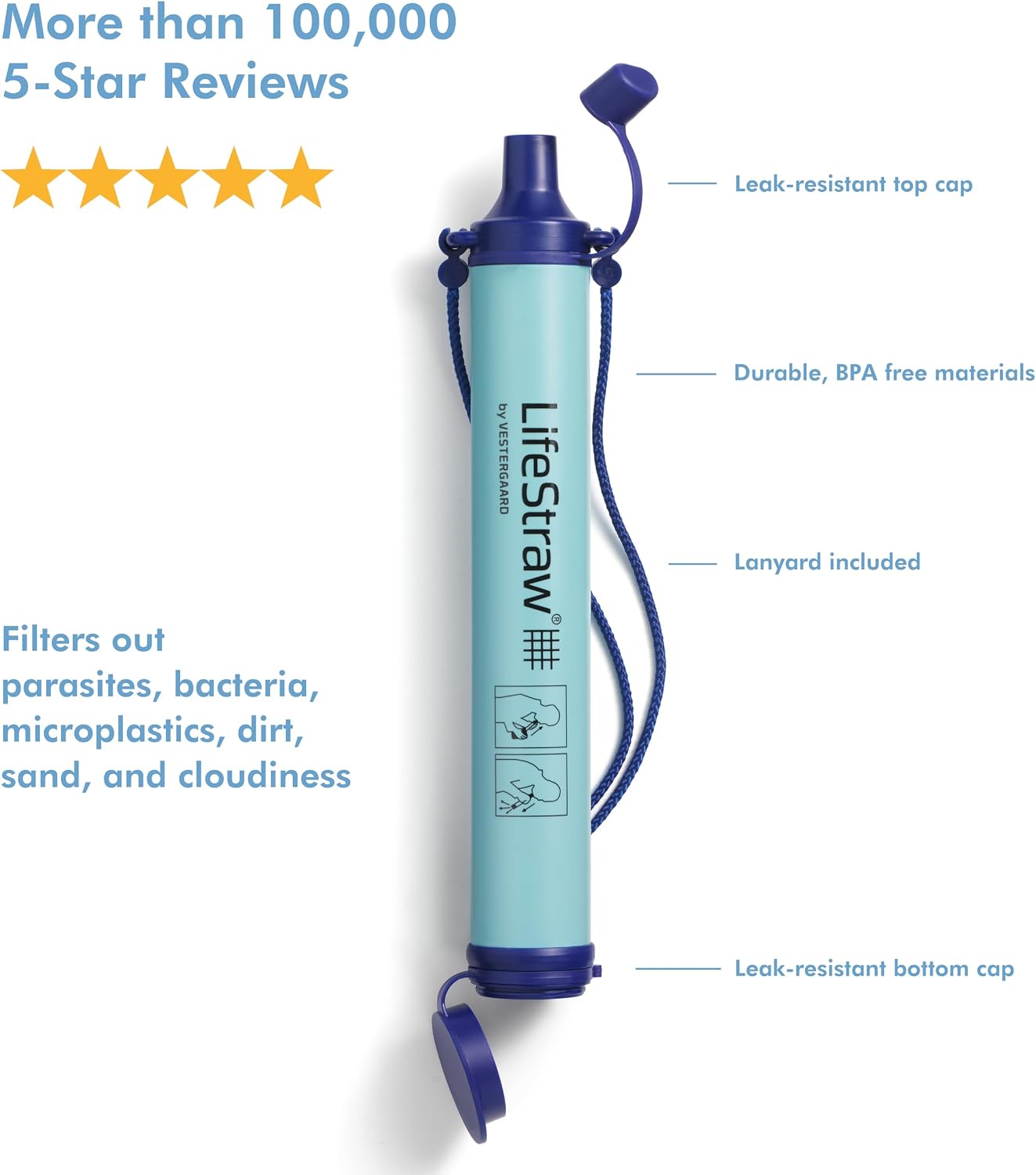
A personal straw like the LifeStraw Personal is manufacturer-rated for approximately 1,000 gallons of lifetime filtration — more than enough volume for years of individual use. The issue isn’t total capacity; it’s throughput. You are the pump. You can only drink so fast, and you can’t pre-fill containers for others. Wirecutter, in its New York Times review of the best backpacking water filters, identifies this same friction point: straw filters are excellent for one person but the flow-rate limitation compounds quickly when filtering for a group.
Gravity systems flip that dynamic. The Katadyn Gravity Camp 6L processes a full six-liter bag with no effort beyond hanging and waiting. The Katadyn Expedition — the premium benchmark in this category — is manufacturer-rated for up to 26,000 gallons of lifetime throughput and delivers roughly four liters per hour. You fill the dirty-water reservoir, walk away, and return to clean water. That passive production is worth a great deal when you’re also managing kids, a generator, medical needs, or stress.
How the Three Filter Tiers Stack Up
Budget Tier: Personal Straw Filters
Personal straw filters have earned their reputation for a reason. They are the preparedness world’s most frictionless entry point: lightweight (the LifeStraw Personal weighs two ounces), near-zero maintenance in the short term, and priced low enough — typically $15–$25 — that most households can justify one per person as a redundancy layer. Outside Online, in its guide to choosing a water filter for the backcountry, describes personal straw filters as the simplest possible solution for personal hydration in a pinch — which is exactly the use case they were built for.
For overlanders, solo hikers, or apartment dwellers building a 72-hour kit, a personal straw often belongs in the pack as a backup even if a gravity system is the primary household solution. It takes up no meaningful space and covers the scenario where your main filter is inaccessible.
Where straws underperform:
- They cannot pre-fill containers. You drink directly through the filter. You cannot filter a batch into a pitcher for cooking, for someone else, or for later. This is a design constraint, not a flaw — but it matters enormously for sheltering-in-place families.
- Cold weather affects flow rate. Backpacker Magazine’s water filter buyer’s guide specifically recommends keeping straw filters against your body in sub-freezing conditions to prevent hollow-fiber membrane damage from ice crystals forming inside the element.
- Cross-contamination risk is higher. Because you’re drinking directly from the source vessel, careful discipline about the dirty side versus the clean side is required — a larger operational concern in a group setting.
- No chemical or viral protection in base models. Standard hollow-fiber straws remove bacteria and protozoa but not viruses or heavy metals. In a municipal-water-failure scenario where chemical contamination is possible — flooding near industrial sites, for instance — this gap matters. Upgrading to a filter with an activated-carbon stage addresses chemical contaminants, but viral protection typically requires a separate purification step such as a UV pen.
LifeStraw
$13.49
In stock on Amazon
Check price on AmazonMid-Tier: Gravity-Fed Systems for Families and Couples
A gravity filter’s value proposition is simple: it works while you don’t. For a family of four managing a 72-hour or longer emergency, that passivity is genuinely valuable. Fill the reservoir, hang it from a cabinet knob or a shower-curtain rod, and the filter does its job while you inventory food, check your battery bank, or settle the kids.
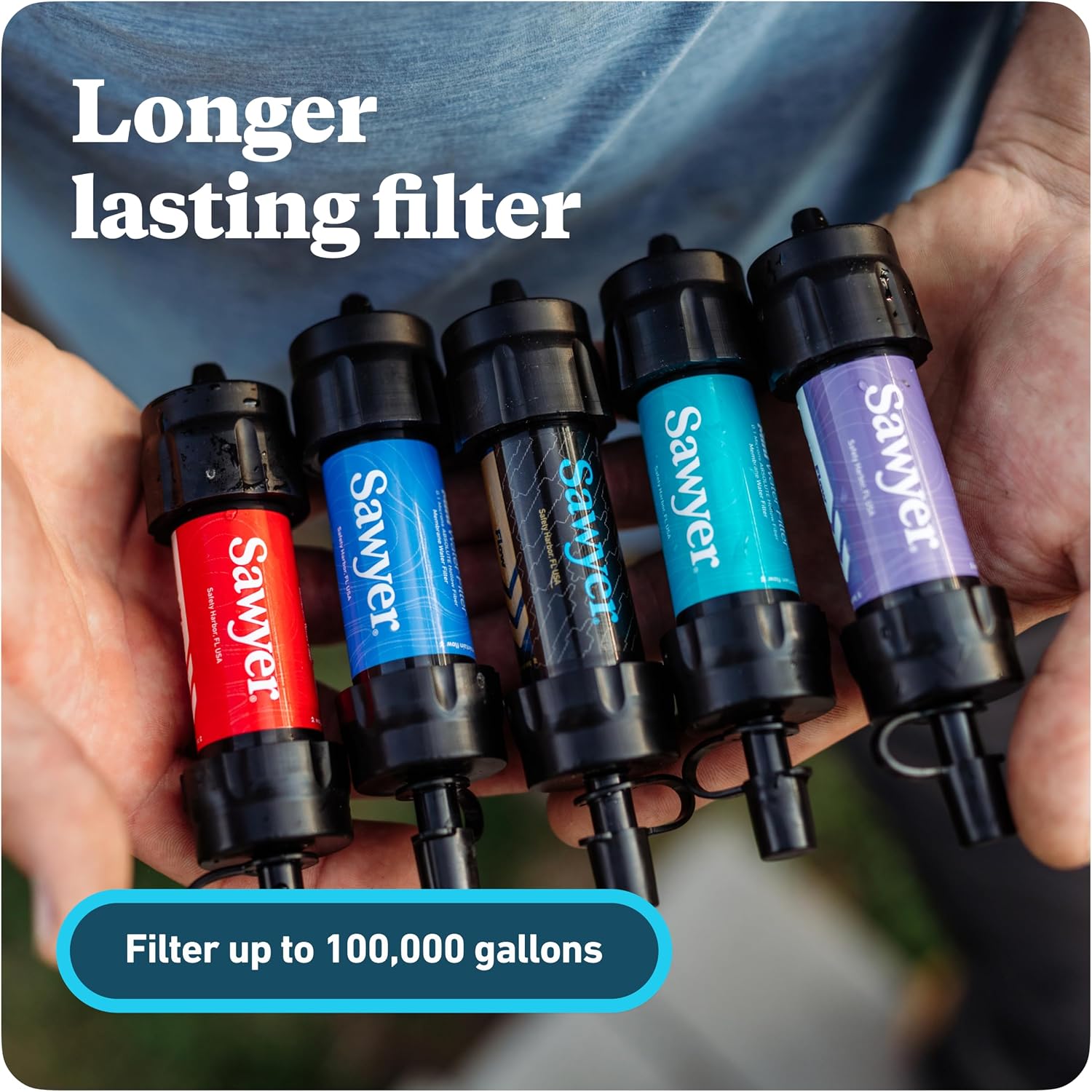
The Katadyn Gravity Camp 6L is the practical workhorse for families and couples — a mid-range performer priced around $60–$90 that reviewers consistently rate as straightforward and reliable. The LifeStraw Mission (available in 5L and 12L versions) is another well-regarded option at this tier, with users noting durable construction and solid flow rates for base-camp-style use.
The REI Co-op backcountry water treatment buying guide frames the core question clearly: the right water filter is the one you will actually use consistently, in the conditions you will actually face. For most households of two to five people sheltering in place, a mid-tier gravity system satisfies that standard better than any straw alternative.
What gravity systems cost you:
- Weight and bulk. Even a 6-liter gravity system packs to a meaningful volume compared to a 2-ounce straw. It is not the right primary filter for a get-home bag or an overnight evacuation kit where every ounce counts.
- Setup requires a hang point. You need a place to suspend the dirty-water reservoir at least 18–24 inches above the clean container. In a vehicle, small apartment, or non-standard shelter, this requires improvisation — worth planning for in advance.
- Price floor is higher. Budget gravity systems exist but tend to underperform on flow rate. Reliable options start around $60.
- Maintenance matters more. Hollow-fiber membranes in gravity systems require periodic backflushing to maintain flow rate. The Katadyn Gravity Camp ships with a backflush syringe; the LifeStraw Mission uses a squeeze method. Skipping maintenance is the most common cause of flow-rate complaints in long-run use of both units.
Sawyer
$28.99
In stock on Amazon
Check price on AmazonPremium Tier: High-Capacity Ceramic Systems for Extended Preparedness
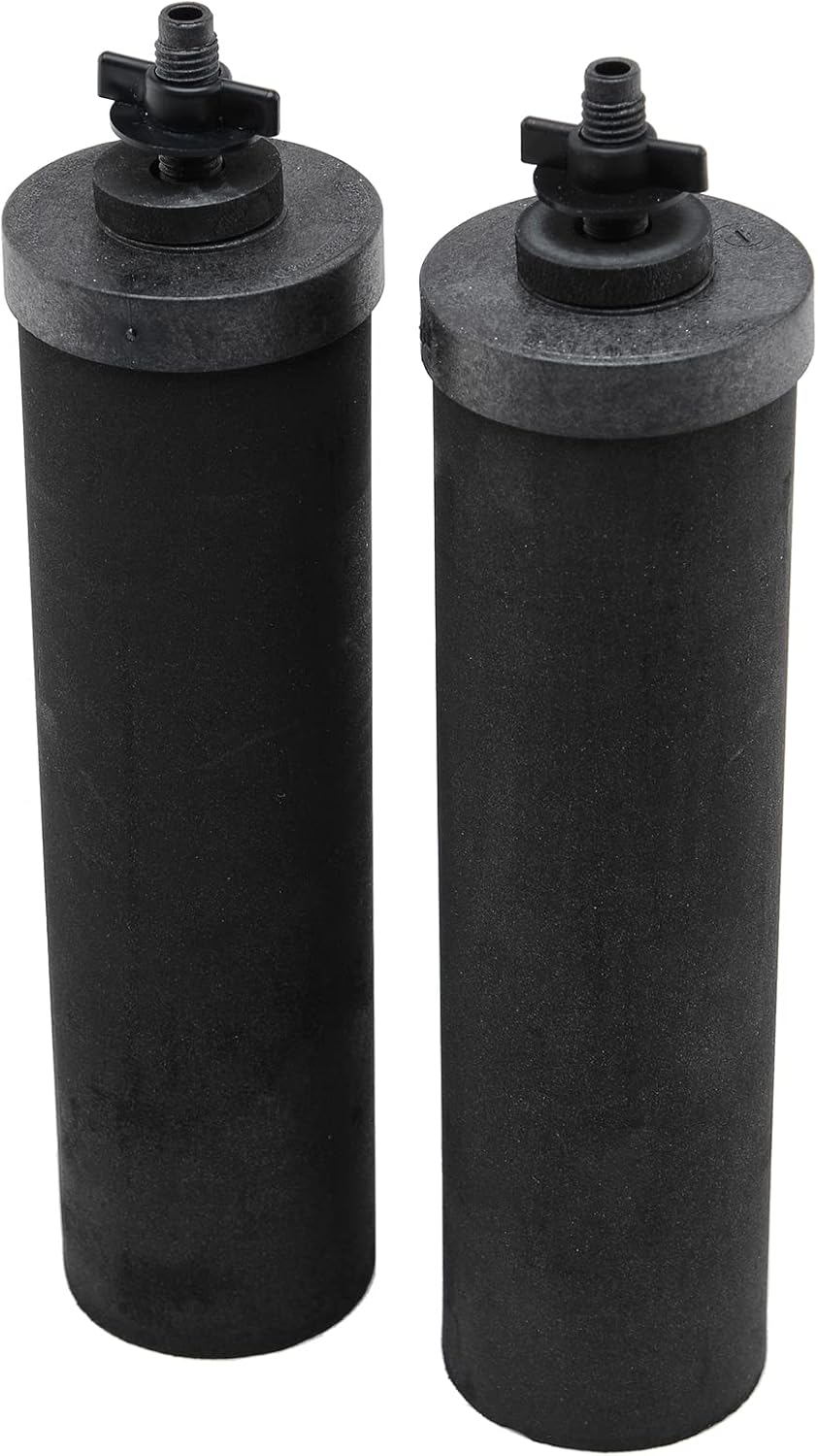
At the premium end, the Katadyn Expedition (typically $350–$450) is the benchmark for groups, extended scenarios, and committed preppers. Its 26,000-gallon lifetime rating and four-liter-per-hour output make it viable for long-term community-level use — a categorically different product from a weekend camp filter.
The Expedition’s ceramic element is cleanable hundreds of times, unlike hollow-fiber membranes that degrade over a fixed number of backflush cycles. For a household committed to multi-year preparedness, that replaceability profile changes the total cost equation significantly. At $350–$450 spread across 26,000 gallons, the Expedition works out to roughly one to two cents per gallon over its lifetime — a figure that compares favorably to bottled water purchased even in bulk.
The Expedition makes sense if at least two of the following are true:
- Your household is five or more people, or you’re prepping to support neighbors or extended family.
- You’re building a multi-year supply system and want filtration that outlasts your food stores — the 26,000-gallon rating means this filter can realistically serve a decade of emergency use.
- You’re in a region with credible long-duration grid-down scenarios: hurricane belt, wildfire corridors with municipal system vulnerability, or rural well-dependence.
- You want to reduce reliance on replacement cartridges — the Expedition’s cleanable ceramic element has a substantially longer service life than disposable hollow-fiber membranes.
If only one of those conditions applies, the Katadyn Gravity Camp 6L or LifeStraw Mission serves most households well at a fraction of the cost.
Big
$367.00
In stock on Amazon
Check price on AmazonDecision Rules: Matching Filter to Your Exact Scenario
Solo traveler, overlander, or individual 72-hour kit: A personal straw is your primary, and costs almost nothing. Add a squeeze bottle with an integrated filter if you want the option to pre-fill containers for cooking or for others.
Couple or small household (2–3 people) sheltering in place: A mid-tier gravity system is your anchor. Personal straws serve as individual backups or evacuation-day tools. Budget $60–$90 for the gravity unit; a straw per person adds another $20–$40.
Family of four or larger: A 6L–12L gravity system is the minimum viable solution. Dual units or stepping up to a high-capacity ceramic system is worth modeling — particularly if you’re stocking more than a 72-hour supply.
Overlanding or vehicle-mounted setup: Weight is less of a constraint than packability and vibration resistance. The LifeStraw Mission’s soft-sided reservoir packs flat; the Katadyn Gravity Camp’s more rigid components are slightly bulkier. Both work well for base-camp-style configurations. Pair either with a personal straw per occupant as a bailout option.
Chemical contamination or viral pathogens are a realistic concern: Standard hollow-fiber filters — both straw and gravity formats — do not address viruses or dissolved chemical contaminants. You need either an activated-carbon stage for chemical filtration, a UV purifier for viral inactivation, or a filter element certified to NSF/ANSI Standard 53 or 58 for the specific contaminants present. FEMA’s emergency kit guidance on ready.gov notes that water purification needs vary by emergency type, which is worth factoring into your planning rather than assuming any single filter covers all scenarios.
The Bottom Line
Personal straws are the right redundancy for almost every household and the right primary solution for solo use. Gravity systems are the right primary for households of two or more in any scenario lasting longer than 24 hours. And the Katadyn Expedition earns its premium price tag specifically for larger households and committed multi-year preparedness systems — not as a status purchase, but as a genuinely cost-effective solution when the lifetime math is run honestly.
Buy the straw first. It costs $20 and covers your worst day. Then build toward the gravity system that fits your household size, and revisit the premium tier when your preparedness depth justifies the investment.