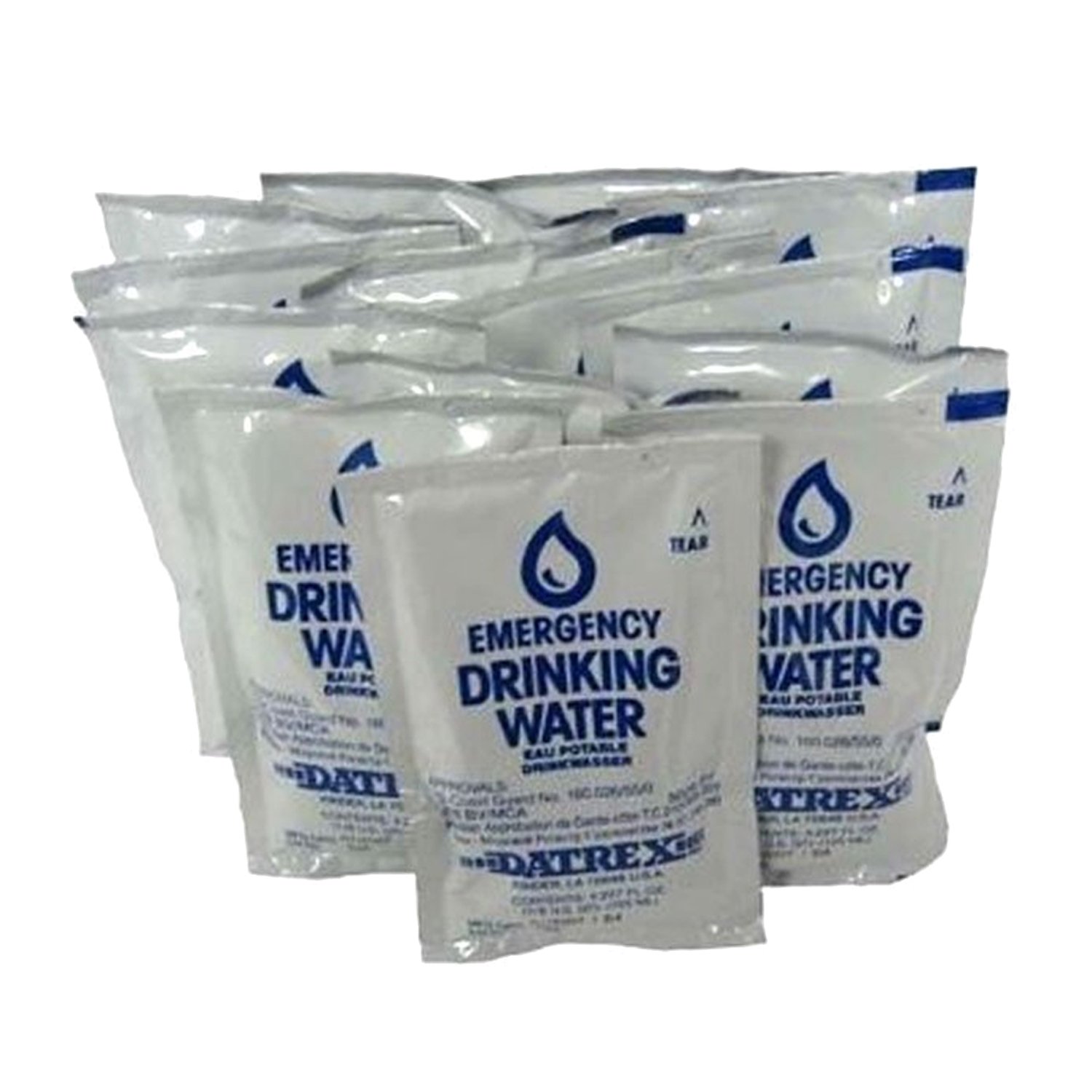
If you’ve ever wondered whether those six cases of water bottles in your garage would actually last your family through a long power outage or a water main break, you’re not alone — and the honest answer is almost certainly no. Emergency water storage means setting aside a supply of clean drinking water before anything goes wrong, so your household can function when the tap runs dry, the utility warns of contamination, or a natural disaster cuts you off from normal services for days at a time. The standard rule of thumb you’ll see most often — one gallon per person per day — is a floor, not a ceiling, and it covers only bare survival drinking needs. This guide walks through how much water your whole household actually needs across different use cases, how to translate that into storage locations room by room, and how to choose the containers and filtration systems that make it practical to maintain.
Why the “1 Gallon Per Day” Rule Is a Starting Point, Not a Plan
The one-gallon-per-person-per-day figure comes directly from FEMA’s emergency preparedness guidance (FEMA, Emergency Water Storage and Purification, ready.gov) and is echoed by the American Red Cross. It is a survival minimum — enough to drink and handle the most basic sanitation. The CDC’s emergency water guidance expands on this, noting that pregnant women, people who are ill, people in hot climates, and anyone doing physical labor need significantly more, and that cooking and hygiene water are separate line items on top of the drinking baseline.
Here’s the practical breakdown of where water actually goes in an emergency:
Drinking: 0.5 gallons per person per day at rest, up to 1 gallon in heat or with exertion.
Food preparation: 0.25–0.5 gallons per person per day, depending on whether you’re rehydrating freeze-dried meals, boiling grains, or eating ready-to-eat food that needs no water at all.
Basic sanitation (handwashing, oral hygiene, wound care): 0.25–0.5 gallons per person per day — this is the number that most beginner guides leave out entirely.
Toilet flushing: This one shocks people. A standard gravity-flush toilet uses 1.28–1.6 gallons per flush. In a scenario where municipal water pressure fails but your sewer line still works, you can manually pour water into the bowl to flush. A household of four flushing twice per person per day burns through 10–13 gallons daily on sanitation alone.
By the Numbers: A 72-Hour Baseline vs. a 14-Day Target
| Scenario | 1 Person | Family of 4 |
|---|---|---|
| 72-hour survival minimum (drink + minimal hygiene) | 3 gallons | 12 gallons |
| 72-hour functional (drink + cook + handwash) | 6 gallons | 24 gallons |
| 14-day functional (no toilet flushing) | 28 gallons | 112 gallons |
| 14-day functional (with toilet flushing 2x/day) | 42 gallons | 168 gallons |
FEMA recommends a minimum of 72 hours of stored water; most preparedness professionals — including guidance published by the Water Quality Association in their Bottled and Stored Water Fact Sheet — suggest working toward a two-week supply as a realistic household resilience target.
Room-by-Room Storage: Where the Water Actually Lives
This is where planning gets practical. You’re not just buying water; you’re finding safe, accessible places to keep it without ruining your floors, freezing your pipes, or stacking unstable containers in spots where they’ll never get rotated. Here’s how to think about each area of a typical home.
Kitchen
The kitchen is where you’ll pull water most often during an emergency — cooking, drinking, washing hands before food prep. It’s also the worst place to store large volumes because cabinet and countertop space is premium real estate.
What belongs here: A two- to seven-day rolling supply of smaller, manageable containers. The FEMA guidance recommends food-grade plastic containers with tight-fitting lids; commercially bottled water in sealed factory containers is the simplest option because it carries a manufacture date and requires no rotation math. A case of 24 half-liter bottles holds about 3.2 gallons — enough for one person’s functional three-day supply. Two cases under a kitchen island or in a pantry corner covers one adult completely for 72 hours.
Rotation: Water stored in sealed commercial bottles doesn’t actually expire the way food does — the Water Quality Association notes the date printed on bottles is a manufacturer quality date, not a safety expiration. However, plastic can leach trace compounds over time, particularly in heat. For kitchen reserves, a 12-month rotation cycle is a low-hassle standard.
Garage or Carport (Primary Bulk Storage)
For most suburban households, the garage is the highest-capacity storage zone. You can get heavy containers off living space floors, onto proper shelving, and away from daily traffic.
What belongs here: Large-format water storage — 5-gallon stackable jugs, 15-gallon barrels, or 30-to-55-gallon upright drums for households committing to a 14-day-plus supply. Brands like Augason Farms and Emergency Essentials both offer stackable 5-gallon BPA-free containers with spigot-compatible lids; WaterBOB and Sagan-style large barrels are a step up for households that want 30+ gallons in a single vessel.
The critical tradeoff: Temperature. Garages in warm climates routinely hit 90–120°F in summer. The CDC notes that water stored in plastic containers in high heat accelerates plastic off-gassing and promotes algae growth if any contamination was introduced at fill time. If your garage runs hot, you have three options: treat stored water with a measured dose of unscented liquid chlorine bleach before sealing (the CDC recommends 8 drops of 6% sodium hypochlorite per gallon), invest in food-grade containers rated for higher temperatures, or move primary storage to a climate-controlled space.
Structural note: Water weighs 8.34 pounds per gallon. A 55-gallon drum holds roughly 459 pounds of water. Verify your garage slab can handle the load before positioning a full drum array; concrete garage floors are typically rated for 40–100 lbs/sq ft depending on construction, so spread the weight across a wide base or use a proper storage pallet system.
Bedroom and Closet Overflow
A single bedroom closet can quietly hold 30–50 gallons without taking up floor space needed for daily use, if you use shelf-stable stackable containers and a proper shelving unit rated for the weight.
What belongs here: Pre-filled stackable 5-gallon containers work well here. This is also a smart location for individual “person-assigned” water reserves in households where family members might be separated — each person’s 72-hour supply in their own room means no single point of failure if the household has to split up.
Apartment consideration: If you’re in a second- or third-floor apartment, weight distribution matters a great deal. Most residential floors are rated for 40 lbs/sq ft under standard building codes, though actual construction varies. For apartment dwellers, the safer approach is distributing weight across multiple smaller containers in different locations rather than concentrating a large drum in one corner. The Everlit and Ready America emergency kit systems take this approach explicitly, bundling manageable container sizes with their kit components.
Outdoor Spaces and Vehicle
For overlanders and suburban households with a shed or outbuilding, outdoor storage extends capacity significantly — but exposure to temperature swings and UV light means container quality matters more here than anywhere else.
What belongs here: UV-resistant, food-grade polyethylene containers. Standard clear or thin-walled bottles degrade rapidly in direct sun. Dark-colored or opaque containers rated for outdoor storage (look for FDA-compliant food-grade HDPE, stamp code #2 on the bottom) hold up significantly better. For vehicle-based systems, many overlanders run collapsible water containers like the Nalgene Cantene or Scepter Military Water Containers specifically because they can be stored flat when empty and are designed to handle freeze-thaw cycles better than rigid jugs.
Filtration as a Force Multiplier
Once you’ve built out raw storage, filtration changes your math. Instead of storing every gallon you might need, you store a base supply and maintain the ability to purify additional water from local sources — rain collection, nearby streams, or a pool.
The Katadyn Gravity Camp 6L filter and the LifeStraw Mission 5L are designed exactly for this mid-tier use case — gravity-fed filtration that doesn’t require pumping or power, rated to reduce bacteria and protozoa to safe drinking levels according to their published specifications. At the higher end, the Katadyn Expedition is rated by Katadyn for up to 26,000 gallons of throughput over its service life (per Katadyn’s published product documentation), which covers a family of four for years of emergency use.
The real-world caveat — which Consumer Reports and independent reviewers have noted consistently across gravity filter categories — is that published flow rates assume clean source water. Turbid or silty water dramatically reduces throughput and filter life. If your local emergency water source is likely to be a pond or river rather than a rain barrel, budget for a pre-filter stage (a simple bandana-and-bucket system works) before it hits your primary filter.
The Decision Framework: If X, Then Y
If your goal is a solid 72-hour kit and you’re in an apartment or rental: store six gallons per person in commercial bottles distributed across kitchen and bedroom closets. Don’t overtheat the container question — factory-sealed bottles are safe and simple. Total cost for a family of four: under $30.
If your goal is a 14-day functional supply for a suburban household: plan for 112–168 gallons depending on whether you’re covering toilet flushing. That means a garage storage array of 5-gallon stackables or one to two 55-gallon drums, treated with bleach at fill, on a 12-month rotation. Add a Katadyn or LifeStraw gravity filter as your backup-to-the-backup. Total investment in containers: $80–$250 depending on format.
If your goal is a multi-month resilience system or you’re building out a vehicle-based overlanding water kit: the math shifts from pure storage to storage-plus-purification. A modest 30-gallon stored base paired with a high-throughput filter like the Katadyn Expedition gives you far greater flexibility than 200 gallons of stored water alone, at a fraction of the weight and space penalty. That filter investment runs $250–$400 based on current retail positioning, but the per-gallon cost over its rated lifespan makes it the highest-leverage item in the kit.
The fundamental rule that applies at every tier: store water you’ll actually rotate, in containers that will actually hold up in your specific storage environment. A 55-gallon drum in a 110°F Arizona garage with no treatment and no rotation plan is worse than 24 gallons of kitchen-stored commercial water on a reliable cycle. Capacity means nothing if the water isn’t safe when you need it.